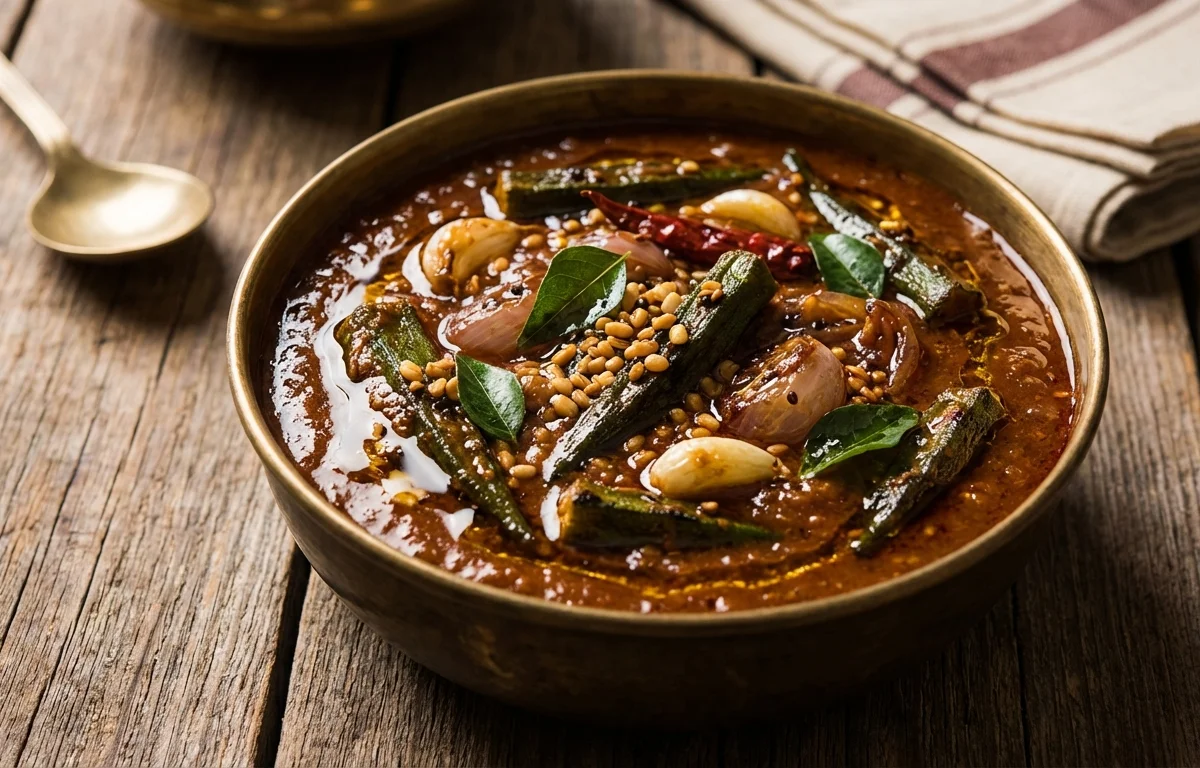
Vendakkai Puli Mandi
A tangy South Indian okra curry with tamarind, gentle spice, and a light coconut finish. The okra is first sautéed to keep it from turning slimy, then simmered until the gravy turns glossy and deeply flavorful.
For 4 servings
- prep · ~15 min
Soak the tamarind and prep the okra.
1.Soak the tamarind in 0.5 cup warm water for 15 minutes.2.Wash the okra well and dry it completely with a cloth.3.Trim the ends and cut the okra into 1 inch pieces.4.Squeeze the soaked tamarind and strain out a smooth extract.TIPDry okra well before cutting so it sautés cleanly and stays less slimy. - mix · ~2 min
Make the coconut mixture.
Mix the grated coconut and rice flour with 0.25 cup water into a smooth, thin paste. Keep it ready for the final simmer.
- temper · ~2 min
Make the tempering.
1.Heat coconut oil in a kadai over medium heat.2.Add mustard seeds and let them splutter.3.Add fenugreek seeds, dried red chili, and curry leaves.4.Stir for a few seconds until fragrant.TIPKeep the heat moderate after adding fenugreek so it flavors the oil without turning bitter. - saute · ~12 min
Cook the onion and okra.
1.Add the sliced onion and green chili.2.Sauté until the onion turns soft and lightly golden, 3 to 4 minutes.3.Add the okra and cook, stirring gently, until the stickiness reduces, 6 to 8 minutes.TIPStir gently instead of constantly tossing, so the okra keeps its shape. - saute · ~1 min
Add the spice powders.
Add turmeric powder, red chili powder, coriander powder, and salt. Mix well and cook for 30 seconds so the spices bloom in the oil.
- simmer · ~10 min
Simmer with tamarind water.
Pour in the tamarind extract and the remaining water. Bring to a gentle simmer and cook uncovered for 8 to 10 minutes until the raw tamarind taste softens and the okra is tender.
- simmer · ~3 min
Finish with the coconut mixture.
Stir the coconut mixture once and pour it into the pan. Simmer on low heat for 2 to 3 minutes until the gravy lightly thickens and looks glossy. Do not boil hard after adding coconut.
TIPA gentle simmer keeps the coconut smooth and prevents the gravy from splitting. - serve
Serve the Vendakkai Puli Mandi hot.
What to keep in mind.
7 tips from the recipe — small details that make a real difference to the final dish.
- 1Dry the okra fully before slicing; even a little surface moisture makes it turn slimy in the pan.
- 2Let the okra sit mostly undisturbed for short stretches while sautéing so its edges sear instead of steaming.
- 3Use only a pinch of fenugreek seeds; too much will make the puli mandi noticeably bitter.
- 4Simmer the tamarind gravy uncovered so the raw sourness cooks off and the sauce concentrates properly.
- 5Stir the coconut-rice flour mixture just before adding, since the flour settles quickly at the bottom.
- 6After adding the coconut mixture, keep the heat low and stop once the gravy turns glossy and lightly thickened.
- 7This curry tastes even better after 20 to 30 minutes of resting, when the okra absorbs the tangy gravy.
Adapt it for your goals.
No-onion
Skip the onion for a simpler, more austere puli mandi; the tamarind, curry leaves, and coconut will still carry the dish well.
spicierSpicier
Increase red chili powder or add one more slit green chili for a hotter version that stands up well to plain rice.
shallotShallot
Replace the sliced onion with small shallots for a sweeter, more traditional Kerala-style depth.
thinner gravyThinner-gravy
Use a little extra water and slightly less rice flour if you want a looser mandi to mix generously with steamed rice.
Why this is on our healthy list.
Vegetable-Rich Main Curry
Okra makes this dish a hearty vegetable-based curry, adding plant goodness while keeping the meal light and satisfying.
Digestive Spice Support
Tamarind, curry leaves, fenugreek, and coriander bring classic South Indian flavour along with ingredients often used in digestion-friendly home cooking.
Moderate, Balanced Richness
A small amount of fresh coconut gives body and satiety without making the gravy heavy like a cream-based curry.
Frequently asked questions
Wash it ahead, dry it completely, and sauté it well before adding tamarind or water. That initial cooking is the key step.