Shepu Bhaji: Nutrition, Vitamin C, Glycemic Index & Health Benefits: verified nutrition facts, glycemic context, serving guidance, and practical cooking ideas.
↑ Shepu bhaji (dill) is more than a garnish — it's a nutrient-dense leafy green.
The fragrant, feathery green
Shepu bhaji is the Marathi and Hindi name for dill leaves (Anethum graveolens). In the West, it's mostly known for flavoring pickles or pairing with salmon. But in Indian kitchens, it's treated like a proper vegetable, stir-fried on its own (bhaji), cooked into lentils (dal), or kneaded into flatbread dough.
Its flavor is its signature: fresh, grassy, and distinctly tangy, with a hint of anise that reminds people of fennel (though they're different plants). It's a taste that can divide a room, but its nutritional profile is far less controversial. It's a genuine superfood, without the fancy label or the high price tag.
IN ONE LINE
Shepu bhaji is just dill. A low-calorie, low-carb leafy green that packs a massive vitamin C punch and has virtually no impact on blood sugar.
Shepu bhaji nutrition facts
Here's the nutritional breakdown for a 100-gram serving of raw shepu bhaji — that's a pretty generous bunch, about what you'd use to make a side dish for two people.
The numbers speak for themselves. For just 43 calories, you get a decent bump of protein and fiber. But the absolute showstopper is the vitamin C. At 85 milligrams, a single serving provides nearly your entire recommended daily intake. That's more vitamin C than you'll find in a medium orange. It's also a good source of Vitamin A (as carotenoids) and minerals like manganese, though the vitamin C is the main event.
A truly low-carb green
With only 7 grams of carbs, 2.1 of which are fiber, the net carb count is less than 5 grams per 100g. This makes shepu bhaji an incredible food for anyone managing blood sugar or following a low-carb or ketogenic diet. It adds bulk, flavor, and huge nutritional value for almost no carbohydrate cost.
Don't just use it as a tiny sprinkle. To get the real nutritional payoff, you need to use a whole bunch — think of it as a leafy green vegetable, not just a herb.
Shepu Bhaji's Glycemic Index
There's no official glycemic index rating for shepu bhaji, and there's a simple reason why: it's unnecessary. Leafy greens like dill, spinach, and fenugreek have so few digestible carbohydrates that their effect on blood sugar is tiny, or 'negligible'. For all practical purposes, its GI is close to zero. It's a food you can eat freely without worrying about a blood sugar spike.
GLYCEMIC INDEX · DILL vs COMMON FOODS
Shepu Bhaji has a negligible GI
Shepu Bhaji
leafy green
LOW
Apple
whole fruit
LOW
Mango
whole fruit
LOW
White bread
refined
HIGH
Cornflakes
refined
HIGH
SCALE 0–90
04590
How to get the most out of it
To maximize the flavor and nutrition of shepu bhaji, a little technique goes a long way.
01
Cook it lightly.
Vitamin C is sensitive to heat. Add shepu bhaji towards the end of cooking, or just wilt it briefly in a stir-fry to preserve its nutrients and fresh flavor.
02
Use the whole plant.
Don't throw away the tender stems! They are full of flavor and nutrients. Just chop them finely along with the leaves.
03
Pair it with iron.
The massive vitamin C dose in shepu bhaji dramatically boosts your body's absorption of plant-based iron. It's a perfect partner for lentils (dal) and beans.
04
Eat it raw.
For maximum vitamin C, eat it raw. Finely chop it into salads, yogurt dips (raita), or sprinkle it over finished dishes as a powerful garnish.
What shepu bhaji is good for
01
A huge vitamin C boost
One 100g serving delivers nearly a full day's worth of vitamin C, essential for immune function, healthy skin, and antioxidant defense.
94%
Vit C DV
02
Excellent for blood sugar
With a near-zero glycemic impact and very few carbs, it's one of the best greens for people with diabetes or on a low-carb diet.
<5g
net carbs
03
Supports weight management
It's very low in calories but provides fiber and bulk, helping you feel full and satisfied without adding to your calorie load.
43
cals/100g
04
A surprising source of protein
For a leafy green, 3.5 grams of protein per serving is quite respectable. It contributes to satiety and the overall nutritional value of a meal.
3.5g
protein
What to pair shepu bhaji with
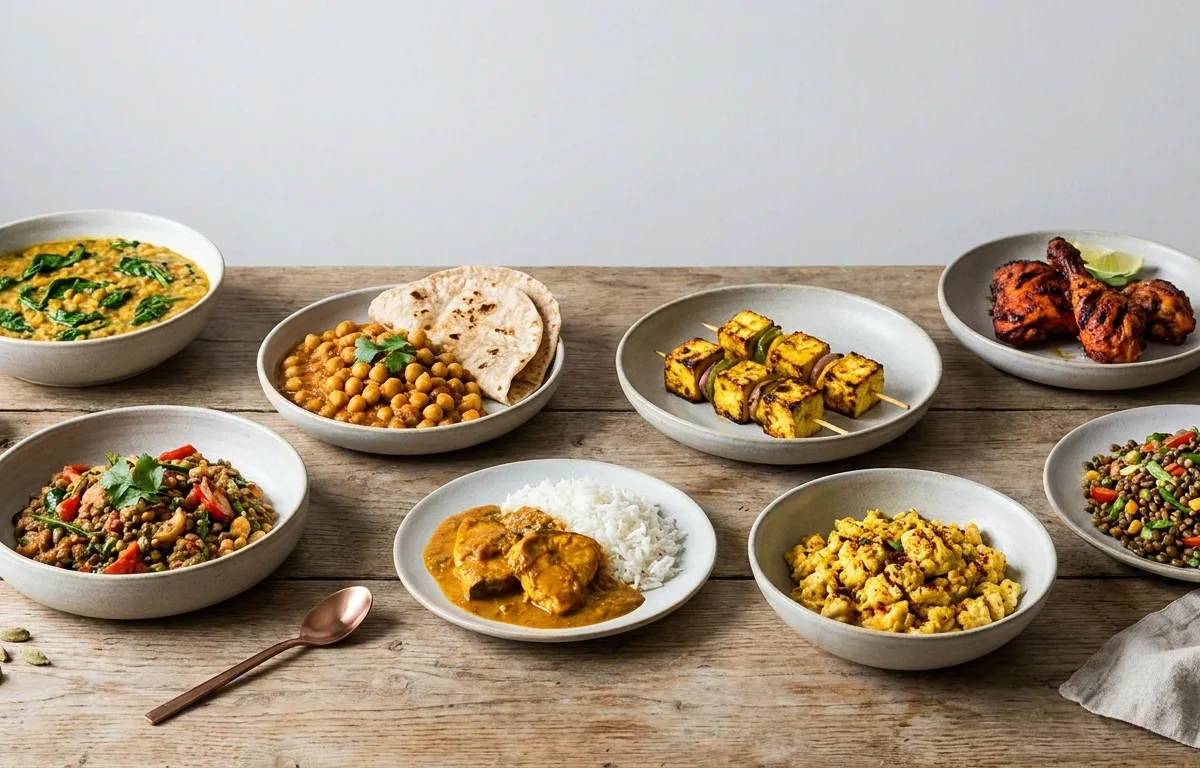
Shepu bhaji's strong flavor loves to be paired with starchy or creamy textures that can balance its sharpness.
Eat freely — or be mindful?
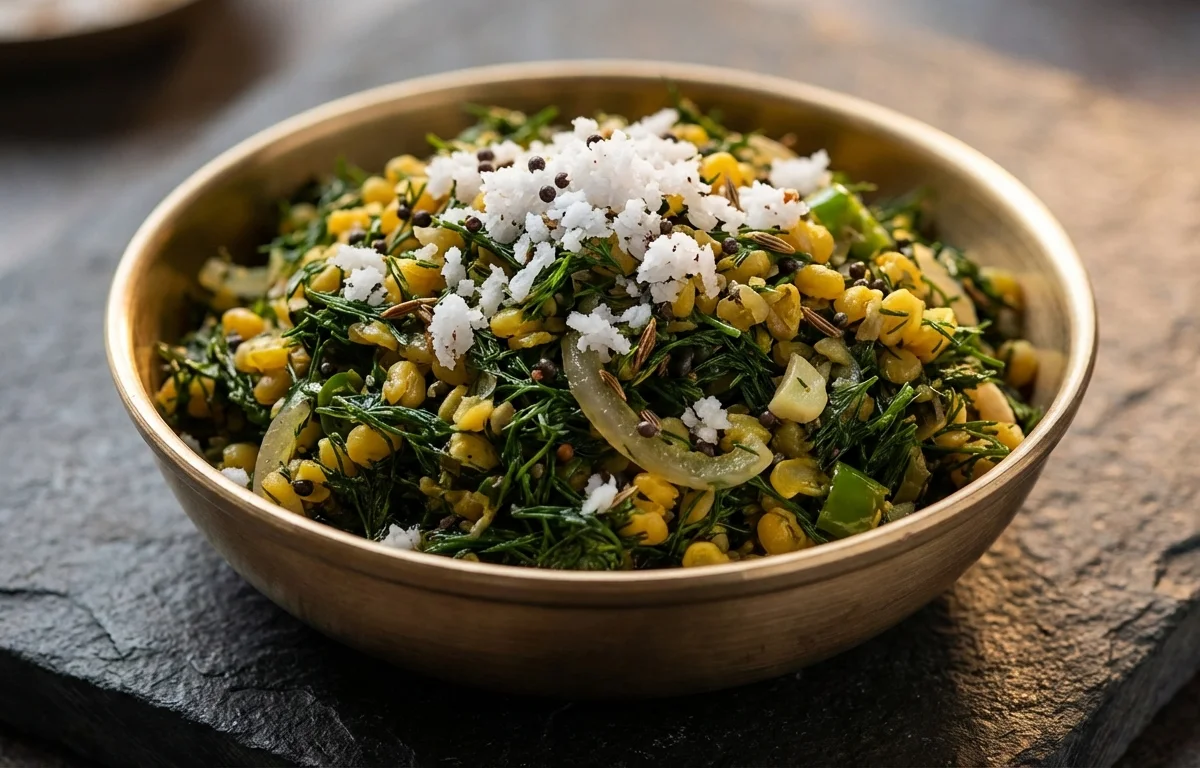
Three ways to cook it
Here are three simple, traditional Indian preparations that treat shepu bhaji as the star of the show.
.webp)
Want more nutrient-dense foods in your week, without the guesswork?
Our meal planner can build a balanced week for you, incorporating greens like shepu bhaji alongside protein and healthy fats. Get a plan with macros calculated and a single grocery list.
Build my weekly plan →SOURCES & REFERENCES · 3
One more thing
Eating well is rarely about willpower. It’s about having a short list of dinners you actually want to eat. Pick two from this list. Make them next week. The rest will follow.
If you want these on autopilot, our weekly meal planner can drop the picks above into your calendar with one click and build a single grocery list from the merged ingredients.
FREQUENTLY ASKED QUESTIONS
Frequently asked questions
Is shepu bhaji good for people with diabetes?
Yes, it's one of the best vegetables you can eat. It is extremely low in carbohydrates and has a negligible effect on blood sugar levels, while providing valuable fiber and nutrients.
Is shepu bhaji the same as fennel or fenugreek?
No. Shepu bhaji is dill. It has an anise-like flavor similar to fennel, but they are different plants. Fenugreek (methi) is another leafy green with a more bitter, maple-like flavor.
Can you eat shepu bhaji raw?
Absolutely. Eating it raw in salads or yogurt dips (raita) is a great way to get the maximum amount of its heat-sensitive vitamin C.
How do you reduce the strong taste of shepu bhaji?
Pairing it with starchy foods like potatoes, creamy ingredients like yogurt, or earthy lentils can help balance its strong flavor. You can also mix it with other milder greens like spinach.

ABOUT THE AUTHOR
Shreya Chatterjee
NUTRITION WRITER
Shreya is a nutrition writer and the voice behind The Nutrition Pen, where she turns evidence-based nutrition into simple, repeatable eating habits. Her writing focuses on practical food guidance — what to actually put on the plate — for readers who want to eat well without the noise.
Meet the editorial team →METHODOLOGY
How this article was created
Built using verified nutrition databases, culinary research, and traditional cooking knowledge — every claim is cross-referenced against the sources listed in the article.
· USDA data· Culinary research· Quality reviewed
Read our methodology →TRANSPARENCY
About this content
Articles are curated using trusted food databases (USDA FoodData Central, IFCT), culinary literature, and dietary guidelines, then structured by our editorial team for clarity, accuracy, and usefulness.
· Verified data sources· Culinary research· Quality reviewed
Read our editorial policy →EXPLORE OUR MEALS
Meals that fit this article

AMERICAN · 1677 CAL
Almonds with Sliced Apple + supplement + iron

MEDITERRANEAN · 809 CAL
Greek Yogurt with Berries Almonds and Granola + supplement + iron

GENERAL_HEALTHY · 705 CAL
Banana with Peanut Butter Pregnancy + supplement + iron

MODERN · 982 CAL
Hummus with Crudits and Pita with Fresh Orange Snack + supplement + iron
TAGGED
KEEP READING