High-Protein Indian Breakfast Without Eggs: 7 Plates That Actually Clear 20g
Seven egg-free Indian breakfasts ranked by protein per realistic serving — moong dal chilla, paneer paratha, soya upma, sprouts chaat. Honest pairings to…
By Sourabh Garg, Content Creator
May 31, 2026 · Reviewed May 2026 · Updated Aug 2026
There is a quiet problem with the standard Indian breakfast plate. A bowl of poha is around 5g of protein. A katori of upma is closer to 6g. A plain aloo paratha with curd is about 8g together. The Indian Council of Medical Research's 2020 RDA puts an adult's protein floor at 0.83g per kg of body weight per day — about 50-60g for most adults — and Leidy and colleagues' 2015 review in the American Journal of Clinical Nutrition argues you want at least 25-30g in a single sitting to actually trigger muscle protein synthesis and stay full until the next meal [1][2]. Most vegetarian Indian breakfasts deliver less than a third of that, in one go.
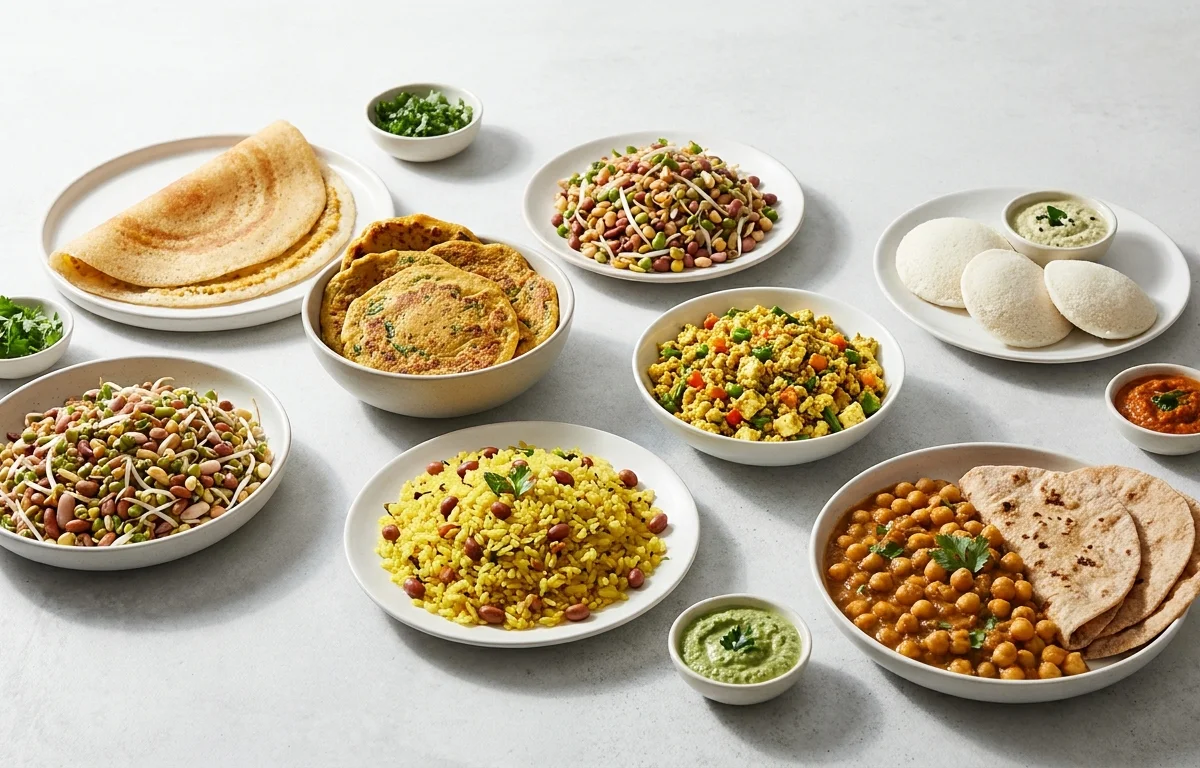
Eggs are the easy fix the internet keeps recommending. This guide is for the readers who do not eat them — for religious, ethical or just personal reasons — and still want a morning plate that does not collapse into a 3 p.m. snack-spiral. The seven plates below are ranked by protein per realistic serving (using ICMR-NIN's IFCT 2017 and USDA FoodData Central for the per-100g numbers), portioned the way Indian families actually eat at breakfast — two chillas, one katori, one paratha — not the dry-weight 100g abstractions food labels report [3][4]. None of them clear 25g on their own. All of them get there with one honest pairing.
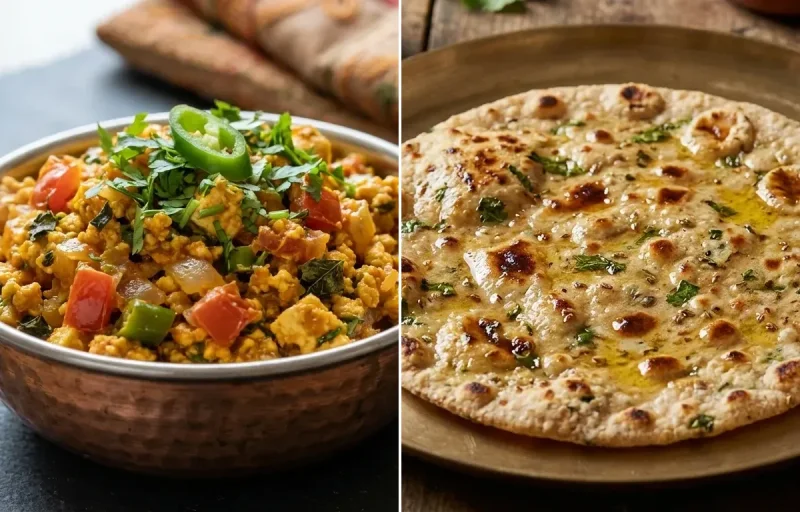
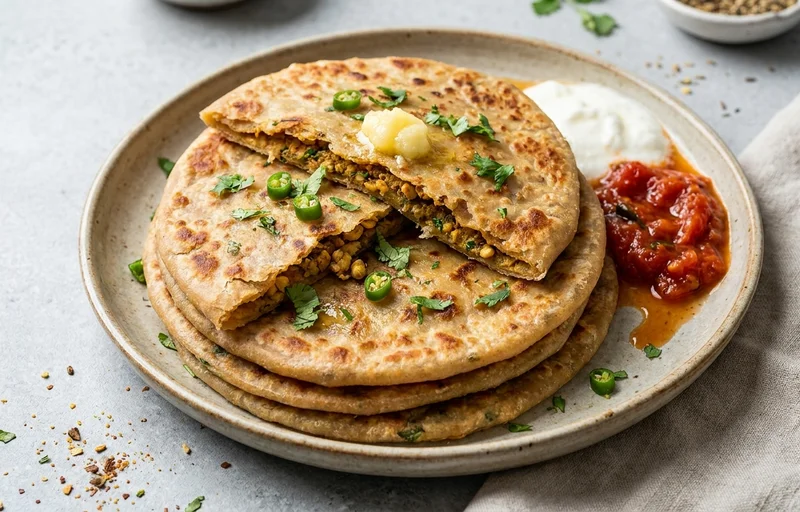
This meal is the definition of a fast, effective protein breakfast. Paneer is a powerhouse of slow-digesting casein protein, providing sustained energy and satiety that lasts for hours.
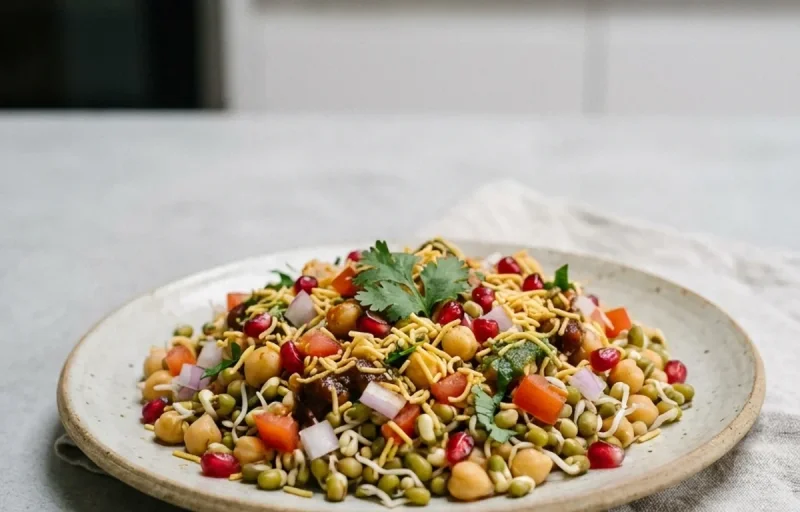
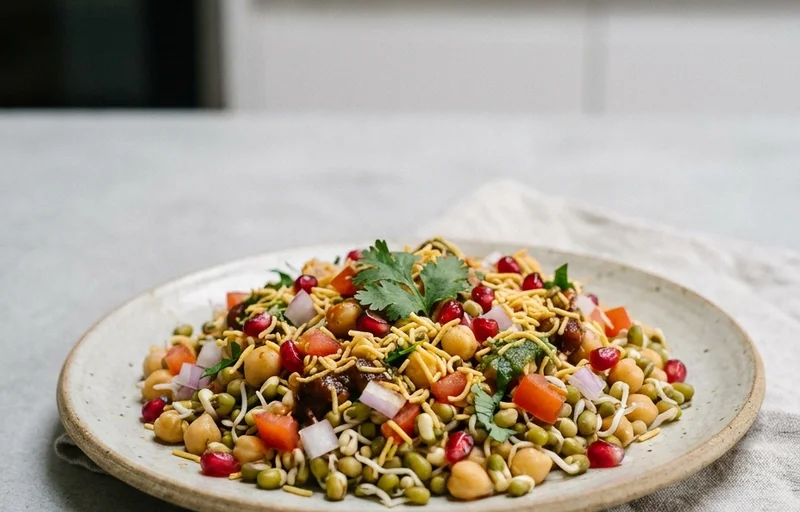
Sprouting legumes dramatically increases their protein content and makes them easier to digest. This chaat is one of the quickest and freshest ways to get a significant protein boost first thing in the morning.
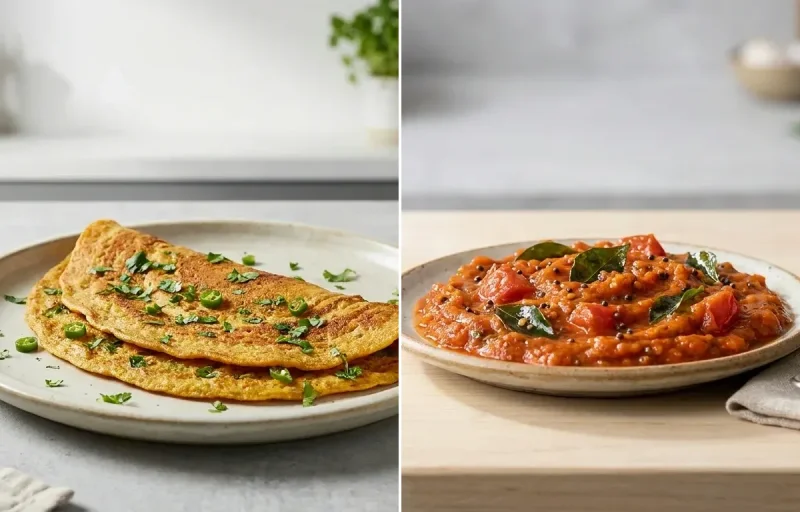
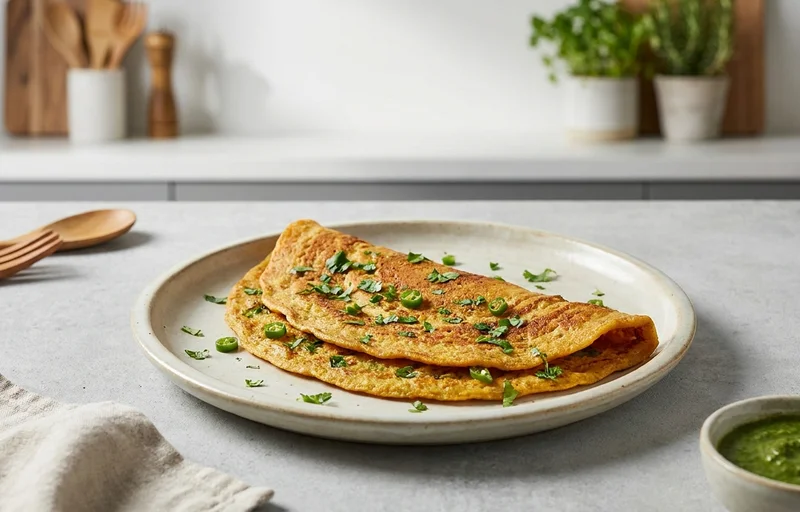
Besan is a high-protein, high-fiber flour that comes together into a satisfying meal in minutes. It's a fantastic option for a quick weekday breakfast that still packs a nutritional punch.
✓Lacto-vegetarian and ovo-averse adults who want breakfast to carry 20-30g of protein without an omelette or scramble.
✓Indian readers whose default breakfast (poha, upma, plain paratha, idli with sambar) is delivering under 10g of protein and leaving them hungry by 11 a.m.
✓People trying to hit a 1.2-1.6 g/kg/day protein target for resistance training, weight loss with muscle preservation, or healthy aging, who have already used their lunch and dinner slots — breakfast is the easiest place to add 15-20g [2][5].
✓Jain, satvik and other religious-vegetarian readers for whom egg whites are not an acceptable shortcut and who need genuinely egg-free protein.
LIMIT OR AVOID IF
Skip this if
!You have chronic kidney disease and your nephrologist has placed you on a protein-restricted diet (typically 0.6-0.8 g/kg/day for non-dialysis CKD) — the 25g-per-meal target here is the opposite direction.
!You have severe lactose intolerance or a confirmed dairy allergy — three of the seven plates (paneer paratha, paneer scramble, sprouts chaat with curd) lean on paneer or curd. Sub in tofu or hung soy curd.
!You have a soy allergy or are advised against soy for an endocrine condition — soya granule upma is the highest-protein item on the list, but it is replaceable with a paneer + bhurji version.
PRACTICAL TIPS
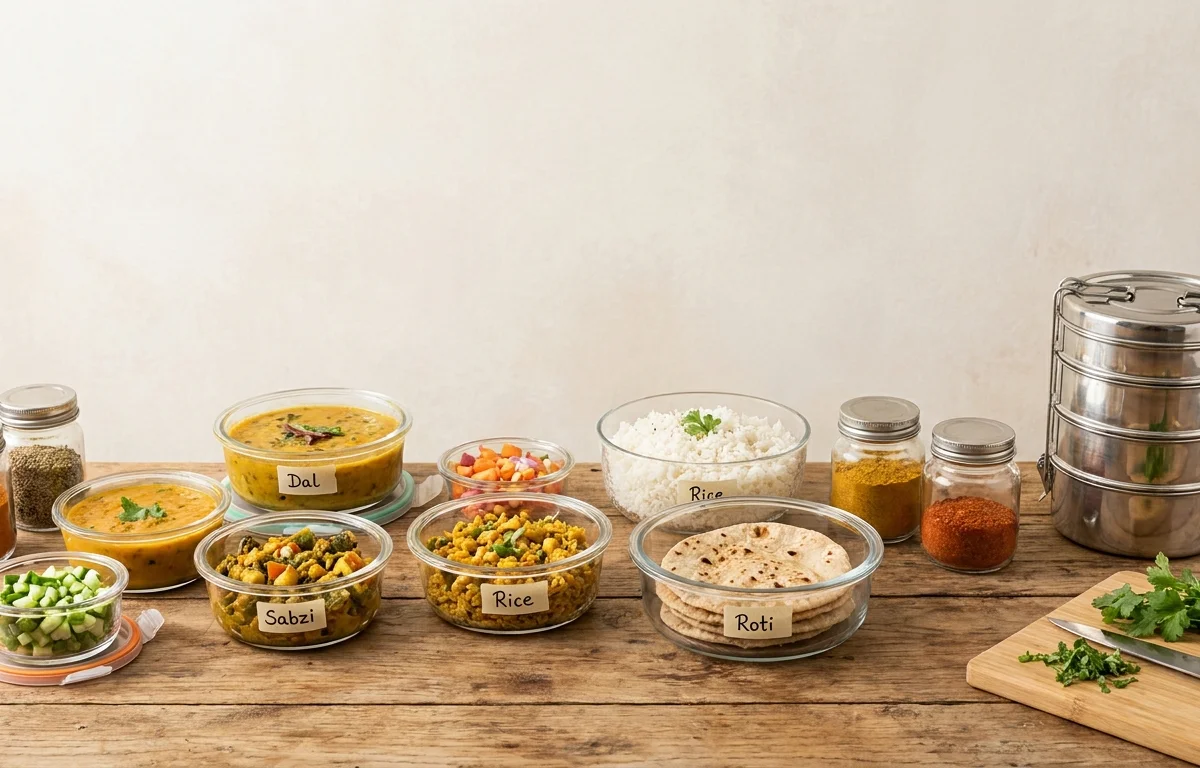
✓Soak your dals and legumes the night before. A jar of soaked moong dal in the fridge collapses your morning chilla into 10 minutes; an un-soaked one means you skip it and reach for poha. Sunday-night batch soaking is the single highest-yield habit for closing the breakfast protein gap.
✓Pair, do not search. The internet keeps trying to find one 'magic' egg-free breakfast that hits 25g of protein on its own. ICMR-NIN's 2024 Dietary Guidelines specifically recommend cereal-pulse-dairy combinations because no single Indian breakfast item gets there alone [6]. Two chillas plus a katori of curd. Paneer paratha plus dahi. Dhokla plus buttermilk.
✓Measure paneer in grams the first week. A 'paneer' paratha at most homes uses ~20g of paneer — that's 4g of protein, not the 14g you think. A genuinely high-protein paneer paratha needs 30-40g of stuffed paneer; weigh it once and you will recalibrate by eye.
✓Use sprouted moong over raw moong wherever you can. Sprouting raises bioavailable protein and digestibility, lowers anti-nutrients (phytate, lectins) and makes a katori of sprouts chaat genuinely sit at 12-14g of protein rather than a vague 'high' [7].
✓Soya granules (nutrela mince) are the highest-protein-density ingredient in an Indian kitchen at about 52g of protein per 100g dry — twice paneer. Half a cup of dry granules rehydrated into upma or bhurji turns any breakfast into a 20g+ plate. Buy plain, not pre-flavoured.
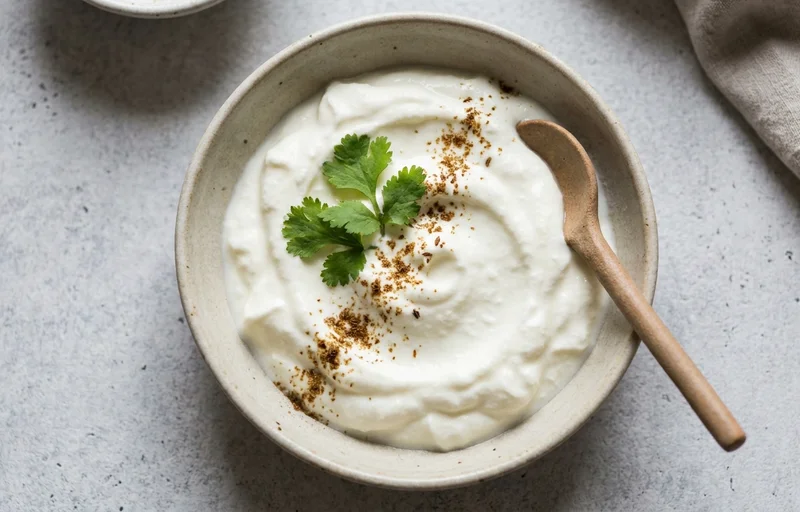
✓Drink a glass of buttermilk or 1 katori (150g) of hung curd alongside whatever you have made. Hung curd is ~8g of protein per katori and almost anything pairs with it. This single addition is what moves most plates from the 14-18g range into the 22-26g range.
The honest takeaway, after running the numbers on every popular egg-free breakfast in the Indian repertoire, is that no single plate hits the 25g per-meal threshold the satiety literature points to. A serving of two moong dal chillas is 18g. A paneer paratha is 14g. A katori of sprouts chaat is 14g. The one outlier — a katori of soya granule upma at ~22g — gets close but is still a notch short.
The move is not to find a magic breakfast. It is to learn the pairing — chilla plus a katori of curd plus a small bowl of sprouts; paneer paratha plus dahi; dhokla plus a glass of buttermilk. Two of these stacks clear 25-30g cleanly and stay under 500 kcal. None of them require a single egg. Pick two pairings from below, rotate them through your week, and the morning protein gap closes — without changing your kitchen or your beliefs.
FREQUENTLY ASKED QUESTIONS
Frequently asked questions
Why does my poha or upma show 'high protein' on the packet but not feel filling?
Because the packet number is for the dry flour or dry beaten rice, not the cooked dish, and the typical recipe uses 30-40g of dry weight per serving. A katori of cooked poha is about 5g of protein and 35g of carbohydrate; a katori of upma is about 6g protein and 38g carbohydrate. The high carb-to-protein ratio is what spikes blood glucose, drops it sharply, and leaves you hungry by 11 a.m. The fix is to add 100-150g of paneer, a katori of sprouts, or a glass of buttermilk — not to keep eating more poha.
Is paneer too high in fat for a daily breakfast?
Full-fat paneer is about 20-25% fat — a 50g serving is about 12g of fat, of which roughly 7g is saturated. That is fine for most adults eating it 3-4 times a week alongside an otherwise plant-forward diet. If you have established cardiovascular disease, dyslipidaemia, or are on a strict saturated-fat protocol, switch to low-fat paneer (8-10% fat) or alternate with tofu, which is ~8g protein and ~5g fat per 100g, mostly unsaturated. The satiety advantage of paneer's protein-fat combination is real and meaningful at breakfast specifically [5].
Can I get enough protein from just milk, almonds and a banana?
No. A 200ml glass of toned milk is 6-7g of protein, eight almonds are about 2g, and a banana is about 1.5g — that is roughly 10g total, less than half the per-meal protein target the satiety literature points to. This is useful as a small starter alongside a protein-dense plate (a chilla, a paneer paratha, a katori of sprouts), not as the whole meal. The Indian breakfast 'milk plus dry fruit' default is one of the main reasons working adults end up under-protein at this slot.
Are sprouts safe to eat raw at breakfast?
For most healthy adults, yes — sprouted moong, chana and methi are traditional Indian breakfast components, and sprouting itself increases bioavailable protein and reduces anti-nutrients. The safer practice for pregnant women, immunocompromised readers, young children and older adults is to lightly steam sprouts for 3-4 minutes (just past raw), which kills any surface bacteria without meaningfully changing the protein or fibre content [7]. If you sprout at home, rinse twice a day during sprouting and discard if you see sliminess or off smell.
I am vegan. Which of these seven plates work without paneer or curd?
Four port directly: moong dal chillas (no curd, pair with hummus or sprouts), besan chillas (same), sprouts chaat (lemon and onion, skip the curd dressing), and soya granule upma (use soy curd or skip dairy). The paneer paratha becomes a tofu paratha — silken tofu mashed with onion, ginger and green chilli gives a similar mouthfeel at comparable protein (~10g for a 100g tofu stuffing). Soy curd or cashew curd replaces dahi in the pairings. The 25g-per-meal target is achievable on a fully vegan plate — soya granule upma plus a small bowl of sprouts is 28g without a single animal product.
Does cooking destroy the protein in dal, sprouts or paneer?
No. Heat denatures protein structure (which is why paneer firms up when fried, or sprouts soften when steamed), but it does not destroy the amino acids that count nutritionally. In some cases — sprouts, dals — cooking improves bioavailable protein because it inactivates anti-nutrients like trypsin inhibitors and phytates that block absorption. The number on the IFCT or USDA database is for the cooked dish, and that is what your body actually uses [3][4].
Is sattu actually high-protein, or is that just Bihari-Bengali pride?
It is genuinely high-protein. Sattu is roasted Bengal-gram (chickpea) flour and runs about 20-22g of protein per 100g dry — slightly higher than besan, slightly lower than moong dal powder. A traditional savoury sattu drink (3 tablespoons dry, ~30g, mixed with water, lemon, salt, chopped onion and green chilli) carries about 6-7g of protein and is a useful add-on, not a meal in itself. A sattu paratha stuffed with 40g of sattu plus a katori of curd gets you to a genuine 16-18g of protein per plate.
ABOUT THE AUTHOR
Sourabh Garg
CONTENT CREATOR
Sourabh writes about Indian cuisine, budget cooking, and the everyday nutrition questions that come up in Indian kitchens — chapati portions, dal protein, how to keep dishes balanced without losing the flavours families actually want. His pieces lean on credible sources (ICMR-NIN, peer-reviewed studies) and home-cook reality in equal measure.
Built using verified nutrition databases, culinary research, and traditional cooking knowledge — every claim is cross-referenced against the sources listed in the article. Last reviewed May 2026.
Articles are curated using trusted food databases (USDA FoodData Central, IFCT), culinary literature, and dietary guidelines, then structured by our editorial team for clarity, accuracy, and usefulness.
· Verified data sources· Culinary research· Quality reviewed
✓Balanced meal with protein, complex carbs, and vegetables
8 CAL
2
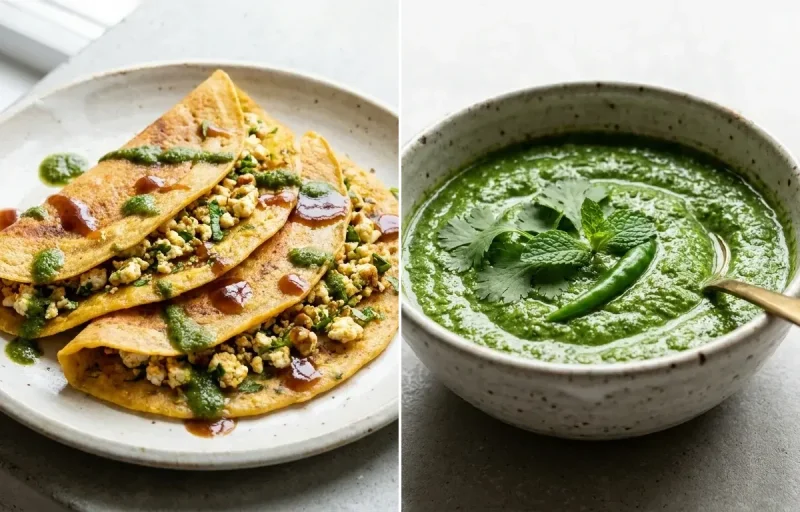
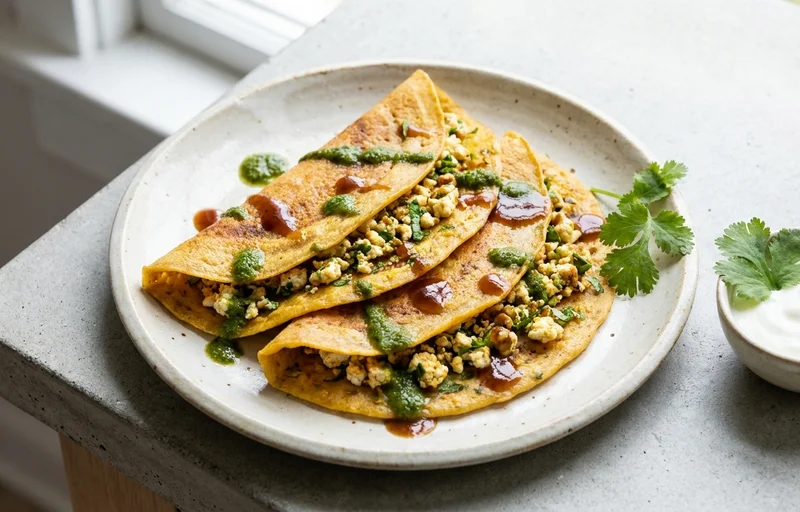
This breakfast doubles down on protein by combining lentils in the crepe with paneer in the filling. Moong dal is easy to digest and has a low glycemic index, preventing energy spikes.
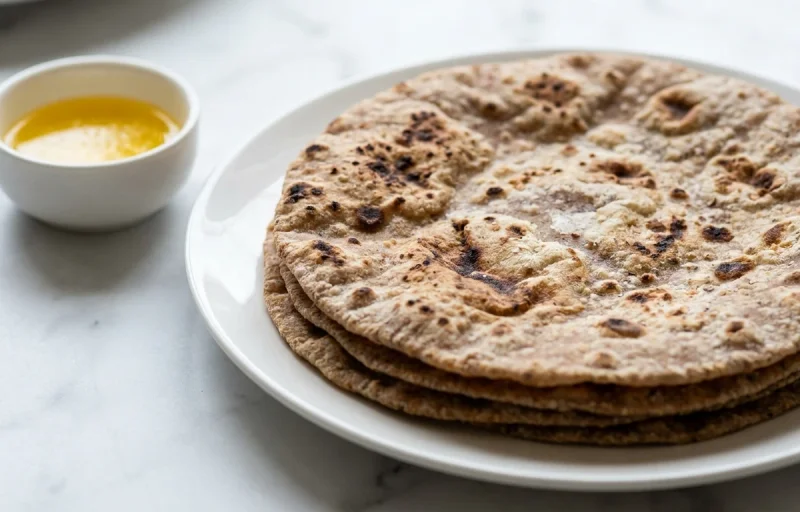
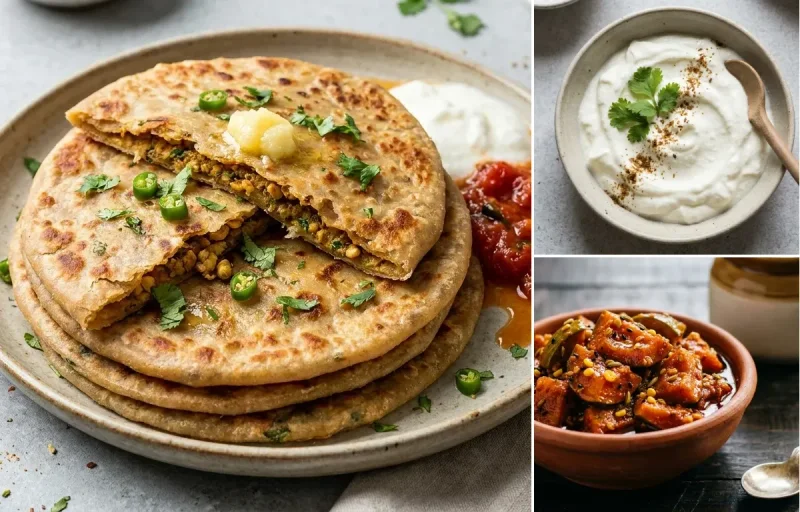
Sattu is a traditional Indian superfood, prized for its high protein and fiber content. This paratha offers a unique, savory flavor and provides long-lasting energy, making it a favorite in its home region.
✓Provides both protein and probiotics when served with dahi
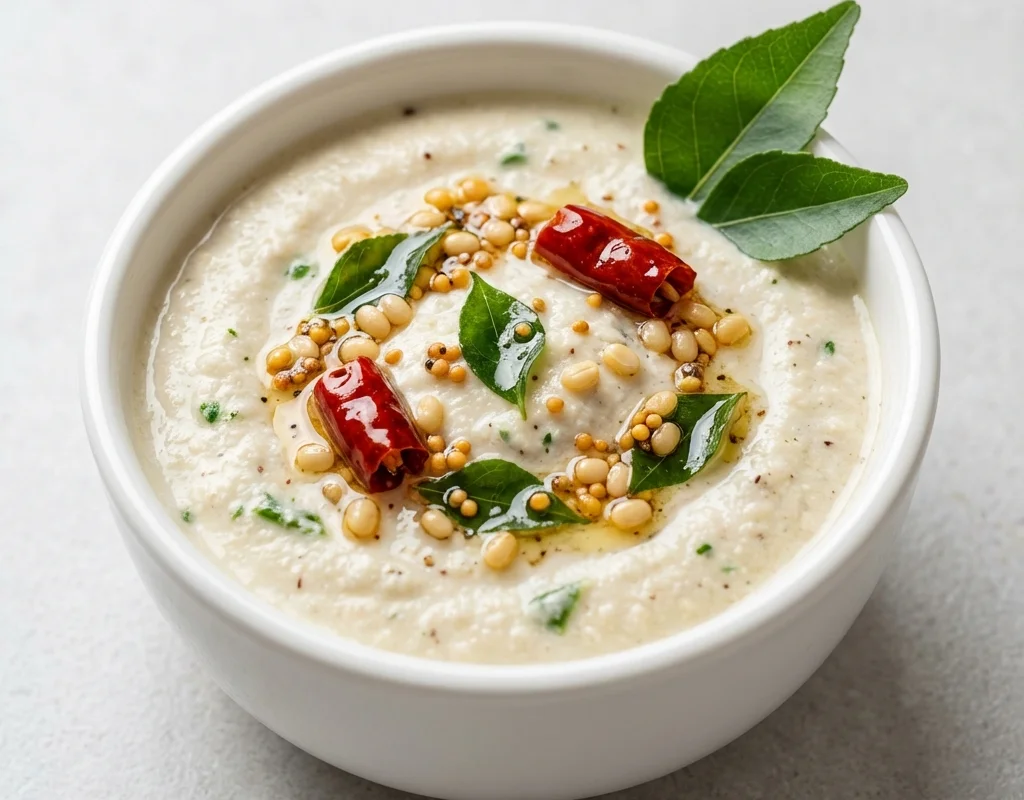
Coconut Chutney
131 CAL · 1G PROTEIN
3
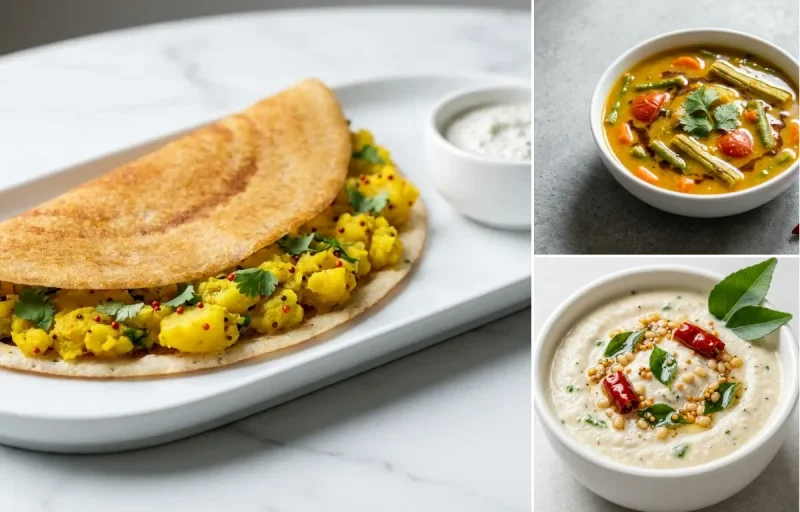
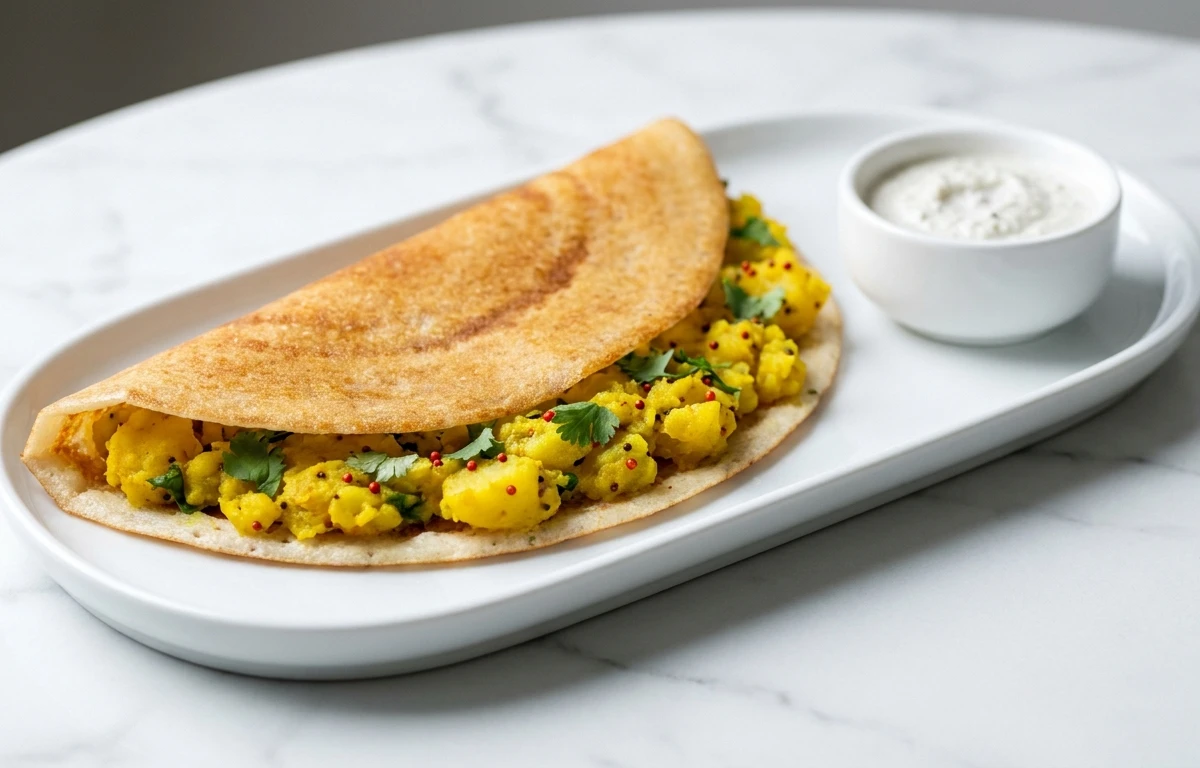
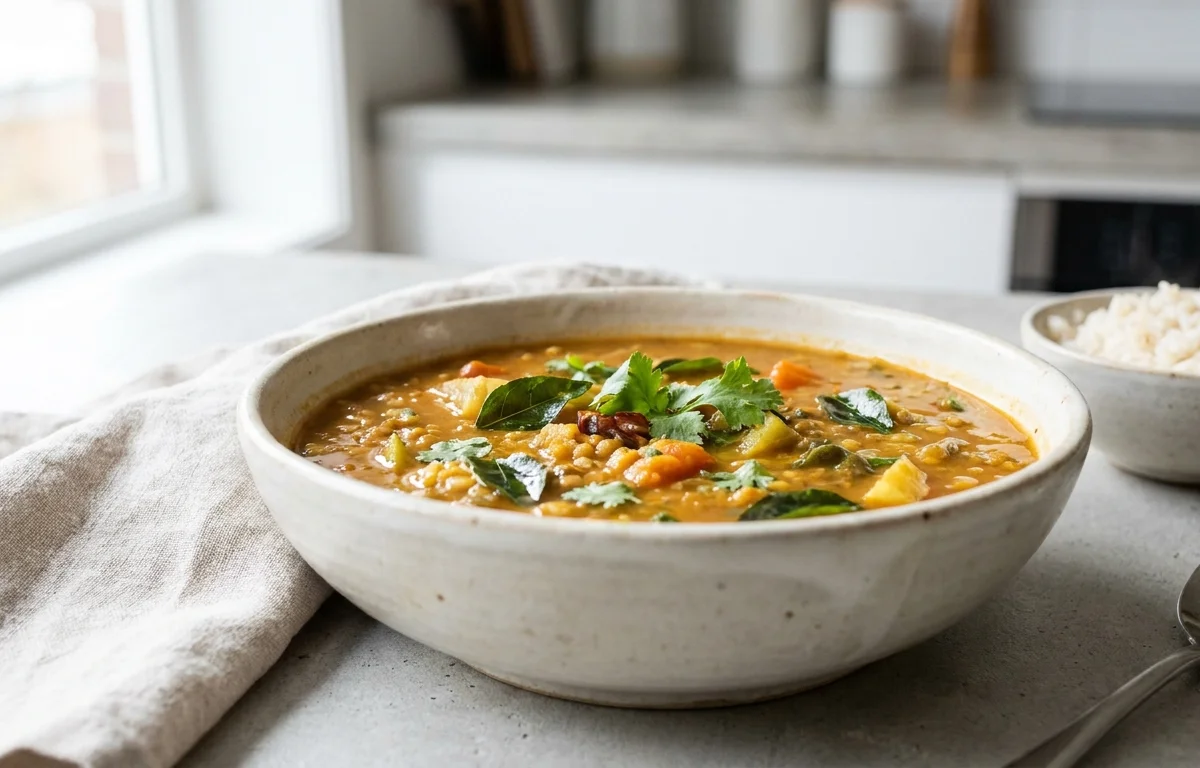
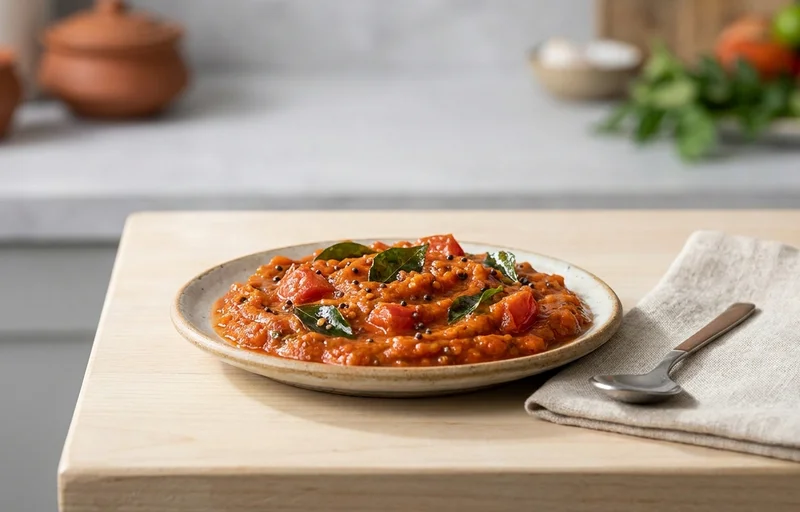
This meal is a masterclass in protein synergy. The combination of urad dal and rice in the dosa batter creates a complete protein with all essential amino acids. The sambar adds another significant protein punch from toor dal.
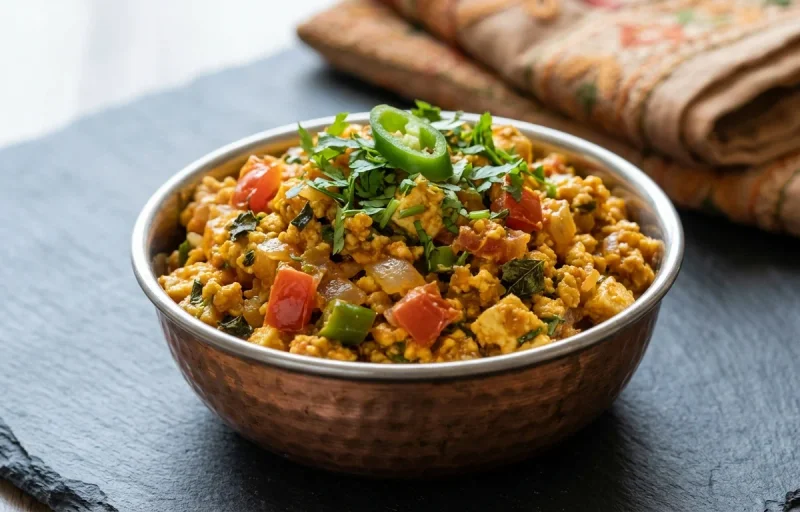
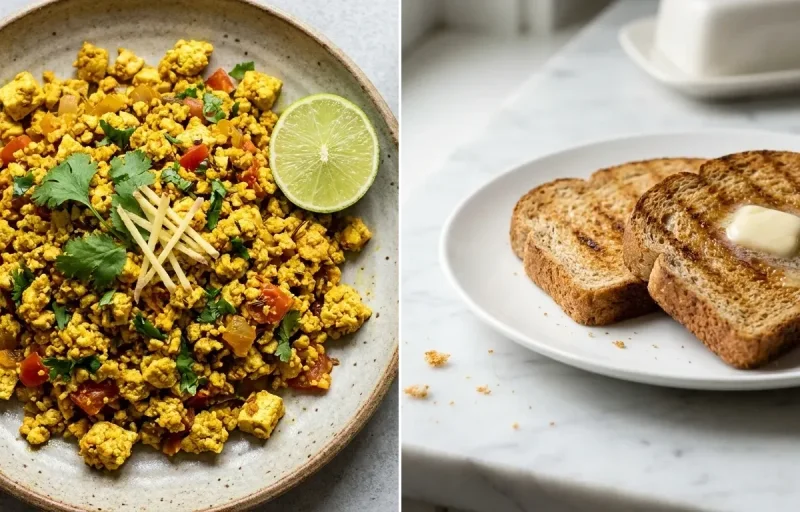
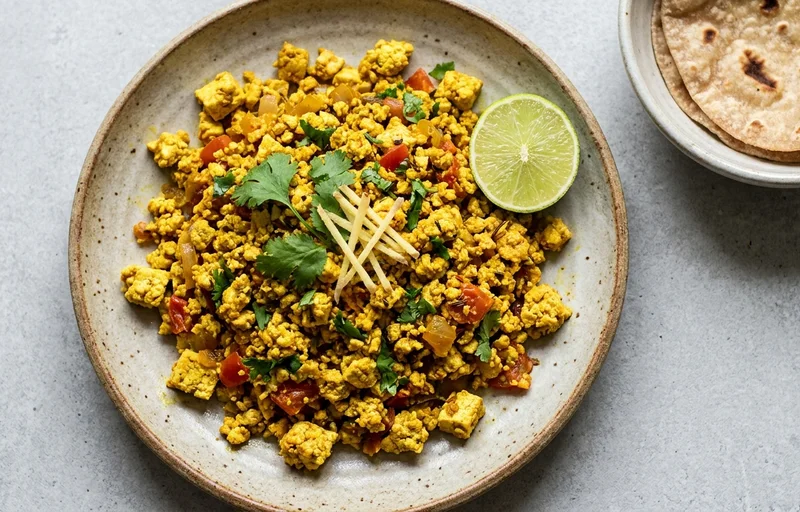
For a fully vegan or dairy-free option, tofu is an unbeatable protein source. It provides a complete protein, meaning it contains all nine essential amino acids, making this a nutritionally robust start to the day.
!You are managing gout or hyperuricemia — the dense pulse and legume base of moong dal chillas, sprouts chaat and dhokla raises purine load. Discuss frequency with your doctor.
ⓘ This guidance is general. Talk to a healthcare professional or registered dietitian for personalised dietary advice.