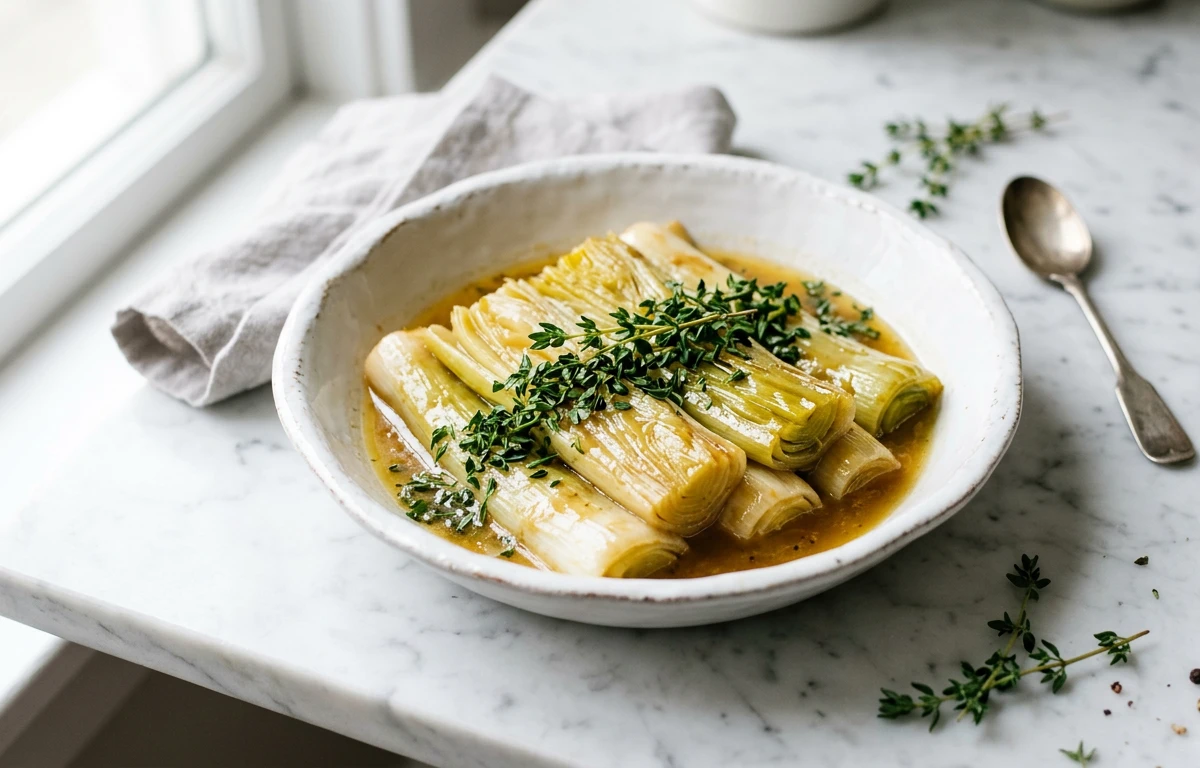
Leeks are too often relegated to a bit part in soup, the mild-mannered cousin of the onion. But that gentle character is their superpower. They build a deep, sweet, savory flavor base without any of the harshness of an onion, and they do it for a ridiculously low-calorie cost. They're mostly water and fibre, making them a fantastic, low-carb vegetable that punches well above its weight in the kitchen.
↑ Leeks are more than a soup ingredient — they're a versatile, low-calorie flavor base.
The gentle allium
Think of a leek not as a weak onion, but as a completely different tool. Where onions can be sharp and aggressive, leeks are sweet, earthy, and almost creamy when cooked down. They melt into dishes, adding a complex savory backbone that supports other flavors without shouting over them. This is why they're a cornerstone of classic French cooking and the secret weapon of so many chefs.
Nutritionally, they're just as impressive in their own quiet way. Low in everything you might want to limit (calories, fat, sugar) and a good source of things you want more of, like fiber and micronutrients. They're the definition of a food that adds more than it costs.
IN ONE LINE
Leeks are a low-calorie, low-carb vegetable with a very low glycemic index, prized for their sweet, mild flavor and prebiotic fiber content.
Leek nutrition facts
Here’s the nutritional breakdown for a 100-gram serving of cooked leeks, which is about one medium-sized leek.
The numbers are modest, but that's the point. You get a huge amount of flavor and bulk for just 61 calories. The 1.8 grams of fiber is particularly important, as much of it is in the form of inulin, a prebiotic that feeds beneficial gut bacteria. Leeks are also a fantastic source of vitamin K and vitamin A (as beta-carotene), which aren't shown on all labels but are a major benefit.
Leeks and the glycemic index
You won't find a specific glycemic index number for leeks, and there's a simple reason why: their effect on blood sugar is so minimal it's not worth measuring. They are a non-starchy vegetable, high in fiber and water with very little sugar. For anyone managing blood sugar, leeks are one of the safest and most beneficial vegetables you can eat. They add flavor and satisfaction to a meal with virtually no impact on glucose levels.
GLYCEMIC INDEX · LEEKS vs COMMON FOODS
Leeks have a negligible GI impact
Leeks
non-starchy veg
LOW
Apple
whole fruit
LOW
Pineapple
whole fruit
MEDIUM
White bread
refined
HIGH
SCALE 0–90
04590
How to prep and cook them right
Leeks are simple to cook, but one step is non-negotiable: washing. They grow in sandy soil, and grit loves to hide between their layers.
01
Wash them well.
The best way is to slice them first (in half lengthwise or into rounds), then rinse thoroughly in a colander or a bowl of water to let the grit sink.
02
Use the white and light green parts.
These are the tender, flavorful parts for most dishes. The tough, dark green tops are full of flavor but fibrous; save them for making stock.
03
Cook them gently.
Sautéing slowly in butter or olive oil is the classic method. They'll soften and turn incredibly sweet. This is the base for soups, tarts, and pasta sauces.
04
Try roasting or grilling.
Halved leeks, drizzled with olive oil and roasted until tender and caramelized, are fantastic. The high heat brings out a nutty sweetness.
What leeks are good for
01
Nourishing your gut microbiome
Leeks are one of the best sources of inulin, a type of soluble, prebiotic fiber that acts as food for beneficial gut bacteria, supporting a healthy digestive system.
1.8g
Fiber
02
Excellent for weight management
With high water and fiber content, leeks add satisfying volume and flavor to meals for very few calories, helping you feel full.
61
Calories
03
Supporting stable blood sugar
As a non-starchy vegetable with a negligible glycemic load, leeks are an ideal food for maintaining steady blood glucose levels.
Low
GI
04
Protecting heart health
Like garlic and onions, leeks contain beneficial sulfur compounds and flavonoids that are associated with improved circulation and heart health.
0.3g
Fat
What to pair leeks with
Leeks have a gentle, sweet flavor that plays well with almost everything. They're a team player. Here are some classic combinations.
Who are leeks good for?
Three ways to cook leeks
Beyond soup, leeks are incredibly versatile. Here are three simple recipes that put them center stage.

Want more easy, healthy vegetable ideas?
Our meal planner can help you build balanced meals around versatile vegetables like leeks, with recipes, smart grocery lists, and nutrition info all in one place.
Build my weekly plan →One more thing
Eating well is rarely about willpower. It’s about having a short list of dinners you actually want to eat. Pick two from this list. Make them next week. The rest will follow.
If you want these on autopilot, our weekly meal planner can drop the picks above into your calendar with one click and build a single grocery list from the merged ingredients.
FREQUENTLY ASKED QUESTIONS
Frequently asked questions
What part of the leek do you eat?
You eat the white and light green parts. The dark green tops are tough and fibrous but are excellent for adding flavor to stocks and broths—just remove them before serving.
Are leeks low-carb and keto-friendly?
Yes, absolutely. A 100g serving has about 12 grams of net carbs (total carbs minus fiber), making them a great vegetable for adding flavor and bulk to low-carb and ketogenic meals in reasonable amounts.
Why do you have to wash leeks so carefully?
Leeks are grown by mounding soil up around the stalk to keep it blanched and tender. This process traps sand and grit between its many layers. Slicing them first and then rinsing is the most effective way to get them clean.
Can I eat leeks raw?
You can, but they are quite pungent and fibrous when raw. If you want to try it, slice them paper-thin and use them sparingly in salads or as a garnish, similar to a scallion.
METHODOLOGY
How this article was created
Built using verified nutrition databases, culinary research, and traditional cooking knowledge — every claim is cross-referenced against the sources listed in the article.
· USDA data· Culinary research· Quality reviewed
Read our methodology →TRANSPARENCY
About this content
Articles are curated using trusted food databases (USDA FoodData Central, IFCT), culinary literature, and dietary guidelines, then structured by our editorial team for clarity, accuracy, and usefulness.
· Verified data sources· Culinary research· Quality reviewed
Read our editorial policy →RELATED RECIPES
Cook from this article
EXPLORE OUR MEALS
Meals that fit this article

AMERICAN · 1677 CAL
Almonds with Sliced Apple + supplement + iron

MEDITERRANEAN · 809 CAL
Greek Yogurt with Berries Almonds and Granola + supplement + iron

GENERAL_HEALTHY · 705 CAL
Banana with Peanut Butter Pregnancy + supplement + iron

MODERN · 982 CAL
Hummus with Crudits and Pita with Fresh Orange Snack + supplement + iron
TAGGED
KEEP READING