Papaya is one of those fruits people either love or feel 'meh' about. But from a dietitian's view, it's wildly underrated. Forget the flavor for a second and look at the function: it's famous for its digestive enzyme, papain, it's loaded with vitamin C, and it has a glycemic index that's more moderate than you might think. The key is to see it not just as a sweet fruit, but as a genuine digestive aid you can eat for breakfast.
↑ Ripe papaya is a brilliant source of vitamin C and digestive enzymes.
The digestive superstar
Let's be honest, papaya can be divisive. Some find its flavor too mild, its texture too soft. But its real magic isn't just in how it tastes, but in what it does. Papaya contains a special enzyme called papain, which is a protease — meaning it helps break down proteins. It’s so effective that it's used as a meat tenderizer.
When you eat papaya, that same enzyme can help ease digestion, which is why it has a long-standing reputation for soothing an upset stomach. It's a fruit that comes with its own digestive assistant built right in. Combine that with a serious dose of vitamin C and a surprisingly low calorie count, and you have a fruit that punches well above its weight.
IN ONE LINE
A low-calorie fruit that's packed with vitamin C and the unique digestive enzyme papain, making it exceptionally gut-friendly. Its glycemic index is moderate, so portion size matters.
Papaya nutrition facts
Here’s the nutritional profile for a 100-gram serving of raw papaya, which is about two-thirds of a cup of cubed fruit.
The standout number here is the vitamin C. With 60.9 mg in a small 100g serving, you're getting over two-thirds of your daily requirement. It's also very low in calories, fat, and sodium, making it an easy fit for almost any eating plan.
Papaya's glycemic index
With a glycemic index (GI) of 60, papaya falls into the 'medium' category (56-69). This means it will raise your blood sugar a bit more quickly than low-GI fruits like apples or cherries, but it’s not a major offender like white bread or sugary cereals. Because a typical serving is low in total carbs, its glycemic load (which accounts for portion size) is still low, at around 6.
For most people, including those with diabetes, a sensible portion of papaya is perfectly fine. The trick is to not go overboard and to consider pairing it with a source of protein or healthy fat to slow down sugar absorption even more.
WATCH OUT
Papaya juice is a different story. Juicing removes the fibre, which means the sugar hits your system much faster. Stick to the whole fruit.
GLYCEMIC INDEX · PAPAYA vs COMMON FOODS
Papaya is a medium-GI fruit
Apple
whole fruit
LOW
Mango
whole fruit
LOW
Papaya
whole fruit
MEDIUM
Watermelon
whole fruit
HIGH
Cornflakes
cereal
HIGH
SCALE 0–90
04590
The best way to eat it
Getting the most out of papaya is simple. A few small habits can maximize its benefits.
01
Stick to a serving.
A cup of cubed papaya (around 145g) is a great portion. It keeps the sugar and carb intake reasonable.
02
Add a squeeze of lime.
This is a classic pairing for a reason. The acidity of lime or lemon brightens papaya's flavor and can cut through any 'musky' notes.
03
Pair it with protein.
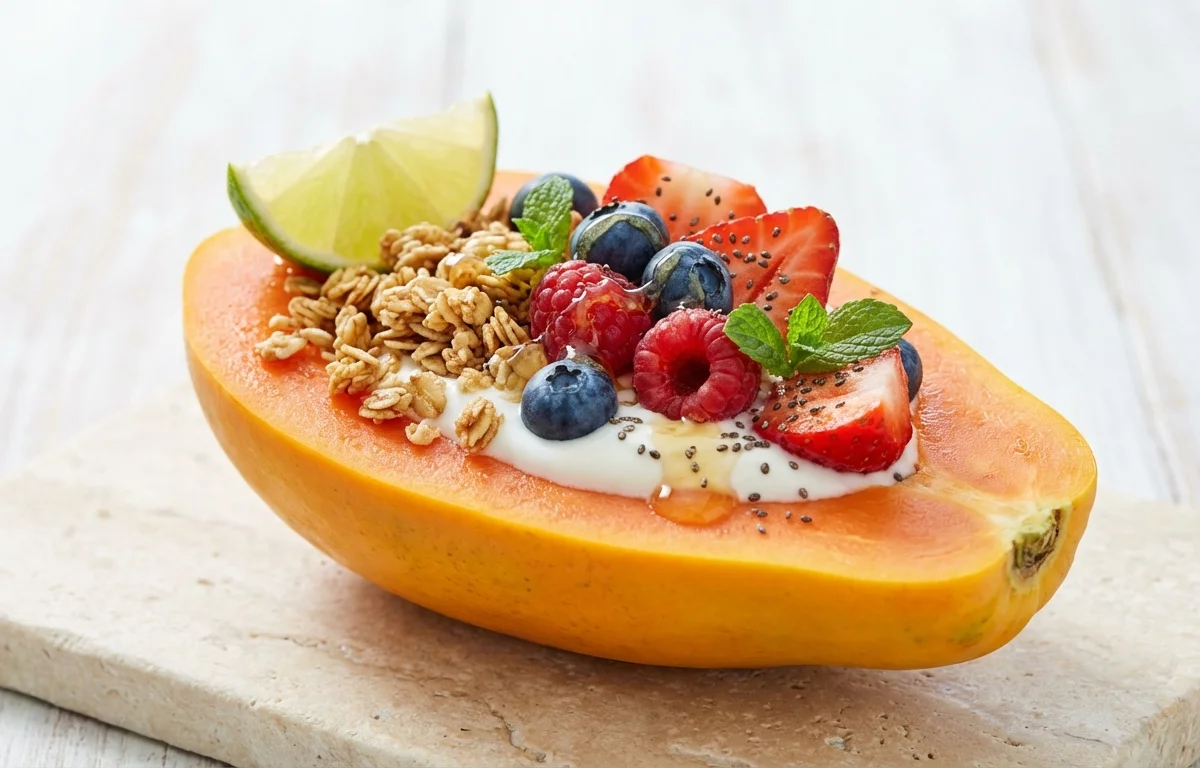
Eating papaya with a spoonful of Greek yogurt, a handful of nuts, or cottage cheese helps blunt the blood sugar response and makes it a more complete snack.
04
Don't throw out the seeds!
Papaya seeds are edible. They have a sharp, peppery flavor like watercress. A few can be blended into a smoothie or salad dressing for a nutritional kick.
What papaya is good for
01
Aiding digestion
The star enzyme papain helps break down proteins, which can ease bloating and indigestion. The fibre also promotes regularity.
Papain
enzyme
02
Supporting immunity
A single 100g serving delivers over two-thirds of your daily vitamin C, which is essential for a healthy immune system.
68%
Vit C DV
03
Promoting skin health
The high levels of vitamin C contribute to collagen synthesis, helping to keep skin firm. Antioxidants also protect against skin damage.
Vit C
collagen
04
Reducing inflammation
Papaya is rich in antioxidants, including carotenoids and vitamin C, which help fight inflammation throughout the body.
Antioxidant
rich
What to pair papaya with
Papaya's mild, sweet flavor makes it a great canvas. Pairing it with the right ingredients can balance its sweetness and turn it into a satisfying meal or snack.
Who should eat papaya?
Three simple recipes
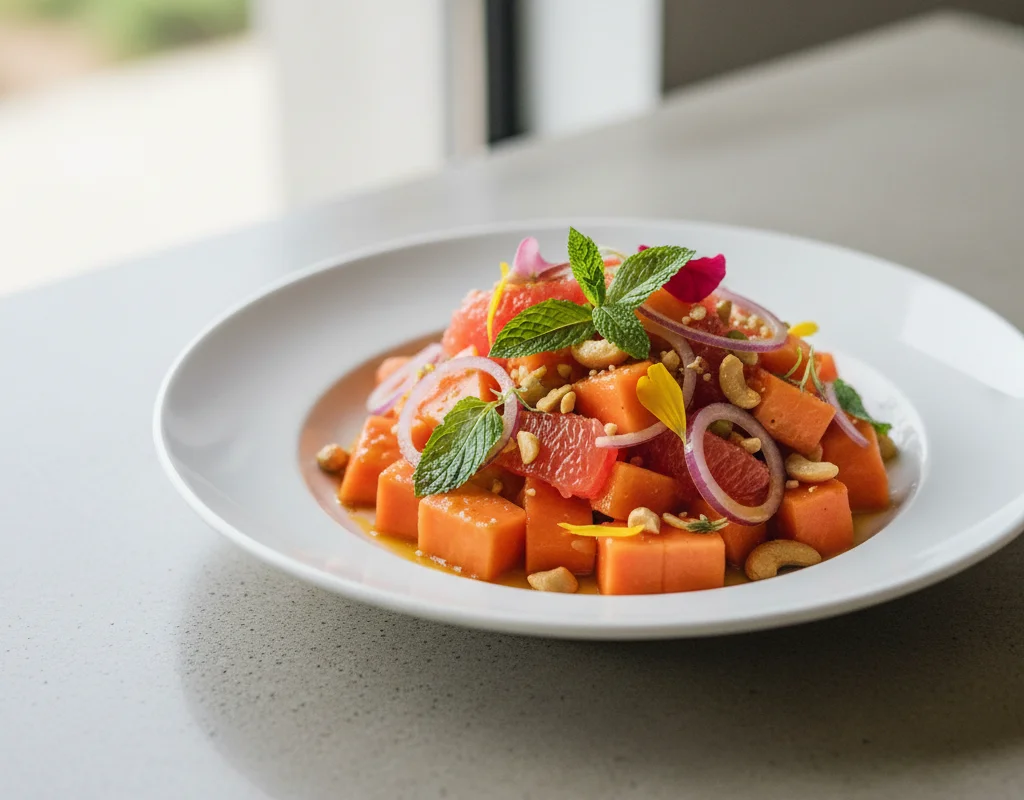
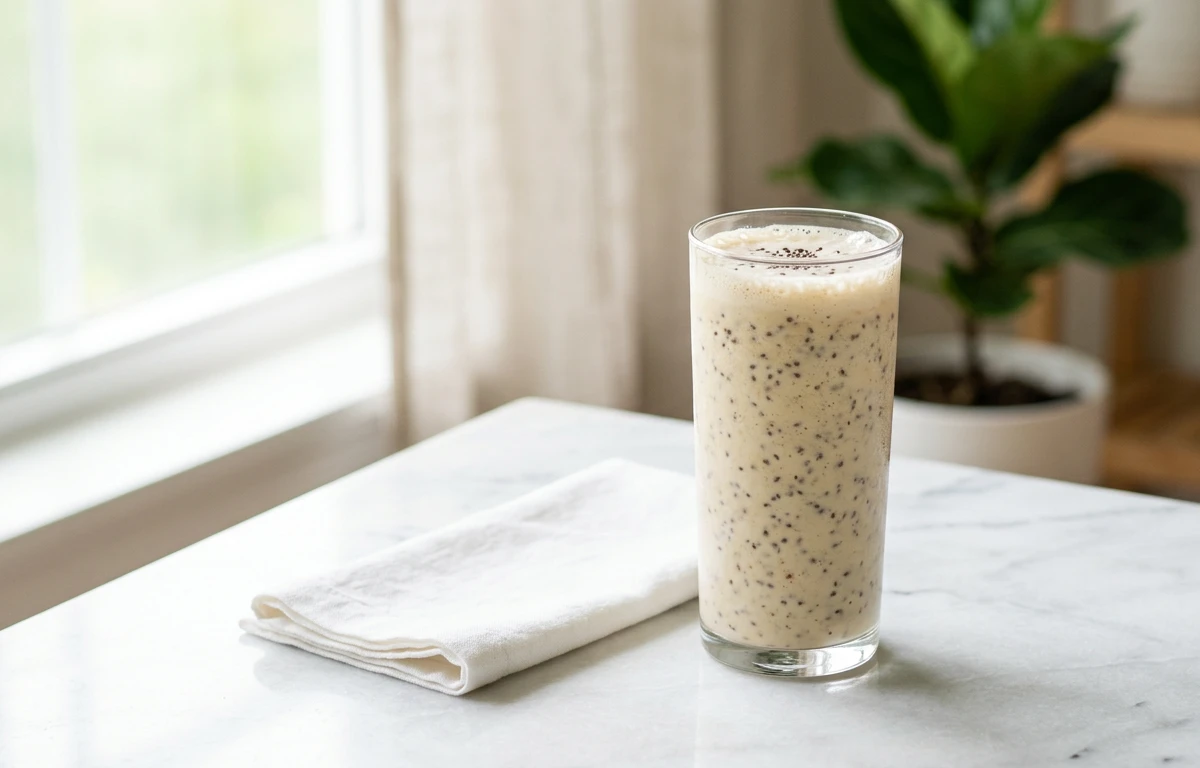
Move beyond just slicing it. Here are three easy ways to incorporate papaya into your meals.
Want fruit worked into a balanced week — without the planning?
Our meal planner pairs fruit like papaya with protein and fibre for steady energy, with portions and macros already calculated and a single grocery list at the end.
Build my weekly plan →SOURCES & REFERENCES · 3
One more thing
Eating well is rarely about willpower. It’s about having a short list of dinners you actually want to eat. Pick two from this list. Make them next week. The rest will follow.
If you want these on autopilot, our weekly meal planner can drop the picks above into your calendar with one click and build a single grocery list from the merged ingredients.
FREQUENTLY ASKED QUESTIONS
Frequently asked questions
Can people with diabetes eat papaya?
Yes, but with mindfulness. Papaya has a medium glycemic index (60), so it's best to eat it in smaller portions (e.g., 1/2 to 1 cup) and pair it with a source of protein or fat like nuts or yogurt to help stabilize blood sugar.
Is papaya really good for digestion?
Yes, this is one of its most well-known benefits. Papaya contains the enzyme papain, which helps break down protein chains. This, along with its fibre and water content, can aid digestion and reduce bloating.
Is green papaya different from ripe papaya?
Yes, very. Green (unripe) papaya has a crisp texture and mild flavor, often used in savory salads like Thai som tam. It's even higher in papain. Ripe papaya is soft, sweet, and eaten as a fruit.
Why does my papaya have a funny smell?
A very ripe papaya can sometimes have a slightly musky aroma due to the enzymes breaking down. A squeeze of lime or lemon juice usually neutralizes this smell and brightens the flavor.
METHODOLOGY
How this article was created
Built using verified nutrition databases, culinary research, and traditional cooking knowledge — every claim is cross-referenced against the sources listed in the article.
· USDA data· Culinary research· Quality reviewed
Read our methodology →TRANSPARENCY
About this content
Articles are curated using trusted food databases (USDA FoodData Central, IFCT), culinary literature, and dietary guidelines, then structured by our editorial team for clarity, accuracy, and usefulness.
· Verified data sources· Culinary research· Quality reviewed
Read our editorial policy →RELATED RECIPES
Cook from this article
EXPLORE OUR MEALS
Meals that fit this article

AMERICAN · 1677 CAL
Almonds with Sliced Apple + supplement + iron

MEDITERRANEAN · 809 CAL
Greek Yogurt with Berries Almonds and Granola + supplement + iron

GENERAL_HEALTHY · 705 CAL
Banana with Peanut Butter Pregnancy + supplement + iron

MODERN · 982 CAL
Hummus with Crudits and Pita with Fresh Orange Snack + supplement + iron
TAGGED
KEEP READING