Raw Banana: Resistant Starch, Glycemic Index & Nutrition Facts: verified nutrition facts, glycemic context, serving guidance, and practical cooking ideas.
↑ Raw bananas are cooked as a starchy vegetable, not eaten as a fruit.
The vegetable in disguise
A raw banana is a starchy, savoury food. It's firm, a little chalky, and not at all sweet. You wouldn't peel and eat one. But boil it, and it becomes tender and fluffy. Slice and fry it, and it turns crisp. It's a fantastic, gluten-free alternative to potatoes, used in curries, stir-fries, and as chips across Asia, Africa, and Latin America.
The magic is in the carbohydrate. In a green banana, most of the carbs are in the form of resistant starch. As it ripens and turns yellow, that starch converts into simple sugars, making it sweet, soft, and an entirely different food from a nutritional perspective.
IN ONE LINE
Think of raw banana as a potato-like vegetable, not a fruit. Its main health benefit comes from resistant starch, a prebiotic fibre that feeds good gut bacteria.
Raw banana nutrition facts
Here's the nutritional profile for a 100-gram serving of raw banana, which is about one small or half a medium one, cooked.
The resistant starch secret
The 32 grams of carbohydrate in a raw banana might look high, but it doesn't behave like the carbs in bread or even a ripe banana. Most of it is resistant starch. This type of starch 'resists' digestion in your small intestine. Instead, it travels to your large intestine, where it acts as a prebiotic — food for your healthy gut bacteria.
These bacteria ferment the starch, producing beneficial compounds like butyrate, which is fuel for your colon cells and has anti-inflammatory effects. This is why raw banana is considered such a gut-health superstar.
Cooking, especially boiling and then cooling, can preserve some of the resistant starch. Frying at high temperatures will convert more of it into regular, digestible starch.
Raw banana's glycemic index
Because most of its carbohydrate is resistant starch that you don't absorb, raw banana has a low glycemic index (GI). There's no official universal number, but it's much lower than a ripe banana (GI ~51) and certainly lower than a potato (GI 70-80). It provides slow-release energy without a significant blood sugar spike, making it an excellent carbohydrate choice for most people, including those with diabetes.
GLYCEMIC INDEX · RAW BANANA vs COMMON FOODS
Raw banana has a low glycemic impact
Apple
whole fruit
LOW
Raw Banana (est.)
cooked vegetable
LOW
Mango (ripe)
whole fruit
LOW
White Bread
refined
HIGH
Cornflakes
refined
HIGH
SCALE 0–90
04590
How to cook with it
First rule: never eat it raw. It's unpleasant and hard to digest. The peel is thick and bitter, so you always remove it. The flesh can stain, so some people peel it under water. From there, it's incredibly versatile.
01
Boil and mash.
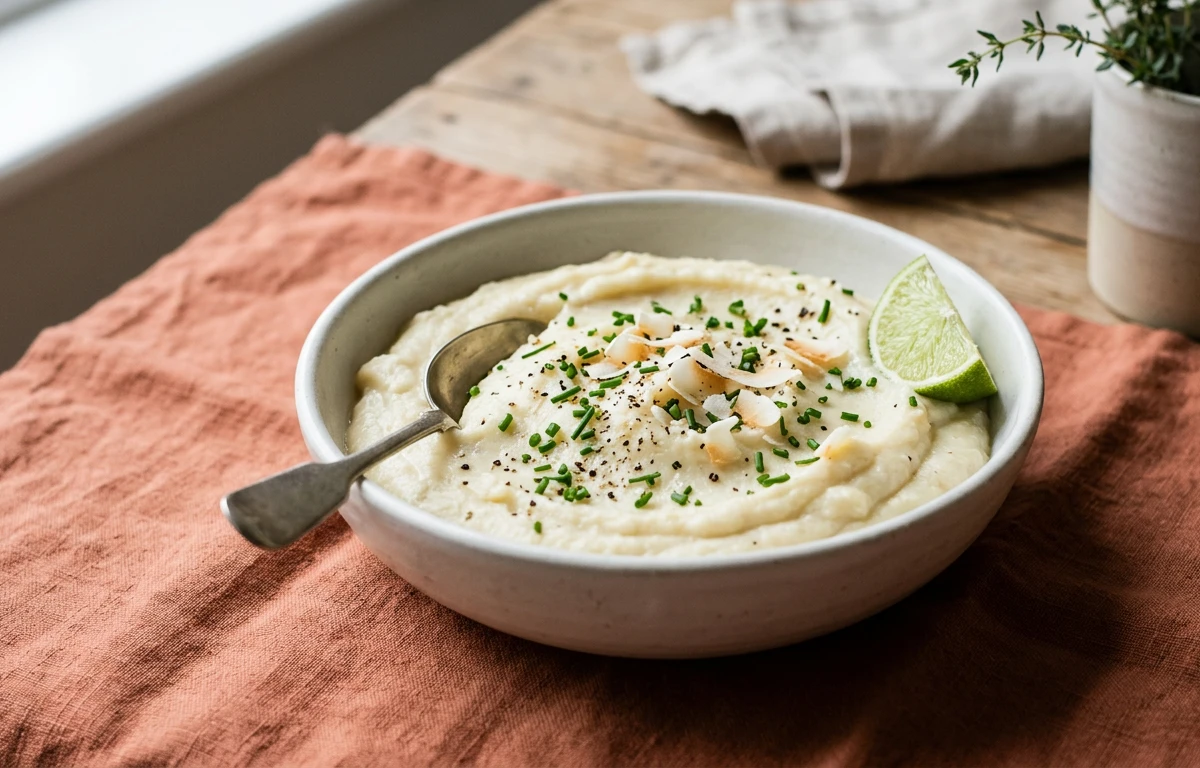
Boil chunks of peeled raw banana until tender, then mash with a little salt and oil. It's a fantastic substitute for mashed potatoes.
02
Add to curries and stews.
Chop it into cubes and add to a coconut-based curry or a lentil stew. It absorbs the flavours beautifully and adds a satisfying, bulky texture.
03
Fry into chips.
Slice it very thinly with a mandoline, toss with salt and spices, and either bake or air-fry until crisp. A healthy, whole-food chip.
04
Use as a 'boat'.
Halve, boil, and scoop out some of the flesh to create a 'boat' you can stuff with spiced lentils, meat, or other vegetables.
What raw banana is good for
01
Feeds your gut microbiome
It's one of the best food sources of resistant starch, a prebiotic that nourishes beneficial gut bacteria and supports a healthy digestive system.
High
prebiotic fiber
02
Supports stable blood sugar
Because its starch isn't easily digested into sugar, it has a very low glycemic impact, helping to prevent energy spikes and crashes.
Low
glycemic impact
03
Promotes fullness and weight management
The combination of resistant starch and regular fibre is very filling, helping to control appetite and reduce overall calorie intake.
122
calories/100g
04
A useful source of Vitamin C
A 100g serving provides a helpful boost of Vitamin C, an important antioxidant for immune function and skin health.
14%
vit C DV
What to pair it with
As a starchy vegetable, raw banana is a blank canvas. Pair it with protein, healthy fats, and bold flavours to create a balanced meal.
Eat freely — or be mindful?
Three ways to cook it
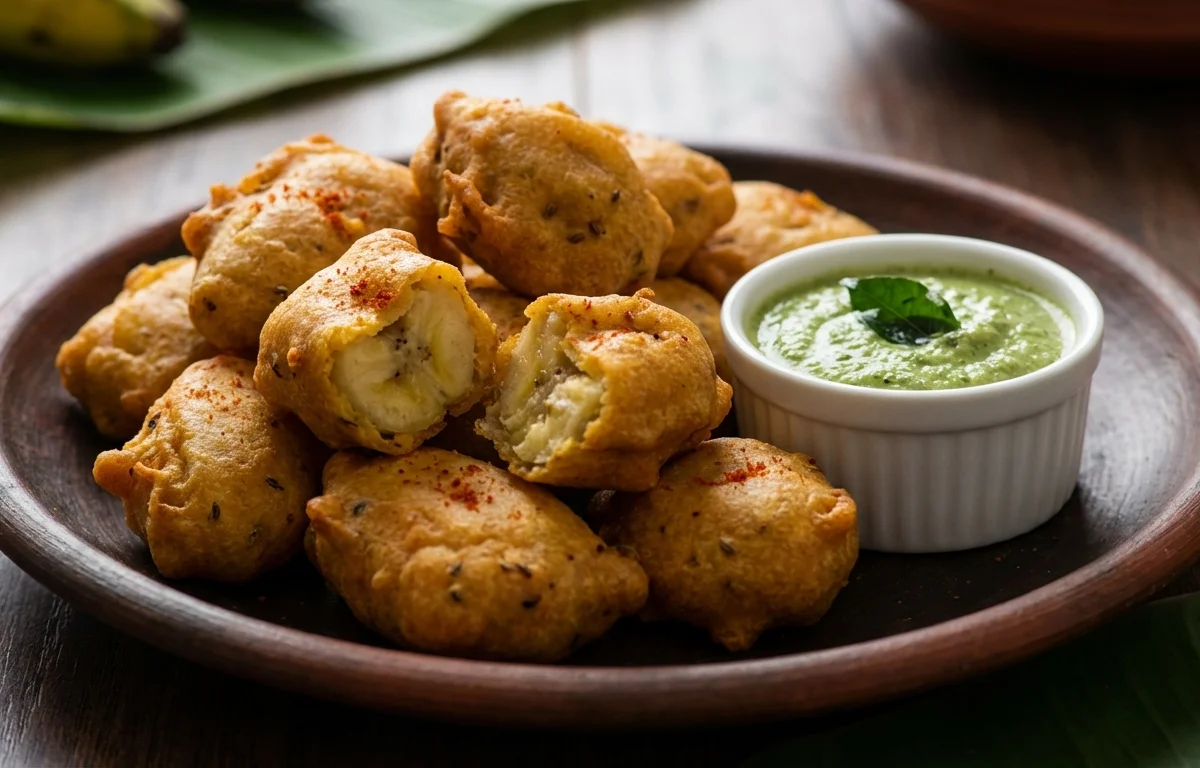
Ready to try it? Here are three simple preparations that showcase the versatility of the raw banana.
Want more gut-friendly foods in your diet, without the guesswork?
Our meal planner can help you incorporate ingredients like raw banana and other prebiotic-rich foods into a balanced week. Get custom plans, smart grocery lists, and meals designed for your health goals.
Build my weekly plan →SOURCES & REFERENCES · 3
One more thing
Eating well is rarely about willpower. It’s about having a short list of dinners you actually want to eat. Pick two from this list. Make them next week. The rest will follow.
If you want these on autopilot, our weekly meal planner can drop the picks above into your calendar with one click and build a single grocery list from the merged ingredients.
FREQUENTLY ASKED QUESTIONS
Frequently asked questions
Can you eat raw banana actually raw?
No, you should always cook it. Eaten raw, a green banana is unpleasantly starchy, bitter, and very difficult to digest. Cooking makes it tender, palatable, and unlocks its use as a vegetable.
Is raw banana better than ripe banana for diabetes?
Yes, significantly. A raw banana is high in resistant starch, which has a very low glycemic impact and doesn't spike blood sugar. A ripe banana is higher in sugars and has a higher GI. For blood sugar management, cooked raw banana is a much better choice.
What's the difference between a raw banana and a plantain?
They are very similar and often used interchangeably in cooking. Both are varieties of banana that are eaten cooked. Plantains tend to be larger and even starchier, while raw green bananas are simply the unripe version of the common dessert banana. In the kitchen, you can often substitute one for the other.
Does cooking destroy the resistant starch?
Cooking does convert some of the resistant starch into regular, digestible starch, which raises the glycemic index slightly. However, a significant amount remains, especially if you boil it. Letting it cool after cooking can even increase the resistant starch content again (a process called retrogradation).

ABOUT THE AUTHOR
Shreya Chatterjee
NUTRITION WRITER
Shreya is a nutrition writer and the voice behind The Nutrition Pen, where she turns evidence-based nutrition into simple, repeatable eating habits. Her writing focuses on practical food guidance — what to actually put on the plate — for readers who want to eat well without the noise.
Meet the editorial team →METHODOLOGY
How this article was created
Built using verified nutrition databases, culinary research, and traditional cooking knowledge — every claim is cross-referenced against the sources listed in the article.
· USDA data· Culinary research· Quality reviewed
Read our methodology →TRANSPARENCY
About this content
Articles are curated using trusted food databases (USDA FoodData Central, IFCT), culinary literature, and dietary guidelines, then structured by our editorial team for clarity, accuracy, and usefulness.
· Verified data sources· Culinary research· Quality reviewed
Read our editorial policy →RELATED RECIPES
Cook from this article
EXPLORE OUR MEALS
Meals that fit this article

AMERICAN · 1677 CAL
Almonds with Sliced Apple + supplement + iron

MEDITERRANEAN · 809 CAL
Greek Yogurt with Berries Almonds and Granola + supplement + iron

GENERAL_HEALTHY · 705 CAL
Banana with Peanut Butter Pregnancy + supplement + iron

MODERN · 982 CAL
Hummus with Crudits and Pita with Fresh Orange Snack + supplement + iron
TAGGED
KEEP READING