Most of us think of strawberries as a simple summer treat, but that sells them short. They're a true nutritional bargain. For almost no calories, you get a huge hit of vitamin C, a decent amount of fibre, and a glycemic index so low it's barely a blip on the radar. The best part? You don't have to do anything complicated. The healthiest way to eat a strawberry is just... to eat it.
↑ Fresh strawberries are low-calorie, high-fibre, and packed with vitamin C.
WHAT THIS ARTICLE COVERS
The everyday nutritional bargain
It feels like a trick, doesn't it? That something as sweet and delicious as a ripe strawberry is also one of the healthiest foods you can eat. But it's true. They are incredibly low in calories and sugar, yet packed with fibre and an almost absurd amount of Vitamin C.
Unlike other 'superfoods' that require special preparation, the strawberry asks nothing of you. You just wash it and eat it. It's the perfect example of how simple, whole food is often the best for us.
IN ONE LINE
A cup of strawberries is low-calorie, low-GI, and delivers a huge hit of vitamin C. Eat them fresh and whole for the biggest benefit.
Strawberry nutrition facts
Here's the nutritional breakdown for a 100-gram serving of fresh strawberries — that's about a cup of slices, or 5-6 medium-sized berries.
The two numbers that jump out are the calories and the vitamin C. At just 32 calories, it's one of the least energy-dense foods you can find. And with 58.8 mg of vitamin C, a single serving provides over 65% of your daily needs — more than you'd get from a small orange.
Are strawberries high in sugar?
This is a common worry with fruit, but for strawberries, it's mostly unfounded. A 100g serving has less than 5 grams of sugar. For comparison, that's about half the sugar of a similar-sized apple. Because that sugar is packaged with 2 grams of fibre, your body absorbs it slowly and gently. So no, strawberries are one of the lowest-sugar fruits you can eat.
Strawberry-flavored yogurts, syrups, and jams are often packed with added sugar. Always check the label — fresh or frozen berries are the best choice.
Strawberry's glycemic index
Glycemic index (GI) ranks how fast a food raises blood sugar on a 0–100 scale. Anything under 55 is considered 'low'. The GI of a strawberry is just 41. This is exceptionally low, meaning they provide a very steady, gentle release of energy with no dramatic spikes and crashes. It's why they are such a fantastic choice for anyone managing their blood sugar, or just looking for stable energy.
GLYCEMIC INDEX · STRAWBERRY vs COMMON FOODS
Strawberries are a very low-GI fruit
Cherries
whole fruit
LOW
Apple
whole fruit
LOW
Strawberry
whole fruit
LOW
Mango
whole fruit
LOW
Watermelon
whole fruit
HIGH
White bread
refined
HIGH
SCALE 0–90
04590
The best way to eat them
You can't really go wrong with a fresh strawberry, but a few simple habits help you get the most out of them.
01
Eat them fresh and whole.
This keeps the fibre and delicate nutrients intact. Sliced is great, but avoid juicing, which removes the fibre.
02
Don't add sugar.
A ripe strawberry is already perfectly sweet. Let that natural flavour shine without adding empty calories.
03
Pair with protein or fat.
A handful of nuts, a scoop of Greek yogurt, or a drizzle of cream makes them more filling and even gentler on blood sugar.
04
Wash just before eating.
Washing strawberries makes them absorb water and go soft quickly. For the best texture, rinse and pat dry right before you serve them.
05
Use frozen for smoothies.
Frozen strawberries are picked at peak ripeness and flash-frozen, locking in nutrients. They're perfect and often cheaper for blending.
What strawberries are good for
01
A huge vitamin C boost
A single 100g serving delivers over 65% of your daily vitamin C, crucial for immune function, skin health, and fighting cell damage.
65%
vit C DV
02
Fantastic for weight management
With just 32 calories and 2 grams of filling fibre, strawberries offer huge flavour and satisfaction for a tiny energy cost.
32
calories
03
Supporting stable blood sugar
The combination of a low GI (41), low carbs, and high fibre makes strawberries an ideal fruit for preventing energy spikes and crashes.
GI 41
low
04
Heart-healthy compounds
Strawberries are rich in antioxidants called anthocyanins (which give them their red color) that are linked to better heart health.
0g
sat fat
05
Aiding healthy digestion
The 2 grams of fibre per serving, along with high water content, helps keep your digestive system regular and healthy.
2 g
fiber
What to pair strawberries with
Strawberries' balance of sweet and tart makes them incredibly versatile. Pairing them with a source of protein or healthy fat turns a simple fruit into a satisfying, balanced meal or snack.
Eat freely — or be mindful?
Three ways to eat them
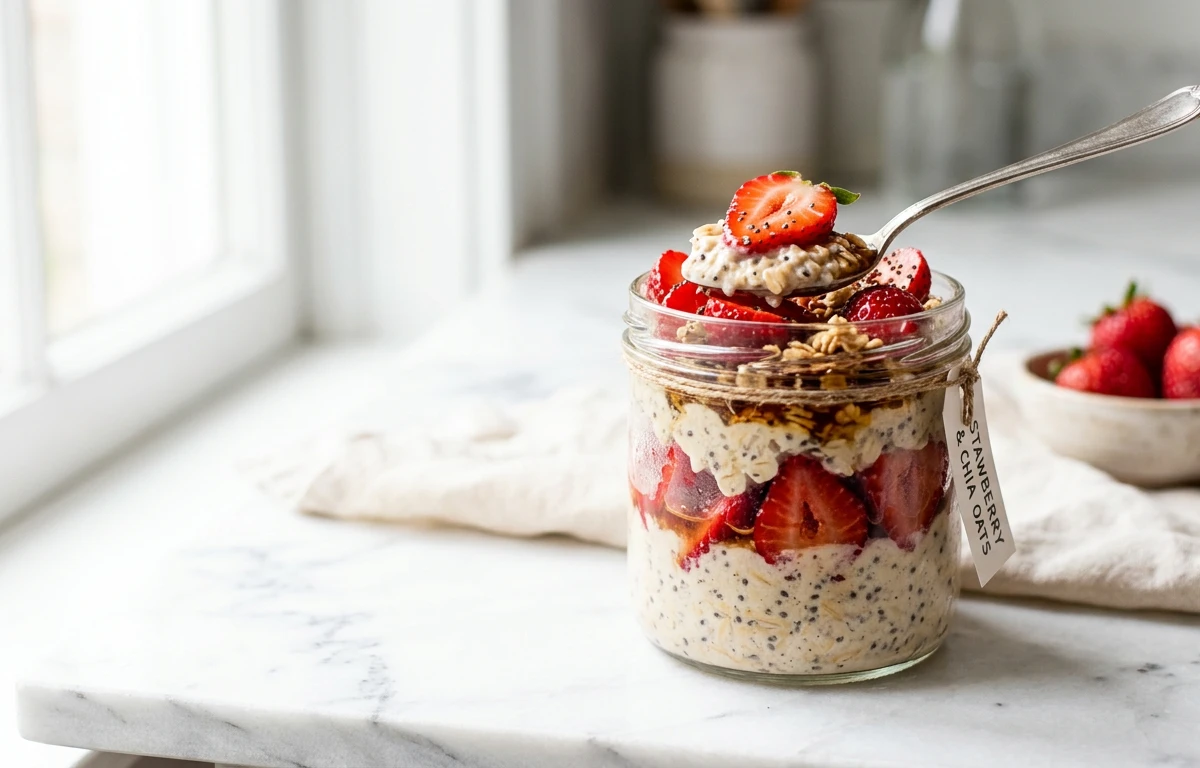
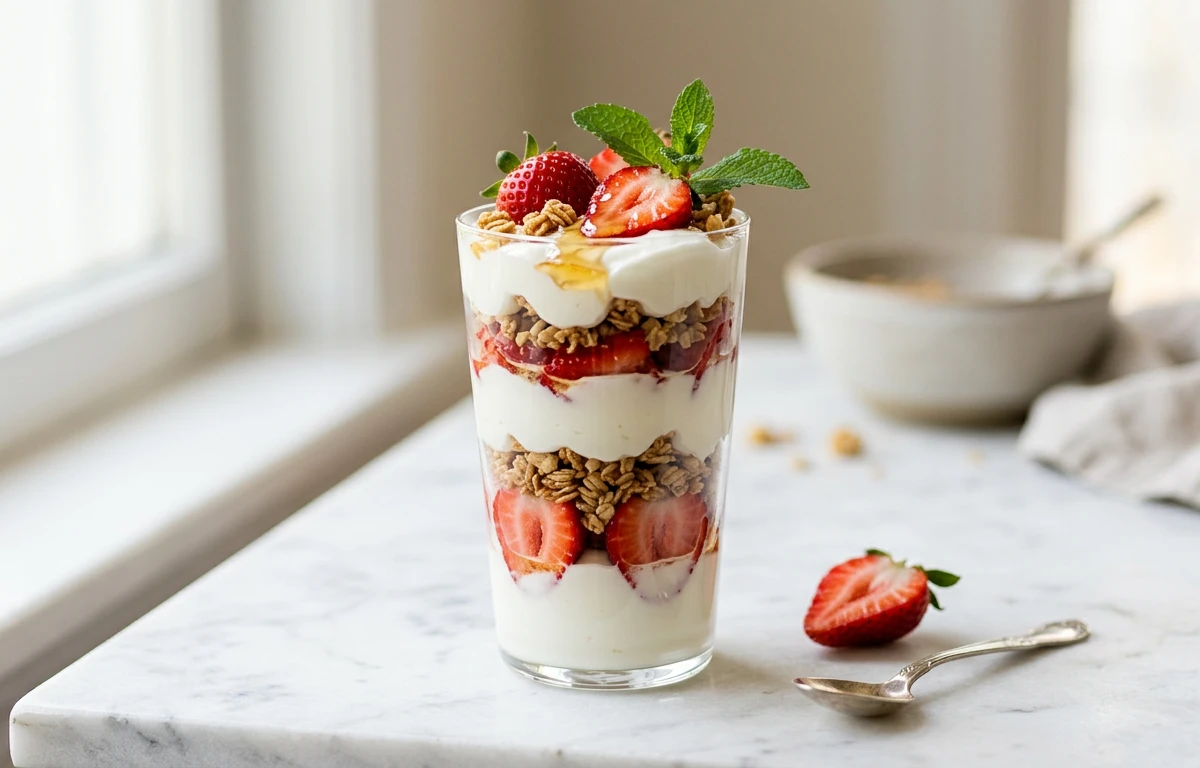
Beyond eating them straight from the punnet, here are three simple ways to work strawberries into your meals.

Want fruit worked into a balanced week — without the planning?
Our meal planner pairs fruit like strawberries with protein and fibre for steady energy, with portions and macros already calculated and a single grocery list at the end.
Build my weekly plan →SOURCES & REFERENCES · 3
One more thing
Eating well is rarely about willpower. It’s about having a short list of dinners you actually want to eat. Pick two from this list. Make them next week. The rest will follow.
If you want these on autopilot, our weekly meal planner can drop the picks above into your calendar with one click and build a single grocery list from the merged ingredients.
FREQUENTLY ASKED QUESTIONS
Frequently asked questions
Can people with diabetes eat strawberries?
Yes, absolutely. Strawberries are an excellent choice for people with diabetes. They have a very low glycemic index (41) and are low in carbohydrates, so they have a minimal impact on blood sugar levels.
Are strawberries good for weight loss?
Yes, they are fantastic for weight loss. A 100g serving has only 32 calories but contains fibre and water, which help you feel full. They're a great way to satisfy a sweet craving without consuming a lot of calories.
Are frozen strawberries as healthy as fresh?
Yes. Frozen strawberries are typically picked at their peak ripeness and flash-frozen, which preserves most of their nutrients, especially their high vitamin C content. For smoothies or baking, they are just as nutritious as fresh.
How many strawberries are in a serving?
A standard 100-gram serving is about 5-6 medium-sized strawberries, or roughly one cup of sliced berries. This portion provides all the benefits mentioned, including over 65% of your daily vitamin C.
METHODOLOGY
How this article was created
Built using verified nutrition databases, culinary research, and traditional cooking knowledge — every claim is cross-referenced against the sources listed in the article.
· USDA data· Culinary research· Quality reviewed
Read our methodology →TRANSPARENCY
About this content
Articles are curated using trusted food databases (USDA FoodData Central, IFCT), culinary literature, and dietary guidelines, then structured by our editorial team for clarity, accuracy, and usefulness.
· Verified data sources· Culinary research· Quality reviewed
Read our editorial policy →EXPLORE OUR MEALS
Meals that fit this article

AMERICAN · 1677 CAL
Almonds with Sliced Apple + supplement + iron

MEDITERRANEAN · 809 CAL
Greek Yogurt with Berries Almonds and Granola + supplement + iron

GENERAL_HEALTHY · 705 CAL
Banana with Peanut Butter Pregnancy + supplement + iron

MODERN · 982 CAL
Hummus with Crudits and Pita with Fresh Orange Snack + supplement + iron
TAGGED
KEEP READING