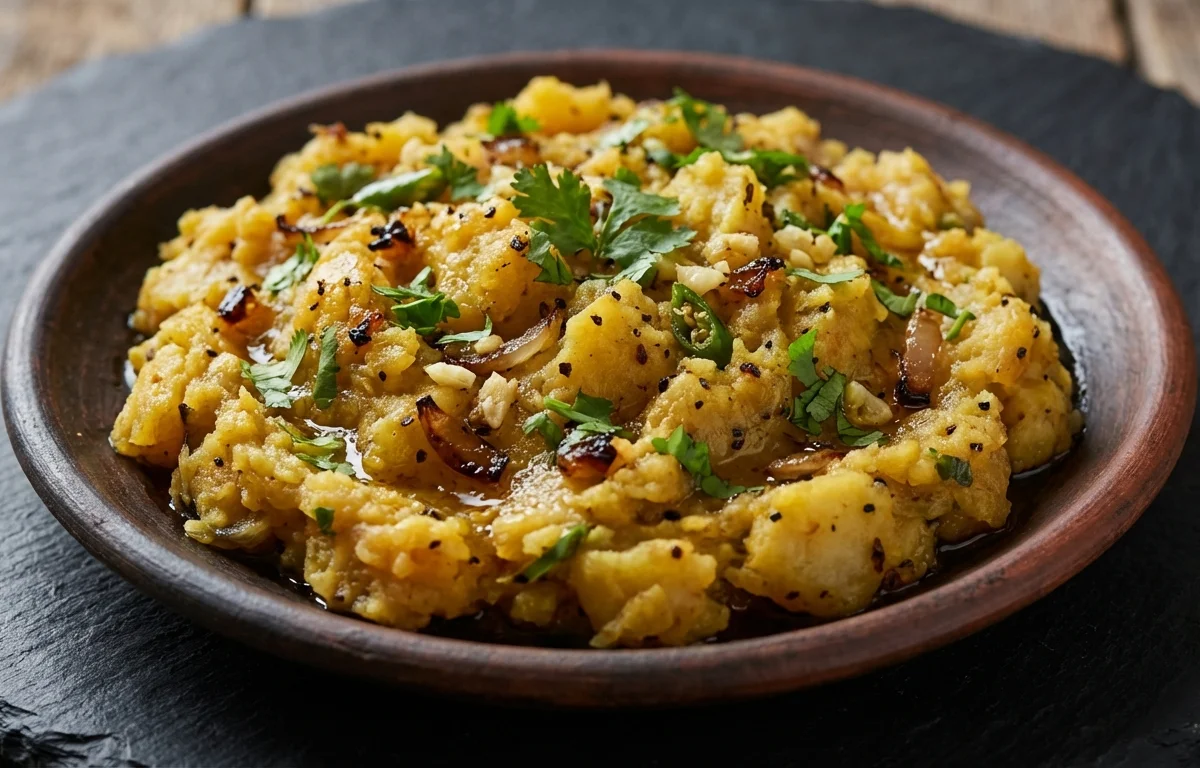
Aloo Poda
Smoky, rustic fire-roasted potatoes mashed with mustard oil, green chilies, and raw onions. This Odisha-style campfire classic is a bold and hearty side that brings an unmistakable charred flavor to the simplest of meals.
For 4 servings
- prep
Wash and prepare the potatoes.
Scrub the potatoes clean under running water. Pat them dry with a kitchen towel. Do not peel; the skin protects the flesh during roasting and adds to the smoky flavor.
TIPChoose starchy potatoes like Russet for the fluffiest mash, or Yukon Gold for a slightly creamier texture. - roast · ~25 min
Roast the potatoes directly over flame or in the oven.
1.For open flame: place potatoes directly on a gas burner or charcoal grill over medium heat.2.Turn every 5 minutes using tongs until the skin is completely charred and the inside is soft (20-25 min).3.For oven: roast at 200°C (400°F) on a baking tray for 40-45 min, turning halfway.TIPTo test doneness, insert a knife into the center. It should slide through with zero resistance. - rest · ~5 min
Cool the potatoes slightly and peel.
Let the charred potatoes rest for 5 minutes until cool enough to handle. Gently scrape off the blackened skin with a knife or your fingers. It should come off easily, leaving the smoky flesh behind.
TIPDon't rinse the potatoes after peeling; you'll wash away the smoky flavor. - mix · ~2 min
Mash and mix the potatoes.
Place the peeled potatoes in a mixing bowl. Roughly mash them with your hands or a fork, leaving some small chunky bits for texture. Add chopped onion, green chili, mustard oil, and salt. Mix well until everything is evenly combined.
TIPThe warmth of the potatoes takes the raw edge off the mustard oil and onion, so do this while they're still slightly hot. - garnish
Garnish and serve warm.
Sprinkle chopped coriander leaves over the mixture. Give it one final gentle toss and serve immediately with pakhala or rice and dal.
What to keep in mind.
7 tips from the recipe — small details that make a real difference to the final dish.
- 1For the most authentic smoky flavor, roast the potatoes directly over an open flame or charcoal, turning every 5 minutes until the skin is completely blackened.
- 2Use starchy potatoes like Russet for a fluffier mash, or Yukon Gold for a creamier texture; avoid waxy potatoes as they become gluey when mashed.
- 3Test doneness by inserting a knife into the thickest part of the potato — it should slide through with zero resistance.
- 4Peel the potatoes while they are still warm; the charred skin comes off easily and the residual heat helps the mustard oil and onions meld.
- 5Do not rinse the peeled potatoes under water or you will lose the prized smoky flavor that defines this dish.
- 6Let the mustard oil sit on the warm potatoes for a minute before mixing to allow its pungent aroma to bloom fully.
- 7This dish can be made ahead and stored in the fridge for up to 2 days; bring to room temperature before serving to restore some of the smoky character.
Adapt it for your goals.
Vegan (already is)
Aloo Poda is naturally vegan as written — no changes needed. Serve with a side of roasted peanuts or a drizzle of lime juice for added richness.
high proteinHigh-protein
Stir in 1/4 cup crumbled paneer or roasted chickpeas after mashing for a protein boost, making it a more substantial meal or post-workout snack.
low oilLow-oil
Replace the mustard oil with a teaspoon of mustard seed powder mixed with water to create a paste; this reduces fat while keeping the characteristic pungent note.
jain friendlyJain-friendly
Skip the onion and replace with a pinch of asafoetida (hing) and finely chopped raw banana flower (kacche kele ka phool) for a similar textural crunch that adheres to Jain dietary restrictions.
herbaceous twistHerbaceous twist
Add 1 tablespoon of finely chopped fresh mint or curry leaves along with the cilantro for a fresh, aromatic lift that complements the smoky potato.
Why this is on our healthy list.
Rich in Resistant Starch
Cooling the potatoes after roasting and then reheating (or eating them warm) increases resistant starch content, which supports gut health and improves blood sugar response.
Good Source of Vitamin C
Potatoes cooked with their skin retain a significant amount of vitamin C, an antioxidant that supports immune function and collagen production.
Heart-Healthy Fats from Mustard Oil
Cold-pressed mustard oil contains monounsaturated and polyunsaturated fats, including omega-3 fatty acids, which can help reduce inflammation and support cardiovascular health.
Natural Electrolytes
The combination of potatoes (potassium) and onions provides natural electrolytes that help maintain fluid balance and muscle function, especially after sweating or exercise.
Frequently asked questions
Yes, roast at 200°C (400°F) for 40-45 minutes, turning halfway, until the skin is wrinkled and the potato yields easily to a knife. The smoky flavor will be milder but still delicious.