Aluchi Patal Bhaji
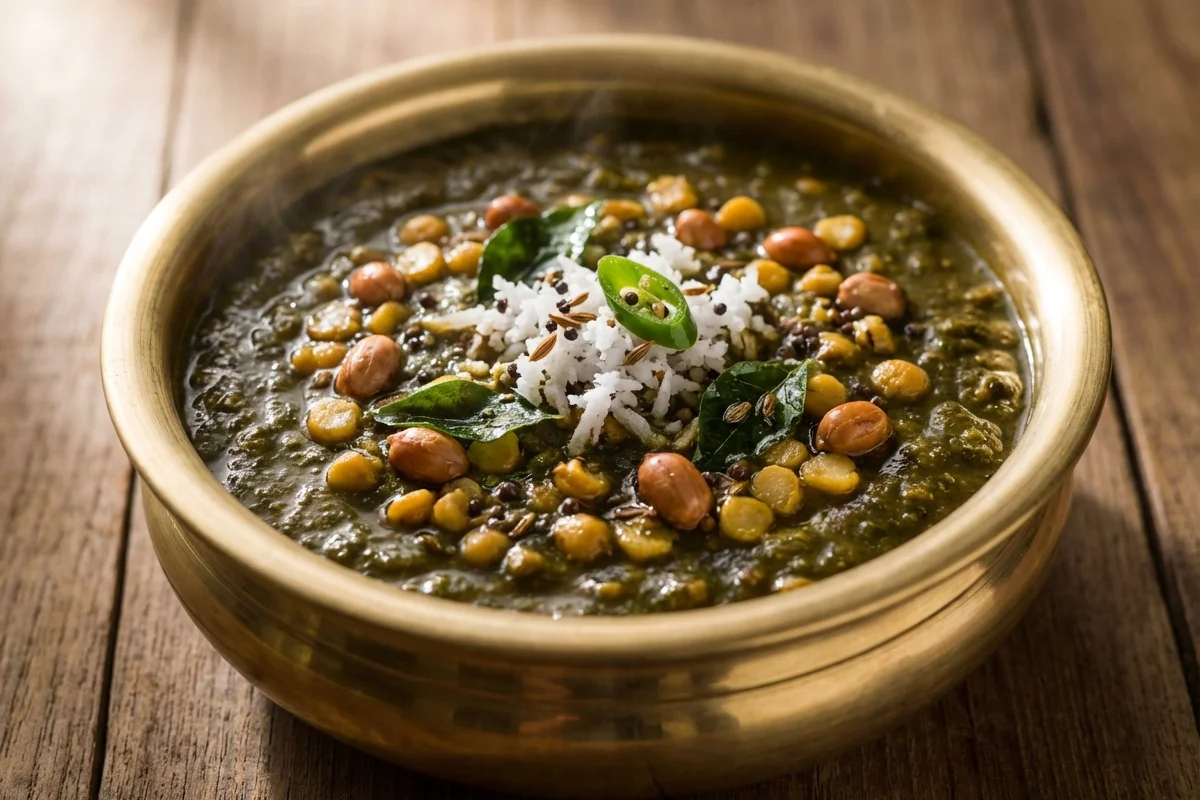
A homestyle Maharashtrian curry made with colocasia leaves, peanuts, chickpea flour, and tamarind-jaggery balance. It cooks into a smooth, tangy, lightly nutty bhaji that pairs beautifully with bhakri or steamed rice.
For 4 servings
- prep · ~15 min
Prep the leaves and peanuts.
1.Wash the colocasia leaves very well to remove any grit.2.Trim the thick stems and finely chop the leaves.3.Soak the peanuts in water for 15 minutes so they soften a little before cooking. - mix · ~2 min
Make a smooth gram flour slurry.
In a small bowl, mix the chickpea flour with a few tablespoons of water from the measured water to make a lump-free slurry.
TIPA smooth slurry thickens the bhaji evenly and prevents raw flour lumps. - saute · ~2 min
Make the tempering.
1.Heat oil in a deep pan over medium heat.2.Add mustard seeds and let them crackle.3.Add cumin seeds, asafoetida, turmeric powder, and garlic.4.Cook for 30 to 40 seconds until the garlic smells fragrant but not browned.TIPKeep the heat moderate so the garlic and spices do not burn. - boil · ~8 min
Cook the leaves with peanuts and spices.
1.Add the chopped colocasia leaves to the pan and stir well.2.Add soaked peanuts, green chili, the remaining water, salt, and red chili powder.3.Bring the mixture to a boil, stirring once or twice as the leaves wilt down. - simmer · ~15 min
Simmer until the leaves turn soft.
Lower the heat, cover loosely, and cook until the colocasia leaves and peanuts are tender and the raw edge of the leaves is gone.
TIPColocasia leaves must cook fully to avoid throat irritation. - mix · ~3 min
Add the slurry, tamarind, and jaggery.
1.Stir the chickpea flour slurry once and pour it into the pan in a thin stream.2.Add tamarind pulp and jaggery.3.Mix continuously so the bhaji stays smooth and evenly thickened. - simmer · ~10 min
Cook the bhaji until thick and glossy.
Simmer uncovered, stirring often, until the bhaji thickens to a spoon-coating consistency and the tangy, sweet, and nutty flavors come together.
TIPIf it gets too thick, add a splash of water and simmer for another minute. - serve
Serve the Aluchi Patal Bhaji hot.
What to keep in mind.
8 tips from the recipe — small details that make a real difference to the final dish.
- 1Wash colocasia leaves in several changes of water; grit often hides in the folds and can spoil the smooth texture.
- 2Chop the leaves finely so they break down evenly and give the bhaji its characteristic soft, almost velvety body.
- 3Do not skip fully cooking the leaves before adding tamarind; proper simmering helps prevent the itchy sensation taro leaves can cause.
- 4Pour the besan slurry in a thin stream while stirring constantly, or the bhaji can form small floury lumps.
- 5Keep the garlic just fragrant, not brown, so the tempering tastes sweet and mellow rather than bitter.
- 6The bhaji is ready when it looks glossy, coats the spoon, and the peanuts are tender enough to press easily.
- 7This tastes even better after a short rest, as the tamarind, jaggery, peanut, and garlic flavors settle together.
- 8Reheat gently with a splash of water because besan thickens the bhaji more as it cools.
Adapt it for your goals.
Jain
Skip garlic and asafoetida, and rely on green chili, cumin, tamarind, and peanuts for flavor while keeping the bhaji true to its sweet-tangy profile.
veganVegan
This bhaji is already naturally vegan if your asafoetida is wheat-free and uncompounded; ideal for a plant-based Maharashtrian meal.
spicierSpicier
Add an extra green chili or a little more red chili powder if you want the sweetness of jaggery and richness of peanuts to stand against more heat.
no peanutNo-peanut
Omit peanuts for an allergy-friendly version; the bhaji will be less nutty but still thick and flavorful from besan and the tempering.
Why this is on our healthy list.
Leafy Green Goodness
Colocasia leaves bring the benefits of leafy greens to the dish, along with fiber that makes the bhaji feel hearty and satisfying.
Plant-Based Protein Support
Peanuts and chickpea flour contribute plant protein, making this simple bhaji more filling than a greens-only curry.
Digestive Spice Base
Garlic, cumin, asafoetida, and turmeric are classic Indian cooking ingredients that add flavor while supporting a lighter, more balanced feel.
Frequently asked questions
If taro leaves are undercooked, they can leave an itchy feeling. Simmer them fully until very soft, and use the tamarind as directed.



.webp)