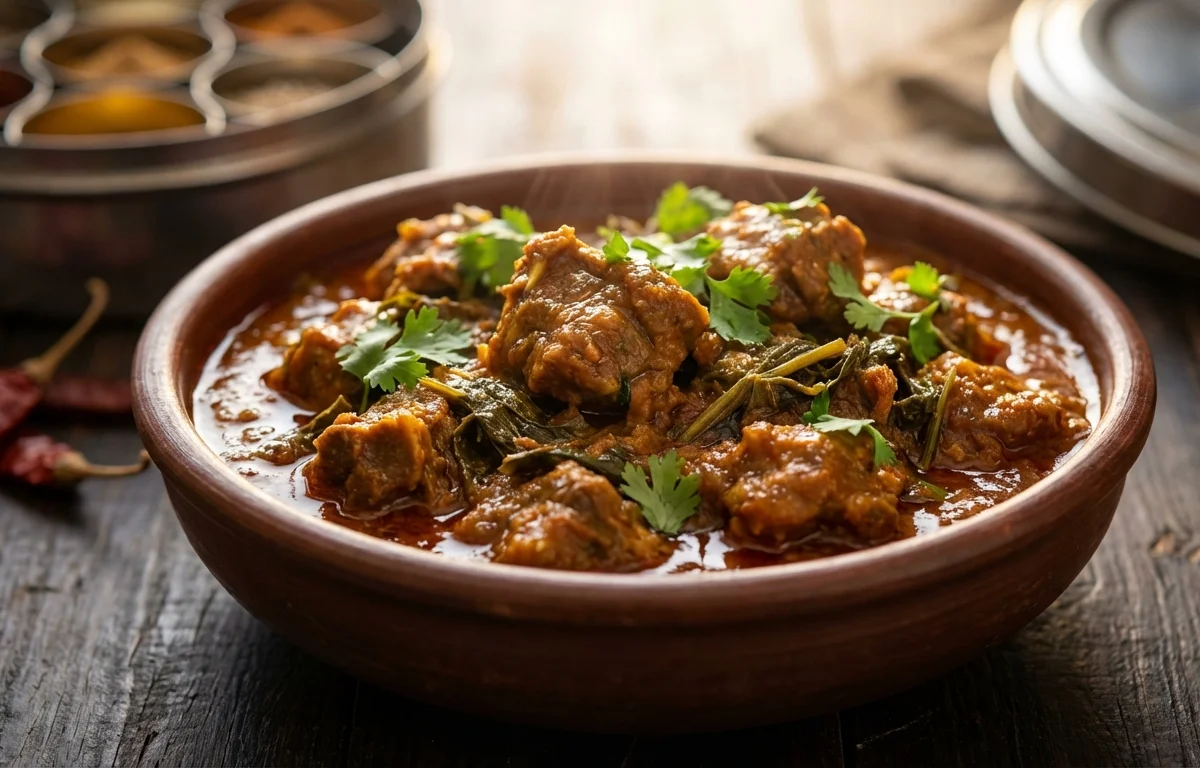
Ambada Gosht
Tender, slow-cooked mutton in a tangy, vibrant sorrel leaf gravy that packs a punch of earthy spices. This Andhra classic balances the rich depth of meat with the sharp citrusy zing of fresh gongura leaves, best mopped up with steamed rice or jowar roti.
For 4 servings
- pressure cook · ~25 min
Pressure cook the mutton.
1.Add cleaned mutton pieces, 0.25 tsp salt, 1 pinch turmeric powder, and 500 ml water to the pressure cooker.2.Close the lid and cook on medium heat for 4-5 whistles until the meat is fork-tender.3.Allow the pressure to release naturally. Set aside without draining the stock. - prep · ~10 min
Prep the gongura leaves.
1.Separate the gongura leaves from the stems.2.Wash thoroughly and roughly chop the leaves.3.In a small pan, add the chopped leaves with 2 tbsp water and cook on low heat for 5-6 minutes until wilted and mushy.4.Mash lightly and keep aside.TIPDo not overcook the leaves; they should retain their vibrant green color for the best tangy flavor. - temper · ~2 min
Make the tempering base.
1.Heat oil in a heavy-bottomed pan over medium heat.2.Add mustard seeds and let them splutter.3.Add cumin seeds, dried red chillies, and curry leaves. Sauté for 30 seconds until fragrant. - saute · ~15 min
Build the onion-tomato masala.
1.Add finely chopped onions to the tempering and sauté until deep golden brown (8-10 min).2.Add ginger-garlic paste and slit green chillies. Cook until the raw smell disappears (1 min).3.Add chopped tomatoes, red chili powder, coriander powder, cumin powder, and remaining turmeric. Mix well.4.Cook until the tomatoes turn soft and mushy, and the oil starts to separate from the masala (5-7 min).TIPDeep browning of the onions is crucial; it adds the rich, sweet depth that balances the tangy sorrel. - simmer · ~20 min
Combine and simmer the curry.
1.Add the cooked mutton along with its stock to the onion-tomato masala. Stir well.2.Bring to a boil, then add the mashed gongura leaves. Mix thoroughly.3.Simmer on low heat for 15-20 minutes, stirring occasionally, until the gravy thickens and coats the meat.4.Check seasoning and add the remaining salt if needed.TIPSimmer on low heat uncovered; this concentrates the flavors and melds the tangy notes of gongura with the rich mutton. - mix · ~2 min
Finish with garam masala.
1.Sprinkle garam masala over the curry.2.Gently fold it in and let it simmer for a final 2 minutes before turning off the heat.TIPAdding garam masala towards the end preserves its aromatic burst, elevating the earthy notes of the curry. - garnish
Garnish with fresh coriander leaves and serve hot.
What to keep in mind.
7 tips from the recipe — small details that make a real difference to the final dish.
- 1Use bone-in mutton for a richer, deeper gravy as the marrow adds body and flavor.
- 2Do not skip cooking the gongura leaves until mushy; mashing them releases their signature tang.
- 3Wait for the oil to separate from the onion-tomato masala before adding the mutton for a non-raw finish.
- 4Let the pressure release naturally from the cooker so the mutton stays tender and absorbs the stock.
- 5Simmer the curry uncovered for the full 15-20 minutes to thicken the gravy and marry the flavours.
- 6Add garam masala only at the very end to keep its aromatic top notes intact.
- 7For best results, let the curry rest for 10 minutes before serving so the flavours settle.
Adapt it for your goals.
Quick pressure-cooker version
Skip the separate pressure-cook step; instead, sauté the masala in the pressure cooker, add the raw mutton and gongura paste, and cook for 4-5 whistles. This saves time and builds flavour in one pot.
chicken gonguraChicken gongura
Substitute mutton with 500 g bone-in chicken thighs. Reduce pressure-cook whistles to 2-3 and simmer time to 10 minutes. Ideal for those who prefer lighter meat.
low oil versionLow-oil version
Reduce oil to 1 tbsp and dry-roast the onions until deeply caramelised, deglazing the pan with splashes of the mutton stock. A lighter choice for everyday cooking.
vegetarian gongura curryVegetarian gongura curry
Replace mutton with 250 g paneer (cubes, sautéed separately) or boiled chana dal. Omit the pressure-cook step entirely; add cooked legumes directly to the masala. Perfect for meat-free days.
Why this is on our healthy list.
Rich in Iron
Bone-in mutton is an excellent source of heme iron, which is more easily absorbed by the body than plant-based iron.
Good Source of Vitamin C
Gongura (sorrel) leaves are naturally rich in vitamin C, which supports immune function and enhances iron absorption from the mutton.
Antioxidant Spices
Turmeric, coriander, cumin, and curry leaves in the masala provide a variety of antioxidant compounds that help combat oxidative stress.
Supports Bone Health
The slow-cooking of bone-in mutton releases calcium, phosphorus, and collagen into the gravy, supporting joint and bone health.
Frequently asked questions
Yes, frozen gongura leaves work well—thaw them fully, drain excess water, and cook down as directed. Fresh leaves provide a brighter tang, but frozen is a fine substitute off-season.


.webp)