Arikadukka
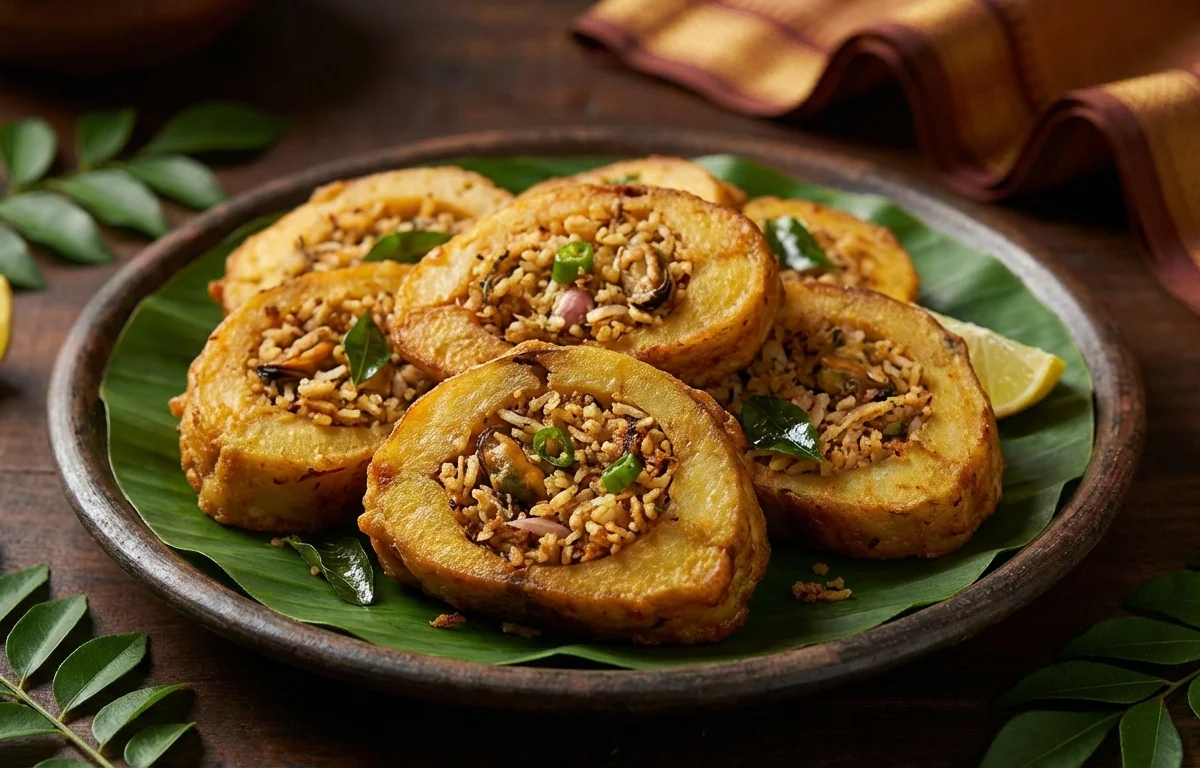
Arikadukka is a Malabar stuffed mussel snack where fresh mussels are packed with a seasoned rice paste, steamed until set, then lightly fried. It is crisp outside, soft inside, and full of coastal spice.
For 12 servings
- prep · ~15 min
Clean the mussels and open the shells.
1.Wash the mussels well and scrape off any dirt from the shells.2.Pry each shell open carefully, keeping the mussel attached to one half.3.Remove any grit from the flesh and set the mussels aside in their shells.TIPDiscard any mussels that smell off or do not look fresh. - mix · ~7 min
Grind the rice paste.
1.Add soaked rice, shallot, fennel seeds, cumin seeds, turmeric powder, red chili powder, black pepper, and salt to a grinder.2.Add a little water and grind to a thick, smooth paste.3.Keep the paste thick enough to hold inside the shell without slipping out.TIPDo not add much water or the filling will loosen and fall out while steaming. - assemble · ~10 min
Stuff the mussels.
1.Take one mussel in its shell and cover the flesh with a generous layer of rice paste.2.Press the paste gently so it sticks well to the mussel.3.Repeat with the remaining mussels and arrange them on a steaming plate. - steam · ~15 min
Steam until the filling is set.
Steam the stuffed mussels over medium heat until the rice coating is firm and cooked through, about 12 to 15 minutes. Remove and let them cool slightly.
TIPLeave a little space between the mussels so the steam cooks them evenly. - prep · ~3 min
Dust the steamed mussels with rice flour.
Lightly coat the steamed side of each mussel with rice flour. This helps the outside crisp nicely when fried.
- fry · ~7 min
Fry the mussels until lightly crisp.
1.Heat oil in a wide pan over medium heat.2.Place the mussels stuffed side down and fry in batches until the outside turns light golden and crisp, 2 to 3 minutes.3.Turn briefly to heat the shell side, then remove.TIPUse medium heat so the crust turns crisp without burning before the inside warms through. - serve
Serve hot.
What to keep in mind.
7 tips from the recipe — small details that make a real difference to the final dish.
- 1Pat the mussel flesh dry before stuffing so the rice paste grips the shell and seafood better.
- 2Grind the soaked rice to a thick paste; if it runs off a spoon, it is too loose for stuffing.
- 3Press the paste right up to the edges of the flesh to prevent gaps and cracking after steaming.
- 4Steam in a single layer with some space between shells so the rice coating sets evenly.
- 5Let the steamed mussels cool a few minutes before dusting with rice flour, or the coating can turn gummy.
- 6Fry stuffed side down first and do not move them early; this helps a firm crust form without sticking.
- 7These are best eaten hot, but you can steam them ahead and do the final frying just before serving.
Adapt it for your goals.
Spicier
Increase red chili powder and black pepper for a hotter Malabar-style bite that stands up well to the sweet mussels.
shallot heavyShallot-heavy
Add a few extra shallots to the paste for a sweeter, more aromatic filling with deeper Kerala-style flavor.
steam onlySteam-only
Skip the final frying for a softer, lighter version that still showcases the stuffed mussels and spice paste.
shallow friedShallow-fried
Use a little extra oil and fry a bit longer for a more even golden crust if you want a crisper snack.
Why this is on our healthy list.
Protein-Rich Seafood
Mussels provide quality protein, making this snack more satisfying than a plain rice-based fritter.
Mineral-Dense Shellfish
Mussels naturally supply important minerals, adding more nutritional value than many fried snack foods.
Digestive Spice Support
Fennel, cumin, black pepper, and shallots bring aroma and traditional digestive-friendly seasoning to the dish.
Frequently asked questions
It should be thick, smooth, and spreadable, holding firmly on the mussel without dripping or sliding off the shell.