Assamese Masoor Dal with Thekera
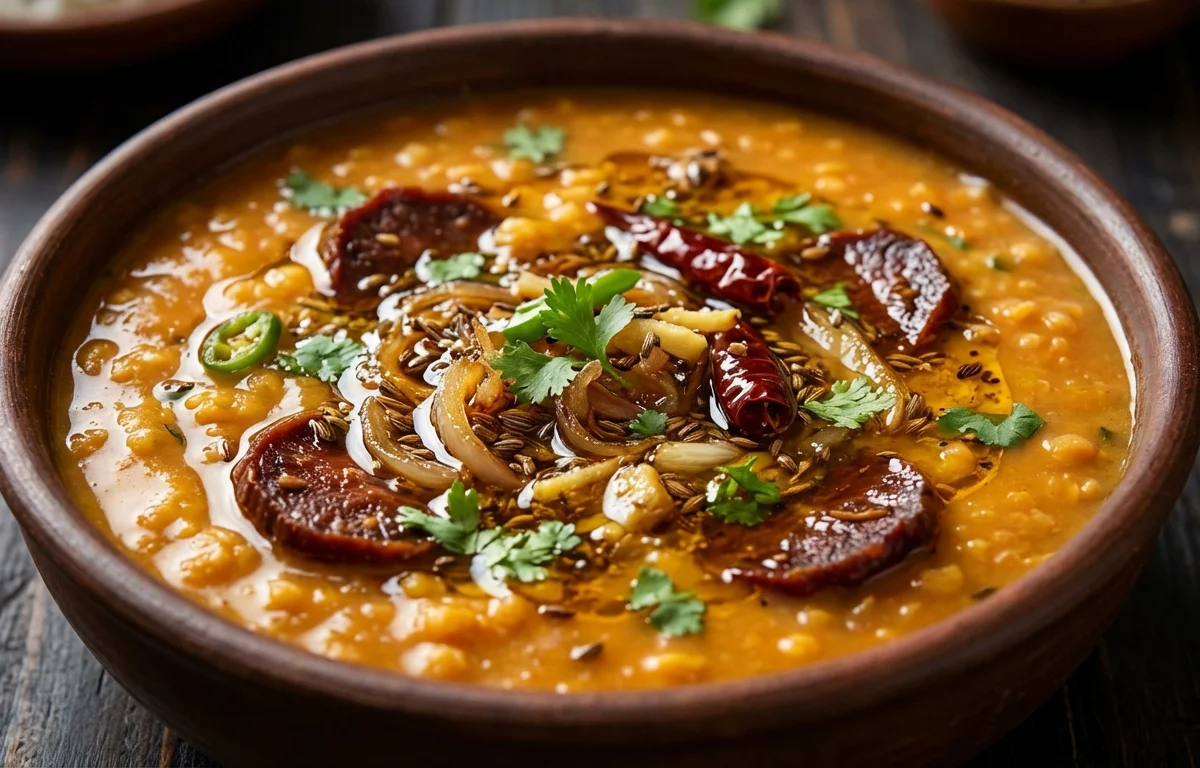
A light, tangy red lentil dal from Assam, brightened with thekera (dried garcinia pedunculata). This everyday comfort dish skips heavy spices, letting the earthy lentils and citrusy sourness shine through a simple mustard oil tempering.
For 4 servings
- prep · ~10 min
Soak the thekera and prep the lentils.
1.Soak dried thekera in 0.25 cup warm water for 10 minutes.2.Rinse masoor dal under running water until water runs clear. - boil · ~18 min
Boil the dal with turmeric.
In a deep pot, combine rinsed dal, 3.5 cups water, and turmeric powder. Bring to a rolling boil over high heat, then reduce to a simmer. Skim off any foam that rises to the surface. Cook until the lentils are soft and broken down, about 15-18 minutes.
TIPDon't add salt yet — it can slow the softening of lentils. Stir the dal well after it's cooked to achieve an even consistency. - simmer · ~7 min
Add thekera and salt, then simmer.
Squeeze the soaked thekera pieces to release their juices into the dal, then drop the pieces in. Add salt. Mash the dal gently with a ladle. Simmer for another 5-7 minutes so the sourness infuses evenly. The consistency should be slightly thin, like a light soup.
TIPThekera's sourness intensifies as it simmers. Start with less if unsure, and add more later. - temper · ~2 min
Make the mustard-garlic tempering.
1.Heat mustard oil in a small pan over medium-high heat until it reaches smoking point and the raw smell disappears.2.Reduce heat to low. Add mustard seeds and wait until they splutter (15-20 seconds).3.Add sliced garlic and dry red chilies. Sauté until garlic turns light golden, about 30 seconds.4.Immediately pour the hot tempering over the cooked dal.TIPThe tempering must be done at the very end and added hot — the sizzle when it hits the dal is what releases that final aroma. - garnish
Garnish with coriander leaves and serve.
Stir the tempering into the dal gently. Transfer to a serving bowl, sprinkle with chopped coriander leaves, and serve hot with steamed rice.
What to keep in mind.
7 tips from the recipe — small details that make a real difference to the final dish.
- 1Soak the thekera in warm water for at least 10 minutes to rehydrate and release its sour essence.
- 2Do not add salt during boiling; it toughens lentil skins and slows softening.
- 3Skim off the foam that rises when boiling the dal for a cleaner, smoother texture.
- 4Heat mustard oil until it reaches its smoking point to mellow its pungent raw aroma before tempering.
- 5Pour the hot tempering over the dal immediately — the sizzle locks in the fragrance.
- 6Mash the dal gently after simmering for a creamy consistency while keeping some texture.
- 7For a thinner soup-like dal, add an extra 1/4 cup of water during simmering.
Adapt it for your goals.
Low-oil
Reduce mustard oil to 1 teaspoon and dry-roast the mustard seeds before adding them to the dal for a lighter tempering that still delivers crunch and aroma.
high proteinHigh-protein
Add 1/2 cup of cooked, shredded chicken or paneer cubes during the last 5 minutes of simmering for a more substantial meal with extra protein.
veganVegan
This recipe is already vegan as written, but confirm your mustard oil is plant-based and skip any optional dairy sides.
jainJain
Omit the garlic and dried red chili; use a pinch of asafoetida (hing) and a few curry leaves in the tempering to keep the dish Jain-friendly while maintaining depth.
Why this is on our healthy list.
Rich in Plant Protein
Red lentils provide a good source of plant-based protein and dietary fiber, supporting muscle maintenance and digestive health.
Low in Fat
With only 2 teaspoons of mustard oil for the entire dish, this dal is naturally low in fat while still offering heart-friendly unsaturated fats.
Antioxidant Boost from Turmeric
A small pinch of turmeric adds curcumin, a compound known for its anti-inflammatory and antioxidant properties.
Digestive Aid from Thekera
Dried garcinia pedunculata (thekera) is traditionally used in Assamese cuisine to aid digestion and add a gentle, tangy flavor without artificial souring agents.
Frequently asked questions
Thekera is dried garcinia pedunculata, a sour fruit used in Assamese cooking. Substitute with 1 teaspoon of tamarind paste or 1 tablespoon of lemon juice added at the end.