
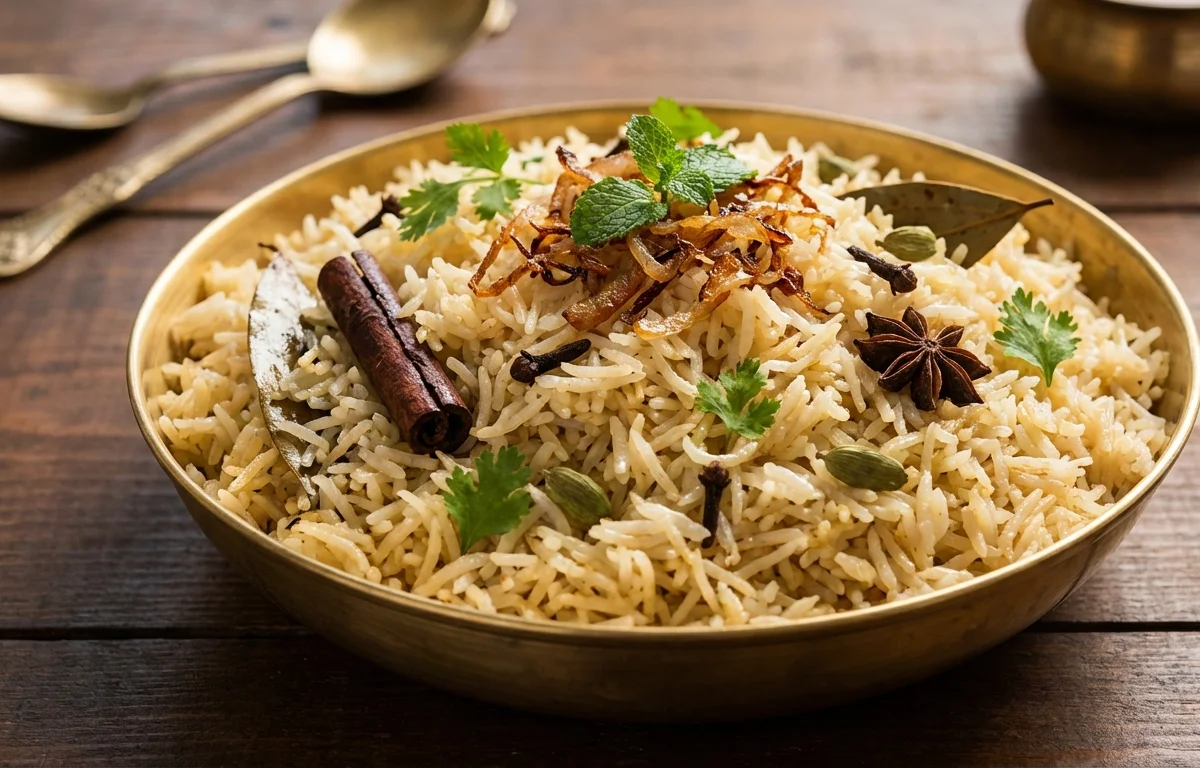
Bagara Rice
Fragrant Hyderabadi-style rice cooked with whole spices, herbs, and a gentle tempering of onions and green chilies. Lightly aromatic and fluffy, it fits beautifully beside rich curries and gravies.
For 4 servings
- prep · ~20 min
Soak the rice.
Rinse the basmati rice until the water runs mostly clear. Soak it in fresh water for 20 minutes, then drain well.
TIPDrained rice toasts better in the fat and stays fluffier after cooking. - temper · ~1 min
Heat the fat and crackle the whole spices.
1.Heat oil and ghee in a heavy pan over medium heat.2.Add shahi jeera, cloves, green cardamom, cinnamon, bay leaf, and black peppercorns.3.Cook until the spices turn fragrant and the jeera crackles, about 30 seconds.TIPKeep the heat moderate so the spices bloom without burning. - saute · ~7 min
Cook the onion, chilies, and paste.
1.Add the sliced onion and cook until lightly golden, 5 to 6 minutes.2.Add the green chilies and ginger-garlic paste.3.Cook for 1 minute until the raw smell fades. - saute · ~2 min
Toast the rice with herbs.
1.Add the drained rice to the pan and stir gently for 1 minute.2.Add mint, coriander leaves, and salt.3.Mix carefully so the grains stay intact. - boil · ~5 min
Add hot water and bring it up to a boil.
Pour in the hot water and stir once gently. Let the rice come to a steady boil over medium heat.
- steam · ~15 min
Cover and cook the rice on low heat.
Once most of the water is absorbed on top, cover the pan tightly and cook on low heat until the rice is tender and fluffy.
TIPDo not stir while the rice is steaming or the grains can break and turn sticky. - rest · ~5 min
Rest the rice before fluffing.
Turn off the heat and let the rice sit covered for 5 minutes. Fluff gently with a fork or flat spoon.
- serve
Serve the bagara rice hot.
What to keep in mind.
7 tips from the recipe — small details that make a real difference to the final dish.
- 1Drain the soaked basmati thoroughly before it hits the pan, or the grains can steam instead of lightly toasting.
- 2Let the whole spices sizzle only until fragrant; burnt cardamom or cloves will make the rice taste bitter.
- 3Cook the onions to light golden, not deep brown, so the rice stays delicately flavored in true bagara style.
- 4Use a heavy-bottomed pan with a tight lid to prevent scorching during the low-heat steaming stage.
- 5After adding hot water, stir just once gently; repeated stirring can break the long grains and make them sticky.
- 6Rest the rice covered for 5 minutes before fluffing so the trapped steam finishes cooking the center of each grain.
- 7If making ahead, cool the rice uncovered first, then refrigerate and reheat with a spoon of water to revive the softness.
Adapt it for your goals.
Vegan
Replace the ghee with more oil for a fully plant-based version that still keeps the classic spiced rice character.
low oilLow-oil
Reduce the oil slightly and use a good heavy pan; the rice will be a bit lighter while still carrying the spice aroma.
spicierSpicier
Add extra slit green chilies or a few more peppercorns if you want the rice to stand up to rich salan or korma.
onion freeOnion-free
Skip the sliced onion for a plainer, lighter bagara rice that pairs especially well with boldly flavored gravies.
Why this is on our healthy list.
Herb-Forward Aromatics
Fresh mint and coriander add flavor and freshness, letting the dish taste vibrant without relying only on heavy richness.
Gentle Whole Spice Benefits
Cloves, cinnamon, cardamom, peppercorns, and shahi jeera contribute aroma and plant compounds while seasoning the rice naturally.
Lighter Than Rich Pulaos
This rice uses a modest tempering of oil and ghee and no cream, nuts, or fried garnishes, keeping it comparatively light.
Frequently asked questions
Usually the rice was not drained well, was stirred too much after adding water, or cooked with too much moisture for the pan used.


