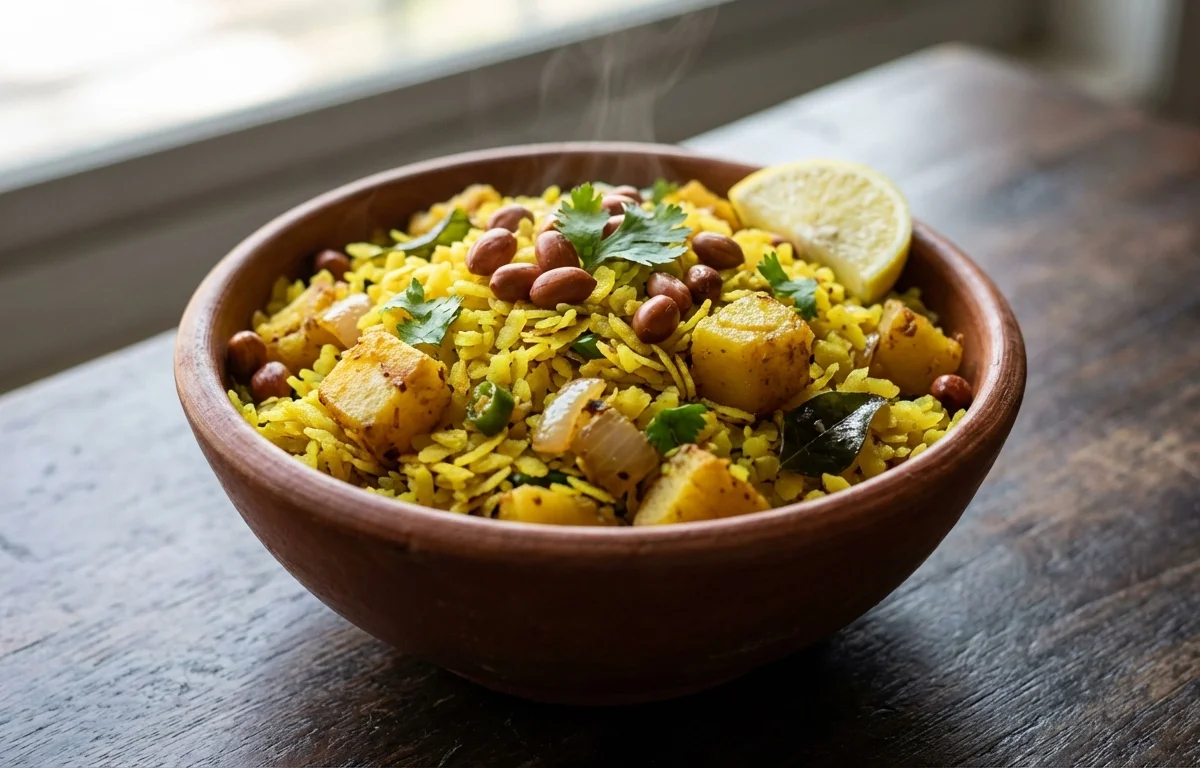
Batata Poha
Light, fluffy flattened rice tossed with tender potatoes, onions, peanuts, curry leaves, and a squeeze of lemon. This Maharashtrian favorite makes a comforting breakfast that feels hearty without being too heavy.
For 4 servings
- prep · ~10 min
Rinse the poha and let it soften.
1.Place the poha in a colander and rinse it quickly under running water.2.Gently toss with salt and sugar while it is still moist.3.Set it aside for 8 to 10 minutes until the flakes soften but stay separate.TIPDo not soak the poha in a bowl of water or it will turn mushy. - temper · ~3 min
Make the tempering.
1.Heat oil in a wide pan over medium heat.2.Add peanuts and cook until lightly crisp, about 1 to 2 minutes.3.Add mustard seeds and let them splutter.4.Add cumin seeds, curry leaves, and green chili and cook for 20 to 30 seconds. - saute · ~11 min
Cook the onion and potato.
1.Add onion and cook until soft and translucent, about 3 minutes.2.Add potato and turmeric powder and mix well.3.Cover and cook on low heat, stirring now and then, until the potato is tender, about 6 to 8 minutes.TIPCut the potato small so it cooks quickly and blends evenly through the poha. - mix · ~3 min
Mix in the poha.
Add the softened poha to the pan and toss gently until the yellow color spreads evenly and everything is well mixed. Cook for 2 to 3 minutes on low heat so the poha warms through without drying out.
- garnish · ~1 min
Finish with lemon, cilantro, and coconut.
Turn off the heat and sprinkle in lemon juice, cilantro, and fresh coconut. Toss lightly and let it sit for 1 minute before serving.
- serve
Serve the batata poha warm.
What to keep in mind.
7 tips from the recipe — small details that make a real difference to the final dish.
- 1Use thick poha only; thin poha turns pasty after rinsing and resting.
- 2After rinsing, fluff the poha with fingers instead of stirring with a spoon.
- 3Fry the peanuts first and well so they stay crunchy after mixing into the poha.
- 4Dice the potatoes small and evenly so they soften in the pan without overcooking the onions.
- 5Keep the heat low once poha is added; high heat makes it dry and break.
- 6Add lemon juice only after switching off the flame to keep its fresh, bright taste.
- 7If the poha seems dry after resting, sprinkle a tablespoon or two of water before tossing.
Adapt it for your goals.
Low-oil
Reduce the oil slightly and dry-roast the peanuts separately; good if you want a lighter breakfast with the same texture contrast.
no onionNo-onion
Skip the onion for a simpler, faster version that still keeps the classic potato, peanut, and curry leaf flavors.
jainJain
Omit onion and potato, then add diced raw banana or soaked peas if preferred; useful for Jain-style adaptations.
extra spicyExtra-spicy
Use more green chili or add a pinch of red chili powder for a sharper, hotter Maharashtrian-style kick.
Why this is on our healthy list.
Balanced Morning Energy
Poha and potatoes provide easy-to-digest carbohydrates, making this a filling breakfast that feels light yet sustaining.
Plant Protein and Good Fats
Peanuts add some protein and satisfying fats, which help make the dish more hearty and complete.
Includes Fresh Herbs and Spices
Curry leaves, cilantro, green chili, turmeric, and lemon bring flavor along with beneficial plant compounds.
Frequently asked questions
It usually happens when poha is soaked instead of quickly rinsed, or when thin poha is used. Thick poha and a short rest give the best fluffy texture.



.webp)