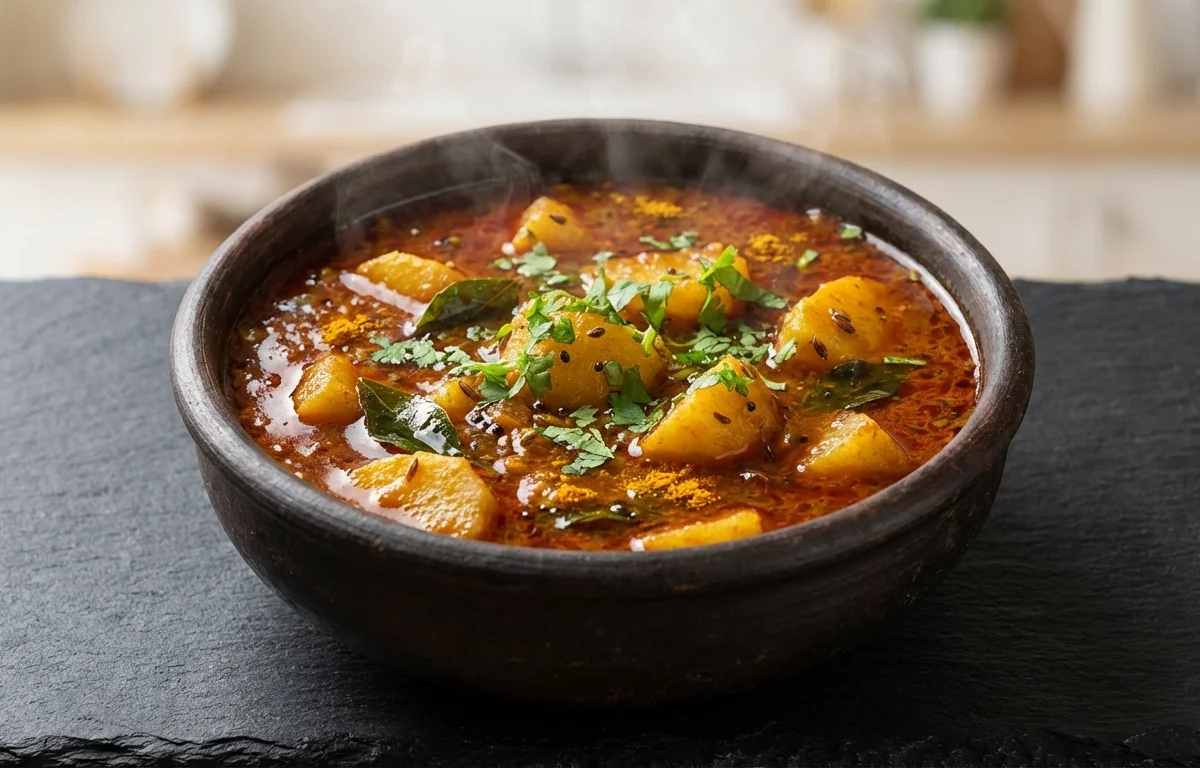
Batata Rassa Bhaji
A comforting Maharashtrian potato curry with a thin, spiced coconut-based gravy. Tender potato cubes swim in a fragrant, lightly tangy rassa that gets its depth from a freshly ground masala paste. A staple in Maharashtra, it pairs beautifully with puri, chapati, or steaming hot steamed rice.
For 4 servings
- prep · ~10 min
Boil the potatoes.
1.Place cubed potatoes in a saucepan, cover with water, and bring to a boil.2.Cook until fork-tender (about 8-10 minutes). Drain and set aside. - temper · ~6 min
Make the tempering.
1.Heat oil in a pan over medium heat until shimmering.2.Add mustard seeds and let them splutter (30 sec).3.Add cumin seeds, curry leaves, and asafoetida. Sauté until fragrant (30 sec).4.Add chopped onions and cook until translucent (4-5 min).TIPLet the mustard seeds fully splutter before adding other spices — this releases their nutty flavor. - saute · ~6 min
Build the masala base.
1.Add ginger-garlic paste and sauté until the raw smell disappears (1 min).2.Add chopped tomatoes, turmeric powder, and red chili powder.3.Cook until tomatoes soften and oil starts to separate (4-5 min). - mix · ~2 min
Prepare the coconut paste.
While the masala cooks, grind the grated fresh coconut with 2-3 tablespoons of water to a smooth paste.
- simmer · ~12 min
Simmer the rassa.
1.Add the coconut paste to the pan and stir well. Cook for 2 minutes.2.Pour in water, add slit green chilies, tamarind paste, and salt. Stir to combine.3.Add the boiled potatoes, bring to a gentle simmer, and cook uncovered for 8-10 minutes until the gravy thickens slightly.TIPThe gravy should remain thin and soupy — it's meant to be a rassa, not a thick curry. - garnish · ~2 min
Finish and garnish.
Turn off the heat. Garnish generously with chopped coriander leaves and let it rest for 2 minutes before serving.
- serve
Serve hot.
Ladle into bowls and serve hot with puri, chapati, or steamed rice.
What to keep in mind.
6 tips from the recipe — small details that make a real difference to the final dish.
- 1Boil the potato cubes just until fork-tender to prevent them from breaking apart in the rassa.
- 2Grind the fresh coconut paste very smooth for a silky gravy; add water sparingly while grinding.
- 3Let the mustard seeds fully splutter before adding the next ingredients to unlock their nutty aroma.
- 4Cook the masala base until the oil visibly separates for deep, well-rounded flavor.
- 5The gravy should be thin and soupy — resist the urge to thicken it, as rassa is meant to be sipped.
- 6Adjust the tang by adding tamarind paste in small increments; start with 1 teaspoon and taste.
Adapt it for your goals.
Vegan
This recipe is already vegan since no dairy is used. Ensure your asafoetida is gluten-free if needed.
low oilLow-oil
Reduce oil to 1 teaspoon and dry-roast the mustard and cumin seeds briefly before adding the onion for a lighter version.
high proteinHigh-protein
Add a handful of boiled chickpeas or paneer cubes along with the potatoes for extra protein without altering the rassa flavor.
gluten freeGluten-free
Confirm your asafoetida is labeled gluten-free (some brands contain wheat flour), and serve with rice or gluten-free roti.
extra spicyExtra-spicy
Increase red chili powder to ½ teaspoon and use 3-4 slit green chilies for a fiery rassa that pairs well with mild breads.
Why this is on our healthy list.
Rich in Fiber
Potatoes with skin provide dietary fiber that supports digestion; peeled cubes still contribute moderate fiber to the curry.
Good Source of Potassium
Potatoes are an excellent source of potassium, important for heart health and muscle function.
Antioxidant Spices
Turmeric, curry leaves, and cumin seeds are rich in antioxidants that help combat inflammation and oxidative stress.
Low in Fat
With only 1 tablespoon of oil, this curry is naturally low in fat while still delivering deep flavor from coconut and spices.
Digestive Support
Asafoetida, ginger, and tamarind are traditionally used to aid digestion and reduce bloating in Maharashtrian cooking.
Frequently asked questions
Yes, use 2 tablespoons of unsweetened desiccated coconut soaked in warm water for 15 minutes, then grind into a paste.



.webp)