
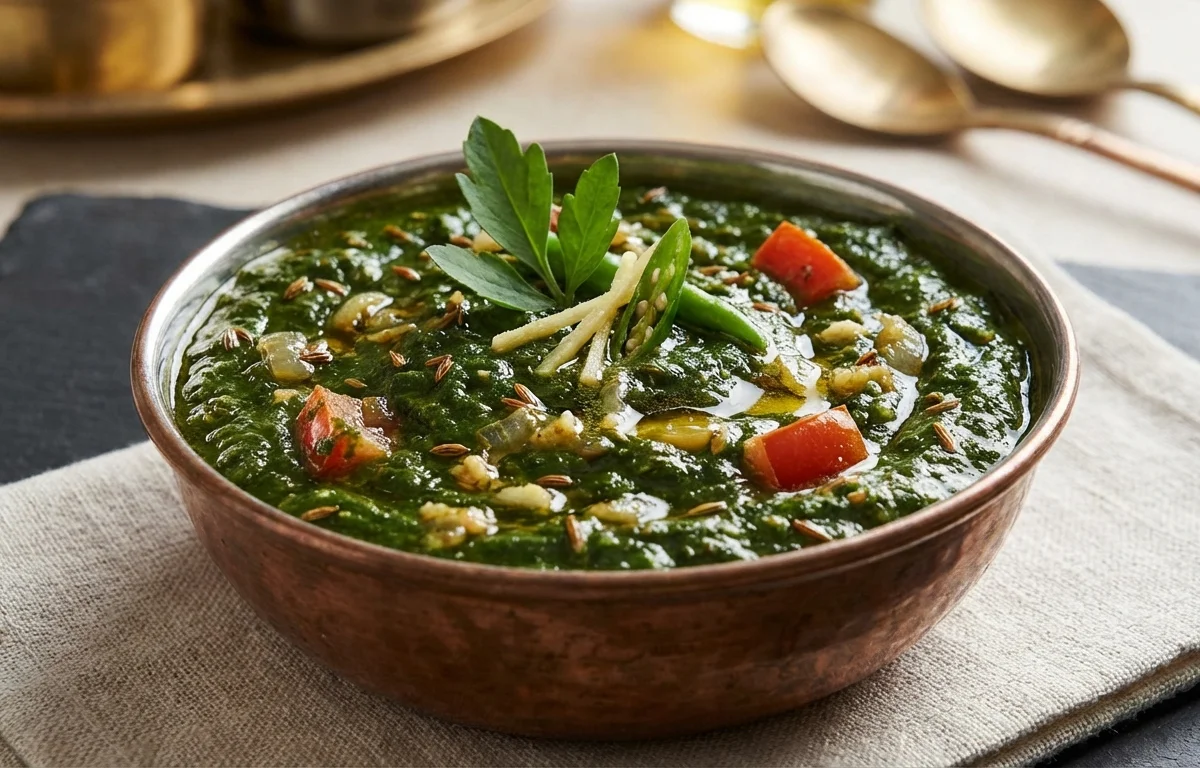
Bathua ka Saag
A rustic winter specialty from North India, this simple green saag celebrates the earthy, mineral-rich flavor of tender bathua leaves. Slow-cooked with just a whisper of garlic, green chilies, and a buttery maize flour finish, it delivers a soft, velvety texture that pairs beautifully with corn rotis and a dollop of fresh white butter.
For 4 servings
- prep
Wash and chop the bathua leaves.
Pick through the bathua, discarding any thick, tough stems. Wash the tender leaves and thin stems thoroughly in several changes of water to remove all grit. Drain well and roughly chop.
TIPChoose bathua with slender stems — if the stems are thick and fibrous, strip the leaves and discard the stems entirely. - boil · ~20 min
Boil the bathua until tender.
1.Place the chopped bathua in a deep pan or kadhai.2.Add ¼ cup water and salt, then set over medium heat.3.Once it comes to a simmer, cover and let it cook until the leaves are completely soft and wilted (15-20 minutes).4.Remove the lid and cook off any excess liquid until the greens are moist but not watery.TIPBathua releases its own moisture as it cooks. The finished greens should be soft and just coated with liquid, not swimming in it. - mix · ~3 min
Mash the greens and add maize flour.
Crush the cooked bathua with a wooden churner or potato masher until roughly broken down. Sprinkle the maize flour evenly over the warm greens and stir vigorously to incorporate without lumps.
TIPStir the maize flour into warm (not cold) greens and keep stirring for a full minute to avoid a raw flour taste. - simmer · ~7 min
Simmer the saag to finish.
Add the slit green chilies to the saag. Cover and let it gently simmer on low heat for 5-7 minutes. The maize flour will cook and bind the greens into a soft, cohesive mixture. Stir once halfway through.
- temper · ~2 min
Prepare a simple garlic tadka.
1.Heat the ghee in a small tadka pan over medium heat until shimmering.2.Add the finely chopped garlic and sauté until it turns a light golden brown and smells nutty (about 1 minute).3.Immediately pour the hot ghee and garlic over the saag.TIPDo not let the garlic burn — it turns bitter and will ruin the mild flavor. Golden is perfect. - mix
Stir the tadka through and serve hot.
Fold the garlicky ghee into the saag gently. Taste for salt and adjust if needed. Serve immediately while steaming hot.
What to keep in mind.
6 tips from the recipe — small details that make a real difference to the final dish.
- 1Bathua leaves must be washed in multiple changes of water to remove all grit and sand.
- 2Use only tender leaves and thin stems; discard thick, fibrous stems to avoid a stringy texture.
- 3Cook the bathua covered so its own steam softens the leaves evenly without extra water.
- 4Stir the maize flour into warm (not cold) greens to prevent lumps and a raw flour taste.
- 5Do not overcook the garlic in the tadka — golden brown is ideal; burnt garlic turns bitter.
- 6This saag thickens as it cools; if reheating, add a splash of water to restore its velvety consistency.
Adapt it for your goals.
Dairy-free
Replace ghee with any neutral oil (like mustard oil or sunflower oil) for the tadka. The dish remains just as flavourful and suitable for vegans or those avoiding dairy.
spicierSpicier
Increase the green chilies to 4–5, or add a pinch of red chili flakes to the tadka. Perfect for those who enjoy a more pronounced heat in their winter greens.
with gingerWith ginger
Add 1 teaspoon of finely grated fresh ginger along with the garlic in the tadka. Ginger lends a bright, peppery note that complements the earthy bathua beautifully.
creamierCreamier
Stir in 2 tablespoons of fresh cream or a dollop of thick yogurt just before serving. This softens the rustic texture and adds a subtle tang, ideal for pairing with plain rotis.
Why this is on our healthy list.
Rich in Minerals
Bathua (pigweed) is naturally high in iron, calcium, and magnesium, supporting bone health and oxygen transport in the body.
High in Dietary Fiber
This saag provides a good amount of fiber from both the bathua leaves and maize flour, aiding digestion and promoting a feeling of fullness.
Low in Calories
With only a small amount of ghee and no heavy cream or butter, this dish is a light yet satisfying way to enjoy leafy greens.
Gluten-Free
Naturally free from gluten-containing ingredients, this saag is suitable for those with gluten sensitivity or celiac disease.
Antioxidant-Rich Greens
Bathua leaves contain chlorophyll and flavonoids, which act as antioxidants and help combat oxidative stress.
Frequently asked questions
Yes, frozen bathua works well. Thaw and drain thoroughly before cooking, and reduce the added water since frozen leaves release more liquid.


