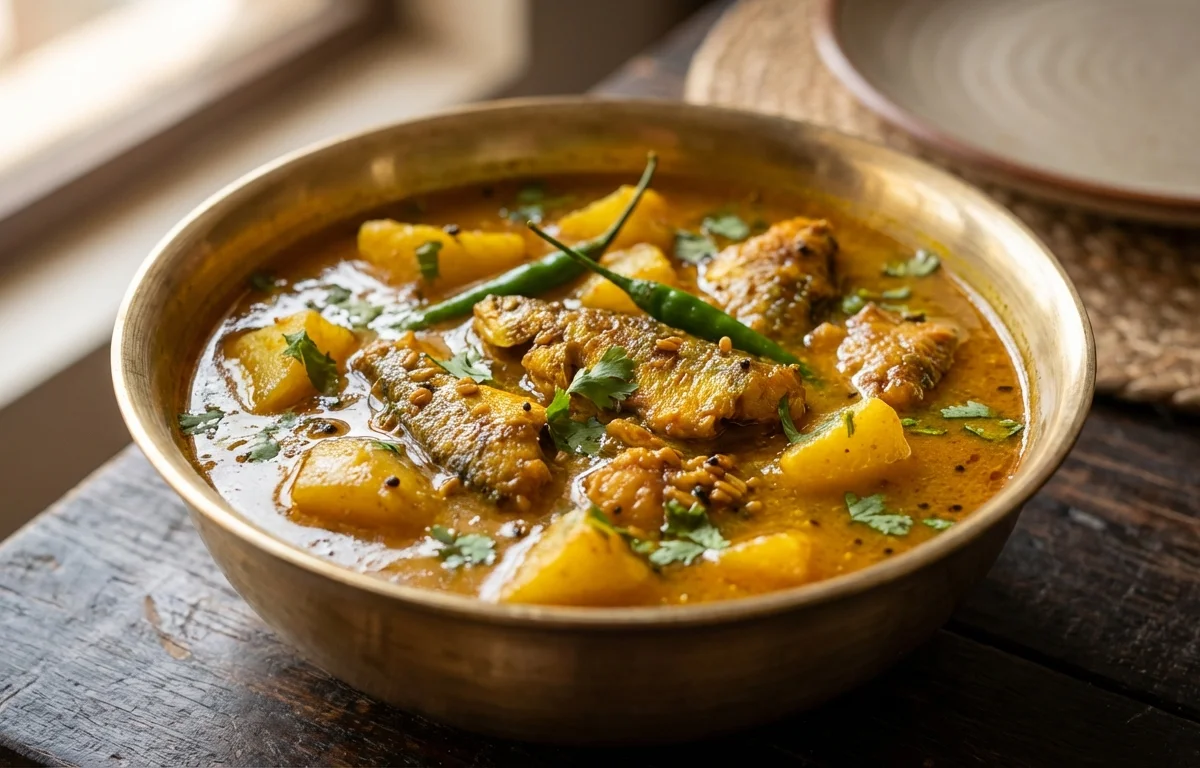
Koni Torkari
A rustic and comforting Bengali fish curry made with small freshwater fish, tender potatoes, and an aromatic five-spice blend. This simple, soupy curry, known as 'jhol', is a staple in Bengali households and pairs perfectly with steamed rice.
For 4 servings
Marinate and Fry the Fish
1.Gently rub the cleaned fish with 1/2 tsp of salt and 1/2 tsp of turmeric powder, ensuring each piece is lightly coated.2.Heat the mustard oil in a kadai or deep pan over medium-high heat. Wait until the oil is very hot and you see faint smoke rising. This removes the oil's raw pungency.3.Carefully slide the marinated fish into the hot oil, working in batches to avoid overcrowding. Fry for 2-3 minutes per side until they are golden brown and crisp.4.Using a slotted spoon, remove the fried fish and set them aside on a plate.Temper the Spices (Phoron)
1.In the same oil, lower the heat to medium. Add the bay leaf and the panch phoron.2.Allow the spices to sizzle and splutter for about 30-45 seconds until they become fragrant. Be careful not to burn them.Build the Curry Base
1.Add the sliced onions to the pan and sauté for 4-5 minutes, stirring occasionally, until they become soft and translucent with golden edges.2.Add the ginger and garlic pastes. Cook for another minute, stirring continuously, until their raw aroma disappears.3.Add the chopped tomatoes and cook for 3-4 minutes, until they break down and become soft and pulpy.Add Spices and Potatoes
1.Add the remaining 1/2 tsp turmeric powder, red chili powder, cumin powder, and coriander powder. Stir and cook the masala for 1-2 minutes until the spices are aromatic and you see oil separating at the edges.2.Add the potato wedges and the remaining 3/4 tsp of salt. Mix well to coat the potatoes thoroughly with the spice mixture. Sauté for 2 minutes.Simmer the Curry (Jhol)
1.Pour in 2 cups of warm water and stir everything together. Bring the mixture to a rolling boil.2.Once boiling, reduce the heat to a simmer, cover the pan, and cook for 8-10 minutes, or until the potatoes are tender when pierced with a fork.3.Gently place the fried fish pieces and the slit green chilies into the simmering gravy. Avoid vigorous stirring to keep the fish intact.4.Let the curry simmer uncovered for another 4-5 minutes. This allows the fish to absorb the flavors of the jhol.Garnish and Serve
1.Turn off the heat and sprinkle the freshly chopped coriander leaves over the curry.2.Let the Koni Torkari rest for at least 5 minutes for the flavors to meld.3.Serve hot with a side of steamed white rice.
What to keep in mind.
5 tips from the recipe — small details that make a real difference to the final dish.
- 1For authentic flavor, always heat mustard oil until it's lightly smoking before adding ingredients. This mellows its sharp, pungent taste.
- 2Do not over-fry the fish. A light golden crisp is perfect; over-frying can make it tough and dry inside the curry.
- 3The consistency of this curry ('jhol') is meant to be thin and soupy. If you prefer a thicker gravy, reduce the water slightly or mash a few potato pieces into the gravy.
- 4Handle the fried fish gently when adding it to the curry to prevent it from breaking apart.
- 5Panch Phoron is key to the dish's unique aroma. Do not skip it. It's readily available at Indian grocery stores.
Adapt it for your goals.
Vegetable Addition
Add other vegetables like cauliflower florets, drumsticks (shojne data), or eggplant (begun) along with the potatoes for a more wholesome curry.
Flavor ProfileFlavor Profile
For a richer, tangier flavor, you can add 1-2 tablespoons of fresh mustard paste (shorshe bata) along with the powdered spices in Step 4.
Fish TypeFish Type
While traditionally made with small fish, you can also use larger fish steaks like Rohu or Katla. Adjust frying time accordingly.
Why this is on our healthy list.
Rich in Omega-3 Fatty Acids
Freshwater fish is an excellent source of omega-3 fatty acids, which are crucial for brain health, reducing inflammation, and supporting a healthy cardiovascular system.
Anti-Inflammatory Properties
The use of turmeric (containing curcumin), ginger, and garlic provides powerful anti-inflammatory and antioxidant benefits, helping to combat oxidative stress in the body.
Excellent Source of Lean Protein
Fish provides high-quality, easily digestible protein that is essential for building and repairing tissues, muscle growth, and overall body function.
Aids in Digestion
Spices used in the curry, such as cumin, coriander, and fennel seeds (from panch phoron), are known to stimulate digestive enzymes and promote gut health.
Frequently asked questions
One serving of Koni Torkari (approximately 1 cup or 285g) contains around 350-400 calories, depending on the type of fish and the amount of oil used.