
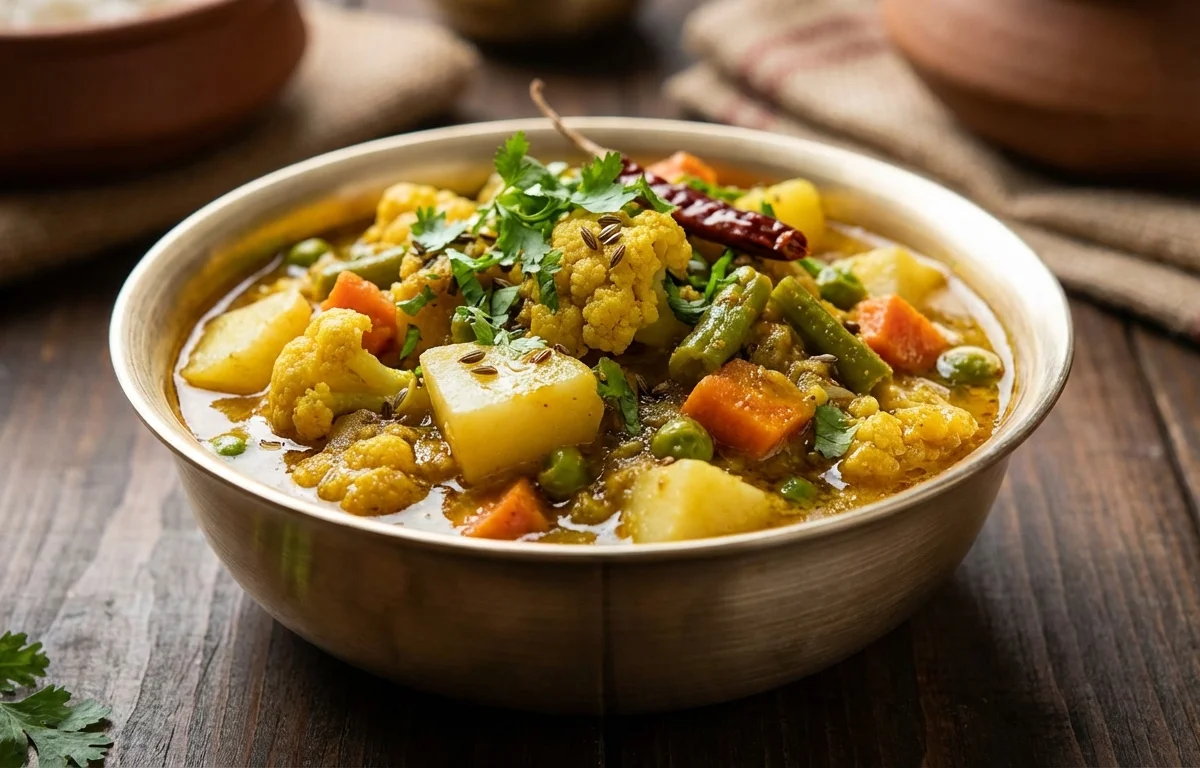
Sobji Torkari
A light Bengali mixed vegetable curry with potatoes, cauliflower, peas, and carrots simmered in a gently spiced gravy. It is homestyle, comforting, and pairs especially well with luchi, roti, or plain rice.
For 4 servings
- prep · ~10 min
Prep the vegetables and spices.
1.Peel and cube the potato and carrot into small even pieces.2.Cut the cauliflower into small florets and chop the tomato.3.Grate the ginger, slit the green chili, and measure the spices. - saute · ~2 min
Heat the mustard oil and start the tempering.
1.Heat mustard oil in a pan over medium heat until it just begins to smoke lightly.2.Lower the heat and add cumin seeds and bay leaf.3.Let the cumin crackle for a few seconds until fragrant.TIPHeating mustard oil well at the start softens its sharp raw taste. - saute · ~8 min
Cook the vegetables with the spice base.
1.Add ginger and green chili, then stir for 20 seconds.2.Add potato, cauliflower, and carrot. Cook for 5 minutes, stirring often.3.Add tomato, turmeric powder, red chili powder, cumin powder, coriander powder, and salt.4.Mix well and cook until the tomatoes soften and coat the vegetables. - simmer · ~15 min
Simmer the torkari until tender.
1.Add green peas, sugar, and water, then mix well.2.Bring the curry to a gentle boil over medium heat.3.Cover and simmer until the vegetables are tender and the gravy is light and flavorful.TIPKeep the gravy a little thin, as Bengali sobji torkari is usually light rather than heavy. - garnish · ~1 min
Finish with garam masala and coriander leaves.
Sprinkle in the garam masala and chopped coriander leaves. Stir gently and cook for 30 seconds more.
- serve
Serve hot.
Serve the sobji torkari hot with luchi, roti, or plain rice.
What to keep in mind.
7 tips from the recipe — small details that make a real difference to the final dish.
- 1Cut the potato, carrot, and cauliflower to similar small sizes so they finish cooking together in the light gravy.
- 2Let the mustard oil reach a light smoking point first; this mellows its pungency and gives the torkari its proper Bengali flavor.
- 3Cook the tomatoes until they lose their raw smell and cling to the vegetables before adding water, or the gravy will taste flat.
- 4Keep the simmer gentle after adding water so the cauliflower stays intact and the potatoes turn tender without breaking apart.
- 5If serving with luchi, leave the gravy slightly looser; for roti, simmer a few extra minutes for a more clingy consistency.
- 6Add the garam masala only at the end so its aroma stays bright instead of getting dulled during the simmer.
- 7This curry tastes even better after a short rest, so make it 30 minutes ahead if you want the vegetables to absorb the spices.
Adapt it for your goals.
Jhol-style
Add a little more water and keep the seasoning gentle for a thinner, brothier version that is especially good with rice.
winter mixed vegWinter-mixed-veg
Add radish, flat beans, or cabbage along with the existing vegetables for a more seasonal Bengali sobji torkari.
no onion no garlicNo-onion-no-garlic
This recipe already fits that style, making it ideal for a light satvik-style everyday curry with clean spice flavors.
spicierSpicier
Increase slit green chilies or a little red chili powder if you want more heat without changing the basic character of the dish.
Why this is on our healthy list.
Vegetable-Rich Meal
Potato, cauliflower, carrot, peas, and tomato make this curry a varied way to include multiple vegetables in one dish.
Fiber From Mixed Veg
Cauliflower, peas, carrots, and potatoes contribute fiber that can make the meal feel satisfying and balanced.
Light, Minimal-Oil Curry
With a modest amount of mustard oil and a thin gravy, this homestyle torkari stays lighter than many richer curries.
Phytonutrients From Spices
Turmeric, ginger, cumin, coriander, and green chili add aroma along with plant compounds from whole and ground spices.
Frequently asked questions
Yes. It keeps well for about 2 days in the refrigerator, and the flavor often improves as the vegetables absorb the light spice gravy.


