
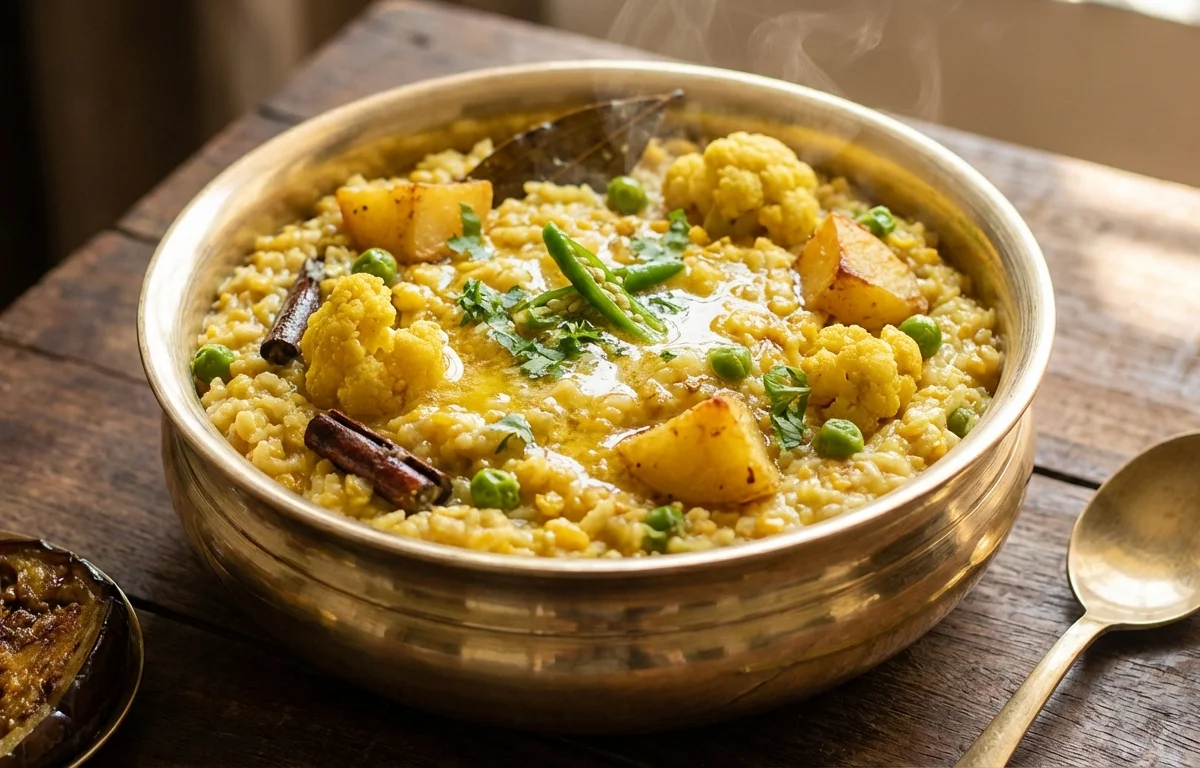
Bhaja Muger Khichuri
A comforting Bengali khichuri made with dry-roasted moong dal, gobindobhog rice, warm whole spices, ginger, and vegetables. Soft, fragrant, and lightly spiced, it is especially loved on rainy days and festive afternoons.
For 4 servings
- roast · ~8 min
Roast the moong dal.
Heat a dry pan over low to medium heat and roast the moong dal until lightly golden and nutty smelling. Transfer to a bowl, wash well, and soak it for 20 minutes.
TIPKeep the heat moderate so the dal toasts evenly and does not turn bitter. - prep · ~20 min
Wash the rice and prepare the vegetables.
1.Wash the gobindobhog rice gently until the water runs mostly clear.2.Soak the rice for 20 minutes, then drain.3.Peel and cube the potato.4.Cut the cauliflower into small florets and chop the tomato.5.Grate the ginger and slit the green chili. - saute · ~6 min
Fry the vegetables lightly.
1.Heat 1 tbsp ghee in a heavy pot over medium heat.2.Add the potato and cauliflower.3.Cook until the edges turn light golden, 4 to 5 minutes.4.Add the green peas and stir for 30 seconds.5.Remove the vegetables to a plate.TIPThis quick frying helps the vegetables hold their shape in the khichuri. - temper · ~5 min
Make the spice base.
1.Add the remaining 1 tbsp ghee to the same pot.2.Add bay leaf, cumin seeds, cinnamon, green cardamom, and cloves.3.Let the spices sizzle for 20 to 30 seconds until fragrant.4.Add the grated ginger and green chili.5.Add the chopped tomato and cook until soft, 3 to 4 minutes. - saute · ~3 min
Add the rice, dal, and ground spices.
Drain the soaked moong dal and rice, then add both to the pot. Stir in turmeric powder, red chili powder, cumin powder, sugar, and salt. Cook for 2 to 3 minutes so the grains and dal are coated well with the spices.
- boil · ~20 min
Cook the khichuri.
Return the fried vegetables to the pot and pour in the water. Bring to a boil over medium-high heat, then lower the heat, cover, and cook until the rice and dal are soft and the mixture is thick but spoonable.
TIPStir once or twice during cooking so the dal does not catch at the bottom. - simmer · ~2 min
Finish with garam masala.
Sprinkle in the garam masala and simmer uncovered for 2 more minutes. Add a splash of water if you want a looser texture.
- rest · ~5 min
Cover and rest for 5 minutes.
- serve
Serve the bhaja muger khichuri hot.
What to keep in mind.
6 tips from the recipe — small details that make a real difference to the final dish.
- 1Roast the moong dal only to light golden; a darker roast can make the khichuri taste bitter.
- 2Drain the soaked rice gently so the short gobindobhog grains stay intact and do not turn mushy too early.
- 3Lightly frying the potato and cauliflower first helps them keep shape after simmering with the rice and dal.
- 4Cook the whole spices in ghee just until aromatic; burnt cardamom or cloves will dominate the mild Bengali flavor.
- 5Aim for a thick but spoonable texture, since bhaja muger khichuri naturally tightens as it rests.
- 6If reheating leftovers, add a splash of hot water and stir over low heat to bring back the soft texture.
Adapt it for your goals.
Low-ghee
Use less ghee and replace part of it with a neutral oil for a lighter everyday version that still keeps the Bengali spice tempering.
no cauliflowerNo-cauliflower
Skip cauliflower when out of season and add more peas or potato for a simpler rainy-day style khichuri.
spicierSpicier
Increase green chili and red chili powder slightly if you want more heat without changing the dish's core flavor.
veganVegan
Replace ghee with mustard oil or neutral oil to make it dairy-free while keeping the rice, dal, and vegetables unchanged.
Why this is on our healthy list.
Balanced Grain and Lentil Meal
The combination of moong dal and rice makes this a filling one-pot dish with plant protein and satisfying carbohydrates.
Vegetable-Rich Comfort Food
Potato, cauliflower, peas, tomato, ginger, and chili add fiber, variety, and everyday nutrients to the khichuri.
Gentle and Easy to Eat
Its soft, moist texture and mild spicing make it a soothing option when you want a warm, simple meal.
Frequently asked questions
Roasting gives the dal its signature nutty aroma and deeper flavor, which is what makes bhaja muger khichuri distinct.



-curry.webp)
.webp)