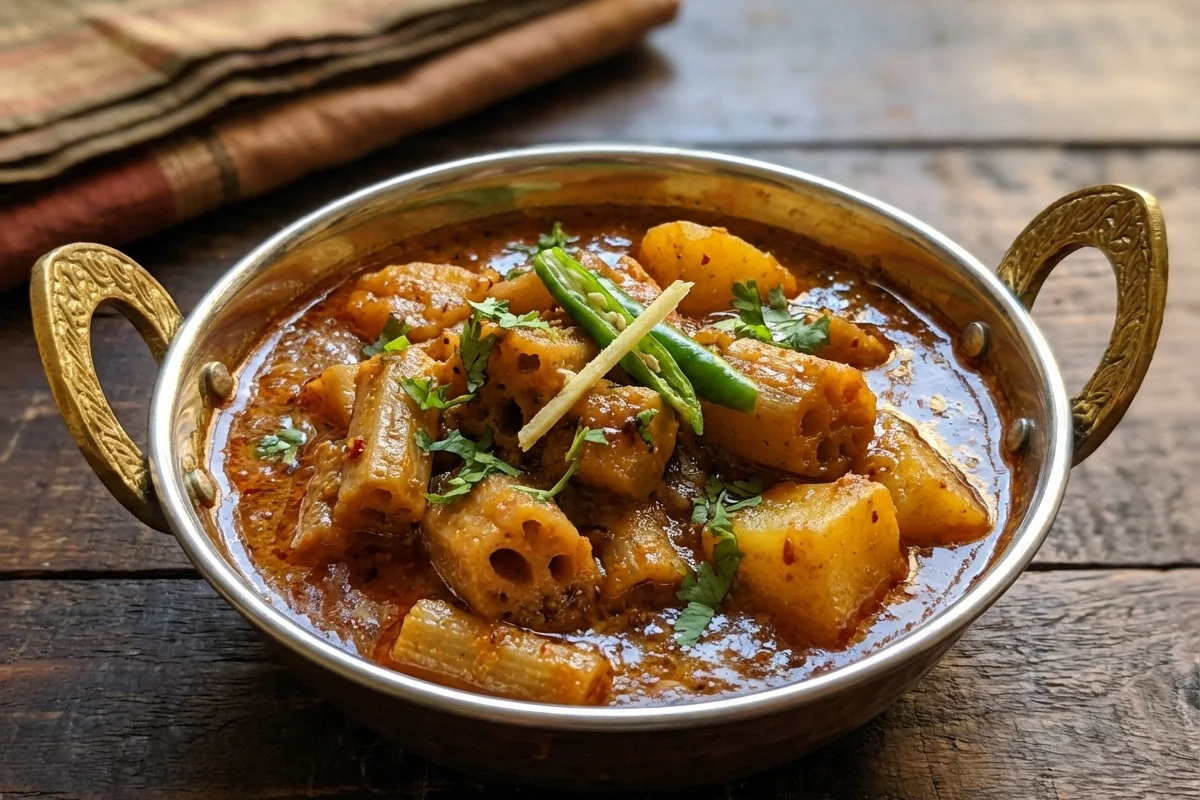
Bhee Aloo Curry
Tender slices of lotus stem and potato simmered in a fragrant onion-tomato gravy. A beloved Sindhi delicacy with a unique earthy flavor and delicate crunch, best enjoyed with steamed rice or phulkas.
For 4 servings
- prep · ~10 min
Prepare the lotus stem.
1.Wash the lotus stem thoroughly, peel the outer skin, and slice into thin, even rounds.2.Place the sliced lotus stem in a pressure cooker with a pinch of salt and enough water to cover.3.Pressure cook for 2 whistles, then let the pressure release naturally. Drain and set aside.TIPScrape off any muddy crevices with a small spoon. Tender young lotus stems cook faster and taste best. - boil · ~10 min
Boil the potatoes.
In a separate pot, boil the cubed potatoes in salted water until just fork-tender. Drain and set aside.
- saute · ~15 min
Build the onion masala base.
1.Heat 2 tbsp oil in a heavy-bottomed pan over medium heat.2.Add the finely chopped onions and sauté until deep golden brown, about 8-10 minutes.3.Stir in the ginger-garlic paste and cook until the raw aroma disappears, about 1 minute.4.Add the pureed tomatoes, turmeric, red chili powder, and coriander powder. Cook until the oil separates from the masala, about 5-7 minutes.TIPPatience while browning the onions is key—this is the foundation of the entire curry's flavor. - simmer · ~12 min
Simmer the curry.
1.Gently fold the boiled lotus stem, potatoes, and slit green chilies into the masala.2.Season with salt and garam masala, then pour in 1 cup of water.3.Bring the curry to a gentle simmer, cover, and let it cook for 10-12 minutes, allowing the gravy to thicken and flavors to meld. - garnish · ~1 min
Finish with amchur and fresh coriander.
Sprinkle the dry mango powder over the curry and give it a final gentle stir. Turn off the heat and scatter freshly chopped coriander leaves on top.
TIPThe amchur added at the very end brightens up the whole dish with its sharp tang. - rest · ~5 min
Rest briefly before serving.
Let the curry sit covered for 5 minutes so the sauce thickens further and flavors settle.
TIPBhee Aloo Curry tastes even better the next day.
What to keep in mind.
7 tips from the recipe — small details that make a real difference to the final dish.
- 1Scrub lotus stem crevices with a stiff brush or small spoon to remove trapped mud.
- 2Do not overcook lotus stem in the pressure cooker; 2 whistles keep its delicate crunch.
- 3Brown the onions until deep golden—this builds the entire flavor base of the curry.
- 4Cook the tomato masala until oil visibly separates to avoid a raw, sour taste.
- 5Add amchur (dry mango powder) only at the end to preserve its bright tangy kick.
- 6Let the curry rest for 5 minutes off heat so the gravy thickens and flavors meld.
- 7This curry tastes even better the next day, so make it a day ahead if time allows.
Adapt it for your goals.
Vegan
This recipe is already vegan as written (no dairy or animal products), making it a perfect plant-based main dish.
nut freeNut-free
Naturally nut-free; no modifications needed—safe for those with nut allergies.
low oilLow-oil
Reduce oil to 1 tablespoon and use a non-stick pan for sautéing. The flavor will be slightly milder but still satisfying.
protein boostProtein-boost
Add ½ cup boiled chickpeas or paneer cubes along with the lotus stem for extra protein and heartiness.
Why this is on our healthy list.
Rich in Dietary Fiber
Lotus stem and potatoes both provide fiber that supports healthy digestion and helps maintain steady blood sugar levels.
Natural Antioxidants
Turmeric, coriander, and tomatoes are rich in antioxidants like curcumin and lycopene that help fight oxidative stress.
Low-Fat Plant-Based Dish
With only 2 tablespoons of oil, this curry is a light yet flavorful vegan meal suitable for heart-conscious diets.
Supports Hydration
The water-based gravy and hydrating lotus stem contribute to daily fluid intake, especially in warm weather.
Frequently asked questions
Yes, drain canned lotus stem thoroughly and skip the pressure cooking step. For frozen, thaw completely and boil for 5–7 minutes until tender.