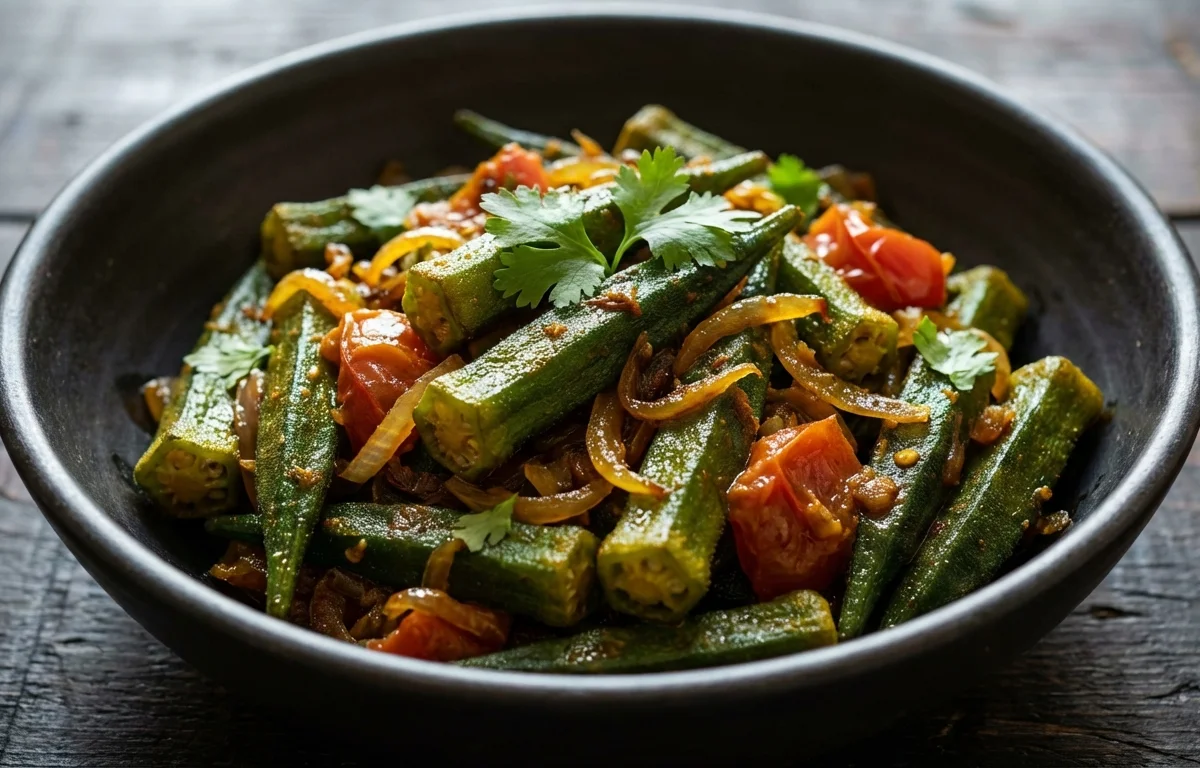
Bhindi Sabzi
Tender okra pods stir-fried with onions, tomatoes, and a handful of warm spices until perfectly dry and crisp. A classic North Indian dry sabzi that transforms sticky okra into a delicious, non-slimy everyday dish, best enjoyed with hot rotis.
For 4 servings
- prep
Ensure the okra is completely dry.
Wash the okra well and pat each pod completely dry with a clean kitchen towel. Moisture is the main cause of sliminess, so make sure no water remains. Cut into 1-inch pieces and set aside.
- fry · ~10 min
Sauté the okra until crisp.
1.Heat 1 tbsp oil in a heavy-bottomed pan over medium heat.2.Add the cut okra and sauté, stirring occasionally, until lightly browned and crisp (8-10 min).3.Remove the okra from the pan and set aside.TIPDon't cover the pan — steam makes okra slimy. Keep it open and stir gently. - temper · ~8 min
Make the tempering in the same pan.
1.Add the remaining 1 tbsp oil to the same pan.2.Add cumin seeds and let them crackle (30 sec).3.Add sliced onions and sauté until golden brown (5-7 min).4.Add slit green chilies, julienned ginger, and sliced garlic. Sauté until fragrant (1 min). - saute · ~7 min
Cook the tomato and spice base.
1.Add chopped tomatoes and cook until soft and mushy (3-4 min).2.Add turmeric powder, red chili powder, coriander powder, and salt. Mix well.3.Cook until the oil starts to separate from the masala (2-3 min). - mix · ~2 min
Combine the okra with the masala.
1.Return the sautéed okra to the pan.2.Gently toss everything together so the okra is well coated with the spices.3.Sprinkle garam masala and dry mango powder. Toss once more.4.Cook on low heat for 2 minutes for the flavors to meld.TIPFold gently — over-mixing can break the okra pieces. - garnish
Garnish with fresh coriander leaves and serve hot.
Transfer to a serving bowl, scatter chopped coriander leaves on top, and serve immediately with roti or paratha.
What to keep in mind.
7 tips from the recipe — small details that make a real difference to the final dish.
- 1Lay okra out after washing for 30 minutes to air-dry completely before cutting.
- 2Use fresh, firm okra pods that snap easily — older pods can be woody and fibrous.
- 3Always sauté okra uncovered to let steam escape and prevent sliminess.
- 4Add dry mango powder at the end for a tangy kick that brightens the dish.
- 5Cook the masala until oil separates for deeper, more developed flavors.
- 6For extra crunch, increase oil by 1 tbsp and fry okra until deep golden.
- 7Make ahead: store cooked sabzi in the fridge for up to 2 days; reheat in a dry pan.
Adapt it for your goals.
Low-oil
Reduce oil to 1 total tbsp and dry-roast the okra in a non-stick pan with a splash of water, covered, until tender — then proceed with the masala. Great for calorie-conscious cooks.
high proteinHigh-protein
Add 100g of paneer cubes or roasted chickpeas along with the okra in step 5. This turns the sabzi into a more filling main dish.
veganVegan
The recipe is already naturally vegan, but ensure any optional ghee or butter used elsewhere is replaced with coconut or avocado oil.
jainJain
Omit garlic and onion; use asafoetida (hing) in the tempering instead of cumin seeds for a Jain-friendly version that still delivers depth.
south indian tadkaSouth-indian-tadka
Swap cumin seeds for mustard seeds and curry leaves in step 3, and add a pinch of red chili powder and grated coconut for a coastal twist.
Why this is on our healthy list.
Rich in Dietary Fiber
Okra is packed with soluble and insoluble fiber, aiding digestion and promoting a feeling of fullness.
Low in Calories
This dry sabzi uses minimal oil and no heavy creams, making it a low-calorie side dish suitable for weight management.
High in Antioxidants
Turmeric, red chili, and coriander powder provide curcumin and other antioxidants that help fight oxidative stress.
Good Source of Vitamin C
Fresh okra and green chilies contribute a notable amount of vitamin C, which supports immune health.
Supports Bone Health
Okra contains vitamin K and folate, nutrients that play a role in maintaining bone density.
Frequently asked questions
Frozen okra tends to release excess moisture and become slimy. If using it, thaw and pat very dry, then sauté on high heat without covering.



.webp)