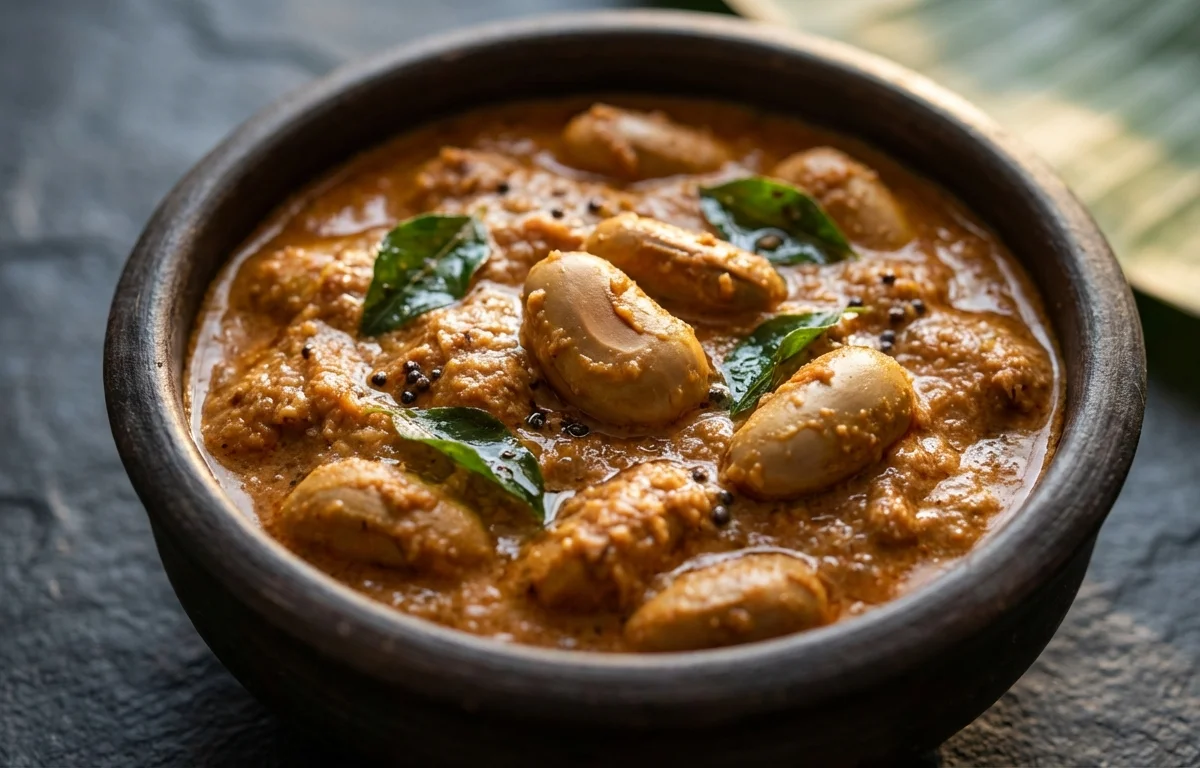
Bikkanda Gashi
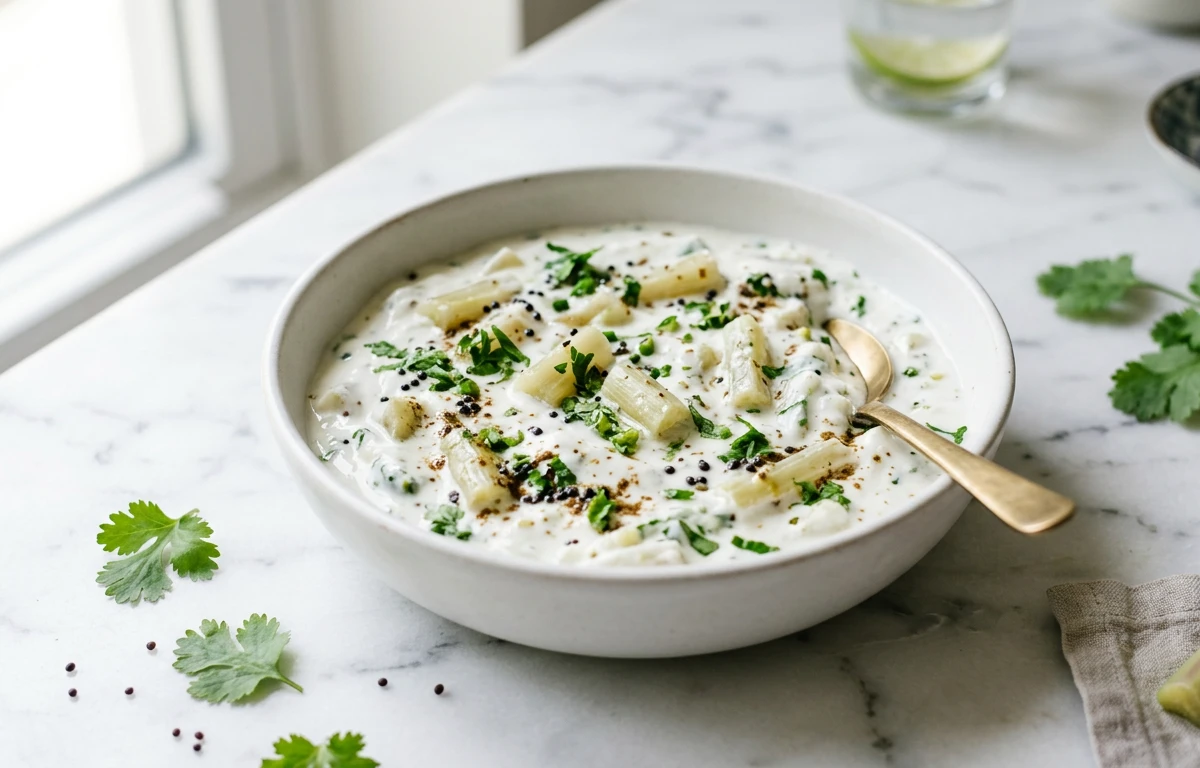
A homestyle Mangalorean gashi made with tender yam simmered in a roasted coconut and red chili gravy. It is earthy, lightly tangy, and deeply comforting, especially with rice on the side.
For 4 servings
- prep · ~15 min
Prep the yam and tamarind.
1.Peel the elephant foot yam and cut it into small even cubes.2.Soak the tamarind in a little warm water for 15 minutes.3.Keep the grated coconut, dried red chili, coriander seeds, cumin seeds, and fenugreek seeds ready. - boil · ~15 min
Cook the yam until tender.
Add the yam, 500 ml water, turmeric powder, and half of the salt to a pot. Boil until the cubes are tender but still hold their shape, 12 to 15 minutes.
TIPCut the yam evenly so it cooks at the same rate and does not turn mushy. - roast · ~6 min
Roast the spices and coconut.
1.Heat a small pan over low to medium heat.2.Dry roast the dried red chili, coriander seeds, cumin seeds, and fenugreek seeds until fragrant, 1 to 2 minutes.3.Add the grated coconut and roast until lightly golden, 3 to 4 minutes.4.Take the pan off the heat and let the mixture cool slightly.TIPKeep the heat moderate so the coconut browns gently and the spices do not turn bitter. - mix · ~4 min
Grind the masala.
Squeeze the soaked tamarind and add the pulp to the roasted coconut mixture. Grind with a little water to a smooth, thick paste.
- simmer · ~10 min
Simmer the gashi.
Add the ground masala to the cooked yam along with the remaining salt. Mix well and simmer for 8 to 10 minutes, adding a splash of water if the gravy looks too thick.
TIPStir gently while simmering so the yam pieces stay whole. - temper · ~1 min
Make the tempering.
1.Heat coconut oil in a small pan.2.Add mustard seeds and let them splutter.3.Add curry leaves and fry for a few seconds until aromatic. - assemble · ~2 min
Pour the tempering over the gashi.
Pour the hot tempering over the simmered curry and cover for 2 minutes so the flavors settle into the gravy.
- serve
Serve hot.
Serve Bikkanda Gashi hot as a side with rice.
What to keep in mind.
7 tips from the recipe — small details that make a real difference to the final dish.
- 1Rinse the peeled yam cubes once after cutting if they feel sticky; it helps keep the gravy cleaner and less slimy.
- 2Do not overcook the yam in the first boil; it should be just tender, since it cooks again while simmering in the masala.
- 3Roast the coconut only to light golden, not deep brown, so the gashi keeps its classic mellow sweetness and red color.
- 4Use byadgi chilies if possible for a bright red gravy with moderate heat and a more traditional Mangalorean flavour.
- 5Grind the roasted coconut masala very smooth; a coarse paste makes the curry feel grainy instead of silky.
- 6After adding the tempering, cover the pot for a couple of minutes so the mustard, curry leaf, and coconut oil aroma gets trapped in the gashi.
- 7This curry tastes even better after resting, so make it 2 to 4 hours ahead if serving for lunch with rice.
Adapt it for your goals.
Spicier
Add 1 to 2 more dried red chilies or a slightly hotter variety if you prefer a fiercer gashi with the same coconut richness.
milderMilder
Reduce the chilies slightly and lean on byadgi chilies for color, making it more family-friendly while keeping the traditional look.
no onion no garlicNo-onion-no-garlic
This recipe is naturally free of onion and garlic, making it suitable for those who want a simple satvik-style curry profile.
vegetable swapVegetable-swap
Use ash gourd or ripe mango in place of yam for a different Mangalorean-style gashi with a lighter or sweeter character.
Why this is on our healthy list.
Fiber-Rich Yam Base
Elephant foot yam adds satisfying bulk and fiber, making the curry hearty and filling when served with rice.
Spices with Digestive Value
Cumin, coriander, fenugreek, and tamarind bring traditional digestive support along with warmth and complexity.
Plant-Based Comfort Dish
Made entirely from plant ingredients like yam, coconut, spices, and curry leaves, this is a wholesome vegetarian side.
Frequently asked questions
The cubes should be easily pierced with a knife but still hold their edges. If they start crumbling, they are overcooked for this curry.