
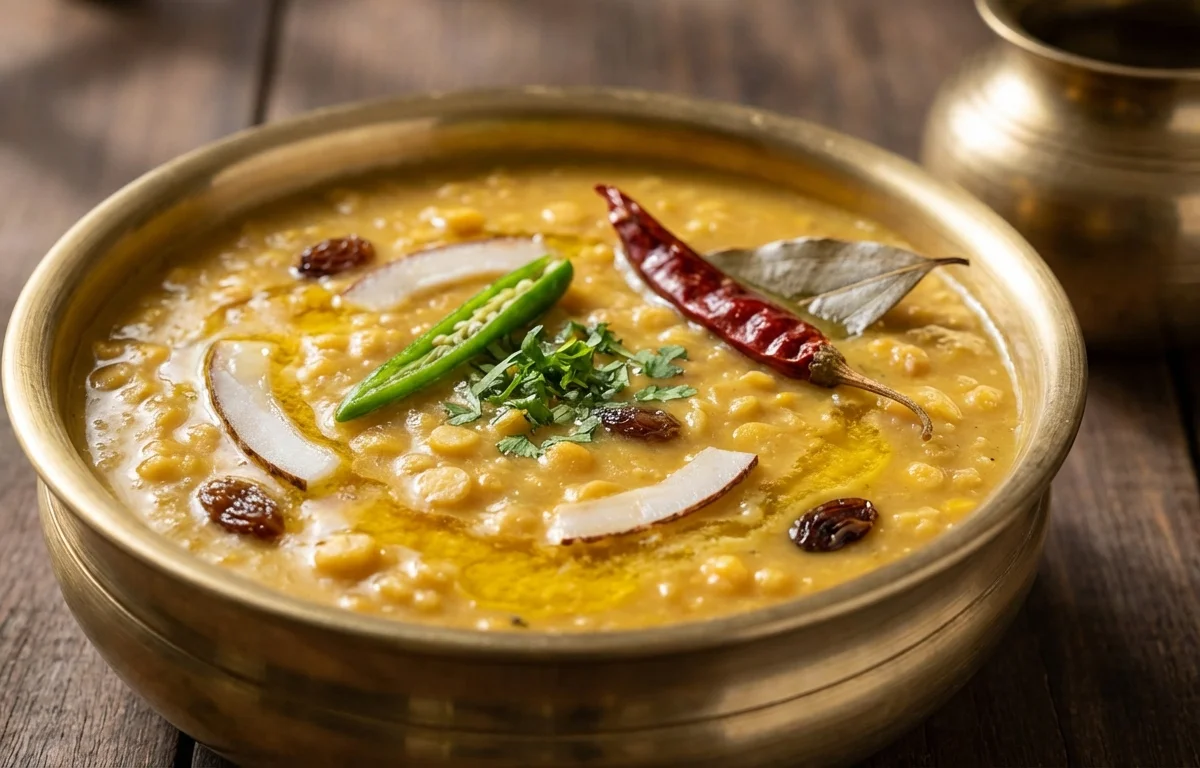
Bootor Dal
A comforting Bengali-style chana dal with a gentle sweetness, warm whole spices, and a light coconut finish. It is hearty without being heavy and goes especially well with luchi, pulao, or plain rice.
For 4 servings
- prep · ~120 min
Soak the chana dal.
Wash the chana dal well and soak it in enough water for 2 hours. Drain before cooking.
- boil · ~30 min
Cook the dal until tender.
1.Add soaked chana dal and 4 cups water to a pot.2.Add turmeric powder and bring to a boil over medium heat.3.Lower the heat and cook until the dal is soft but still holds its shape, about 25 to 30 minutes.4.Skim off any foam from the top while it cooks.TIPDo not overcook the dal into a mash. Bootor Dal tastes best when the grains stay whole and distinct. - fry · ~2 min
Fry the coconut slices.
Heat the ghee in a pan over medium heat and fry the coconut slices until light golden. Remove and keep aside.
- temper · ~1 min
Make the whole spice tempering.
1.In the same pan, add bay leaf, cinnamon, green cardamom, and cloves.2.Let the spices sizzle in the ghee until fragrant, about 20 to 30 seconds.3.Add grated ginger and sauté briefly for 30 seconds.TIPKeep the heat medium so the whole spices release aroma without turning bitter. - simmer · ~7 min
Season and finish the dal.
1.Pour the cooked dal into the pan with the tempering.2.Add salt, sugar, cumin powder, slit green chili, and the fried coconut slices.3.Mix well and simmer for 5 to 7 minutes so the flavors blend.4.Sprinkle garam masala and stir once at the end. - serve
Serve the Bootor Dal hot.
What to keep in mind.
7 tips from the recipe — small details that make a real difference to the final dish.
- 1Soak the chana dal fully for the best texture; under-soaked dal tends to cook unevenly and split less cleanly.
- 2Cook the dal only until tender but grainy-looking; each split chickpea should hold its shape in the finished Bootor Dal.
- 3Fry the coconut just to light golden, not deep brown, so it stays sweet and nutty instead of tasting bitter.
- 4Crush the cardamom lightly before tempering so the ghee picks up its aroma quickly.
- 5Add the garam masala at the very end and stir once; prolonged cooking dulls its warm fragrance.
- 6If the dal thickens after resting, loosen it with a splash of hot water before serving, not cold water.
- 7This dal tastes even better after 30 minutes of rest, when the sugar, ginger, and whole spices settle into the lentils.
Adapt it for your goals.
Vegan
Replace ghee with coconut oil or a neutral oil for a dairy-free version that still pairs beautifully with the coconut and whole spices.
low sweetnessLow-sweetness
Reduce or skip the sugar if you prefer a more savory dal; the ginger, cumin, and garam masala will come forward more strongly.
no coconutNo-coconut
Omit the coconut if unavailable; the dal will be less rich but still very traditional in its spiced, lightly sweet profile.
spicierSpicier
Add an extra slit green chili or a pinch of red chili powder for more heat without changing the dish's Bengali character.
Why this is on our healthy list.
Protein-Rich Lentil Base
Chana dal makes this dish hearty and satisfying while providing plant protein and fiber from split chickpeas.
Digestive Spice Support
Ginger, cumin, cardamom, and cloves add aroma and can make a rich lentil dish feel lighter and more balanced.
Steady, Comforting Energy
The combination of lentils and moderate fat from ghee and coconut makes this a filling meal that pairs well with simple rice.
Frequently asked questions
Yes, but it will take longer to cook and may not soften as evenly. Soaking helps the dal become tender while still keeping its shape.



-curry.webp)
.webp)