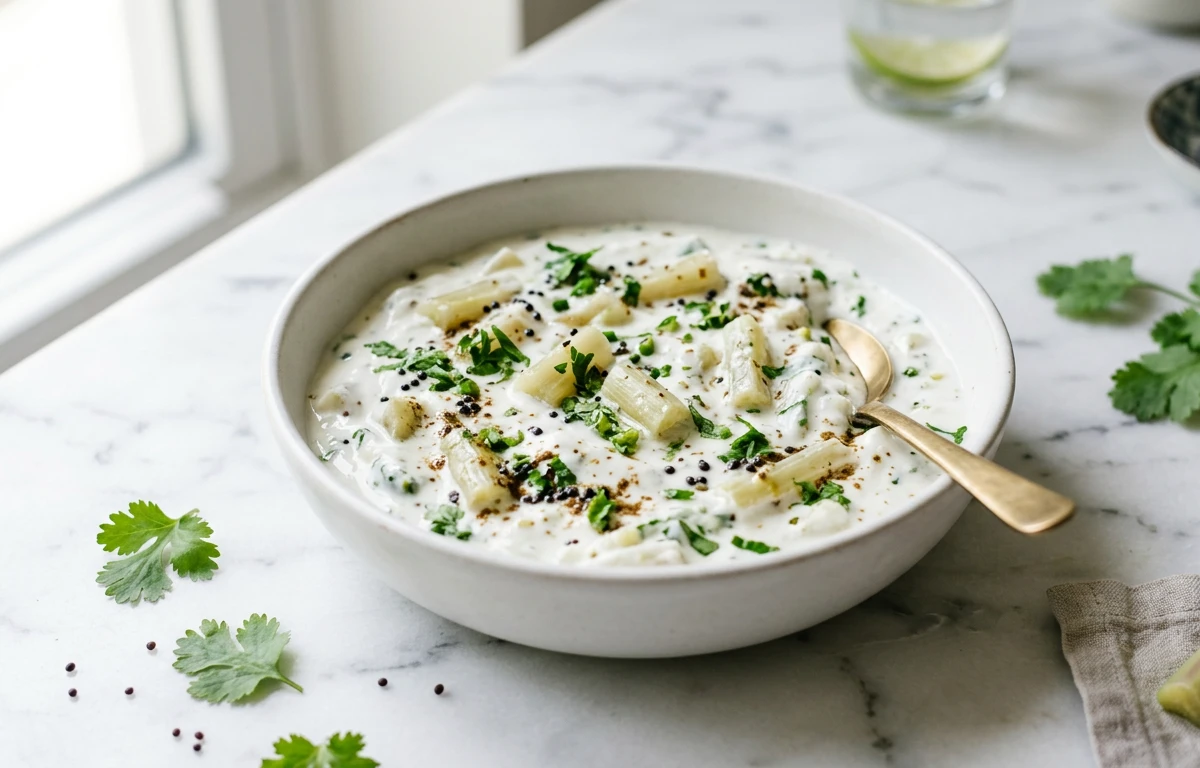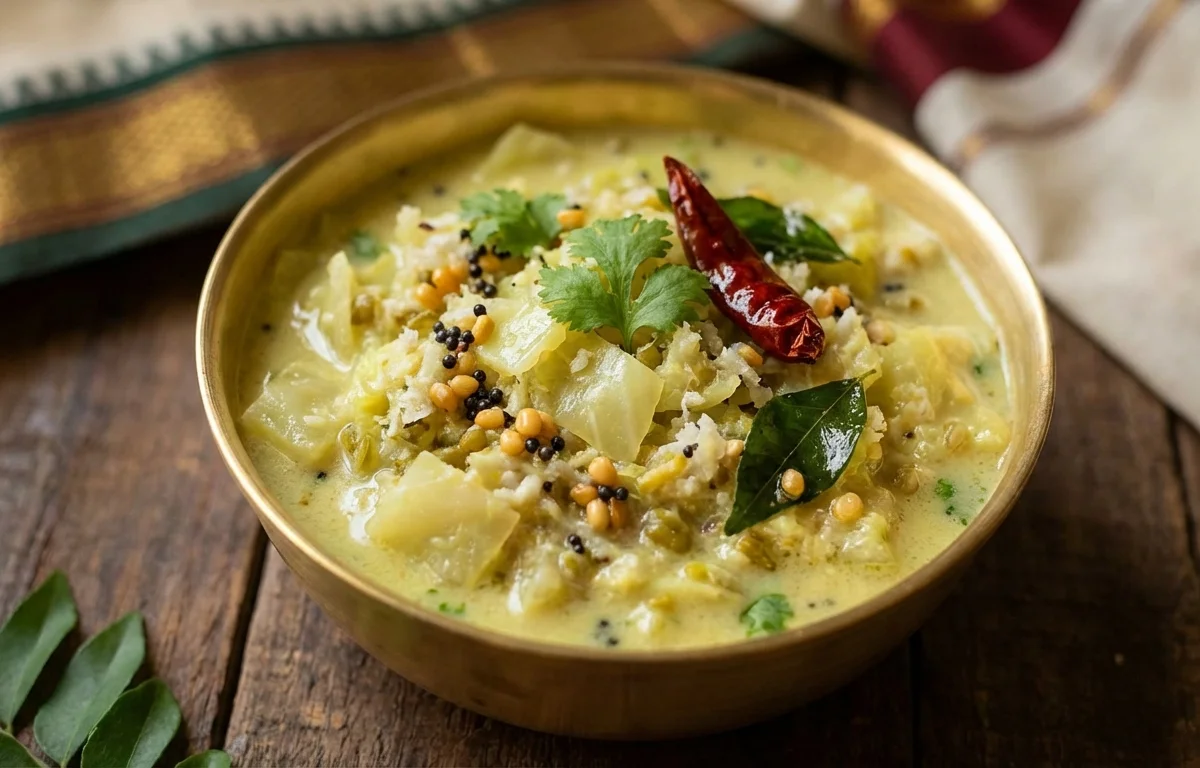
Cabbage Kootu
Tender cabbage cooked with moong dal, coconut, and gentle spices into a comforting South Indian kootu. It is light, mildly spiced, and perfect alongside rice, rasam, or a simple poriyal meal.
For 4 servings
- prep · ~5 min
Prep the cabbage and dal.
1.Rinse the moong dal well until the water runs mostly clear.2.Finely chop the cabbage so it cooks quickly and evenly.3.Slit the green chili and keep the coconut, cumin seeds, and curry leaves ready.TIPKeep the cabbage finely chopped for an even, soft kootu texture. - pressure cook · ~12 min
Cook the dal until soft.
Add moong dal and 1 cup water to a pressure cooker. Cook for 2 whistles, then let the pressure drop naturally before opening.
TIPDo not overcook the dal into a paste; it should be soft but still hold some texture. - mix · ~2 min
Grind the coconut mixture.
Grind the grated coconut and 0.5 tsp cumin seeds with a little water to a smooth, thick paste.
- boil · ~10 min
Cook the cabbage.
1.Add chopped cabbage to a pot with green chili, turmeric powder, salt, and 1 cup water.2.Cover and cook on medium heat until the cabbage turns tender but not mushy, about 8 to 10 minutes.3.Stir once or twice so the cabbage cooks evenly. - simmer · ~4 min
Combine and simmer the kootu.
1.Add the cooked moong dal to the cabbage and mix gently.2.Stir in the ground coconut mixture and the remaining 0.5 tsp cumin seeds.3.Simmer for 3 to 4 minutes until the kootu thickens lightly and the raw coconut smell is gone.TIPKeep the heat low after adding coconut so the kootu stays fresh-tasting and does not split. - temper · ~2 min
Make the tempering.
1.Heat coconut oil in a small pan over medium heat.2.Add mustard seeds and let them splutter.3.Add urad dal and cook until lightly golden.4.Add curry leaves and fry for a few seconds until fragrant.TIPAdd curry leaves carefully, as they may splutter in hot oil. - assemble · ~1 min
Finish the kootu.
Pour the tempering over the hot kootu and mix well. Cook for 1 more minute, then turn off the heat.
- serve
Serve the cabbage kootu warm.
What to keep in mind.
7 tips from the recipe — small details that make a real difference to the final dish.
- 1Chop the cabbage very fine so it softens quickly and blends into the dal without stringy bites.
- 2Let the pressure cooker release naturally; quick release can make the moong dal break down too much.
- 3Grind the coconut with just enough water to make a thick paste, or the kootu can turn watery.
- 4Cook the cabbage only until tender; overcooking dulls its sweetness and makes the kootu smell sulfurous.
- 5After adding the coconut paste, keep the heat low and simmer briefly so the fresh coconut flavor stays bright.
- 6Temper the mustard first, then brown the urad dal lightly for a nutty crunch that contrasts the soft kootu.
- 7This kootu thickens as it sits, so loosen leftovers with a splash of hot water before reheating.
Adapt it for your goals.
No-onion-no-garlic
This recipe already suits a no-onion, no-garlic meal, making it ideal for simple South Indian home-style and festival-style cooking.
spicierSpicier
Add an extra green chili or grind one into the coconut paste for a hotter kootu without changing its basic character.
thinner kootuThinner-kootu
Add a little more hot water while simmering if you want a looser consistency to serve more easily with plain rice.
mixed vegMixed-veg
Cook a small amount of peas or finely chopped chow chow with the cabbage for extra texture while keeping the dish mild and traditional.
Why this is on our healthy list.
Gentle Plant Protein
Moong dal adds plant protein and makes the kootu more satisfying while still feeling light and easy to eat.
Fiber-Rich Vegetables
Cabbage and lentils together provide fiber that supports fullness and gives the dish its hearty, comforting texture.
Balanced Fats and Flavor
Fresh coconut and coconut oil add richness in small amounts, helping this mild dish feel complete and flavorful.
Frequently asked questions
Yes. Simmer the rinsed moong dal in a pot with water until soft but not mushy, then continue with the recipe as written.