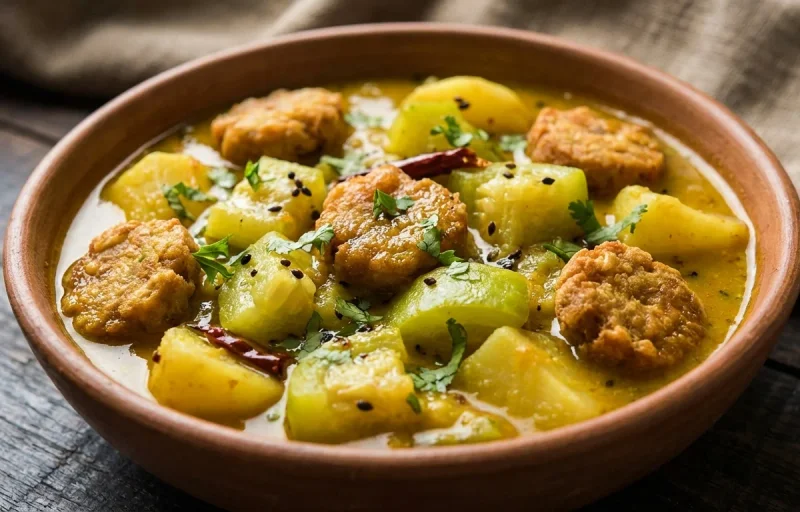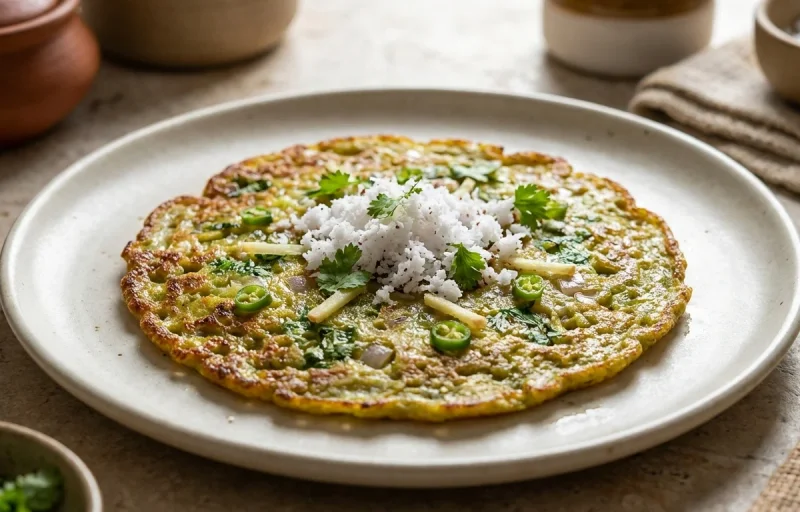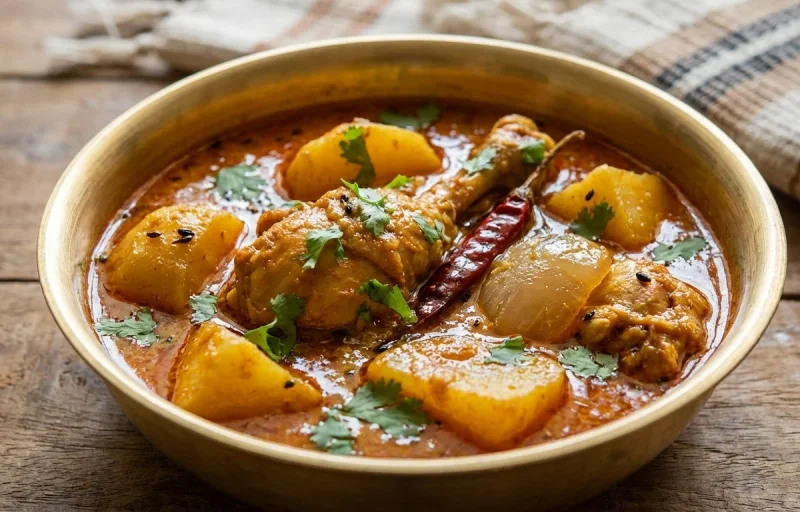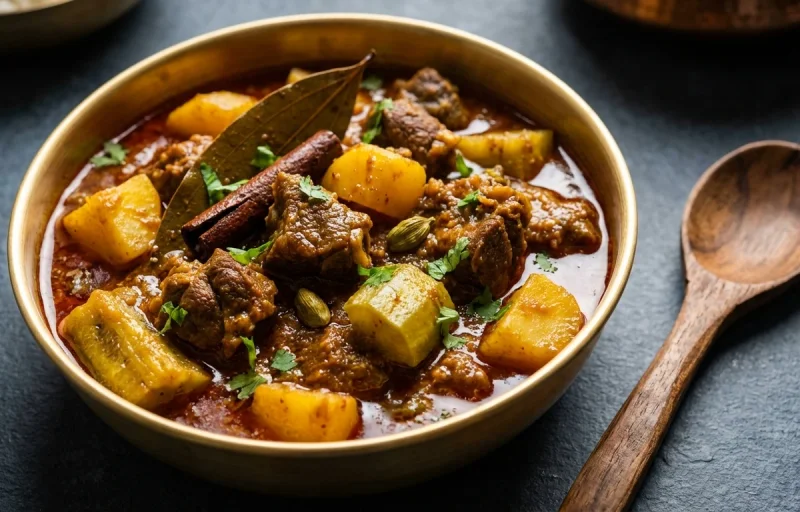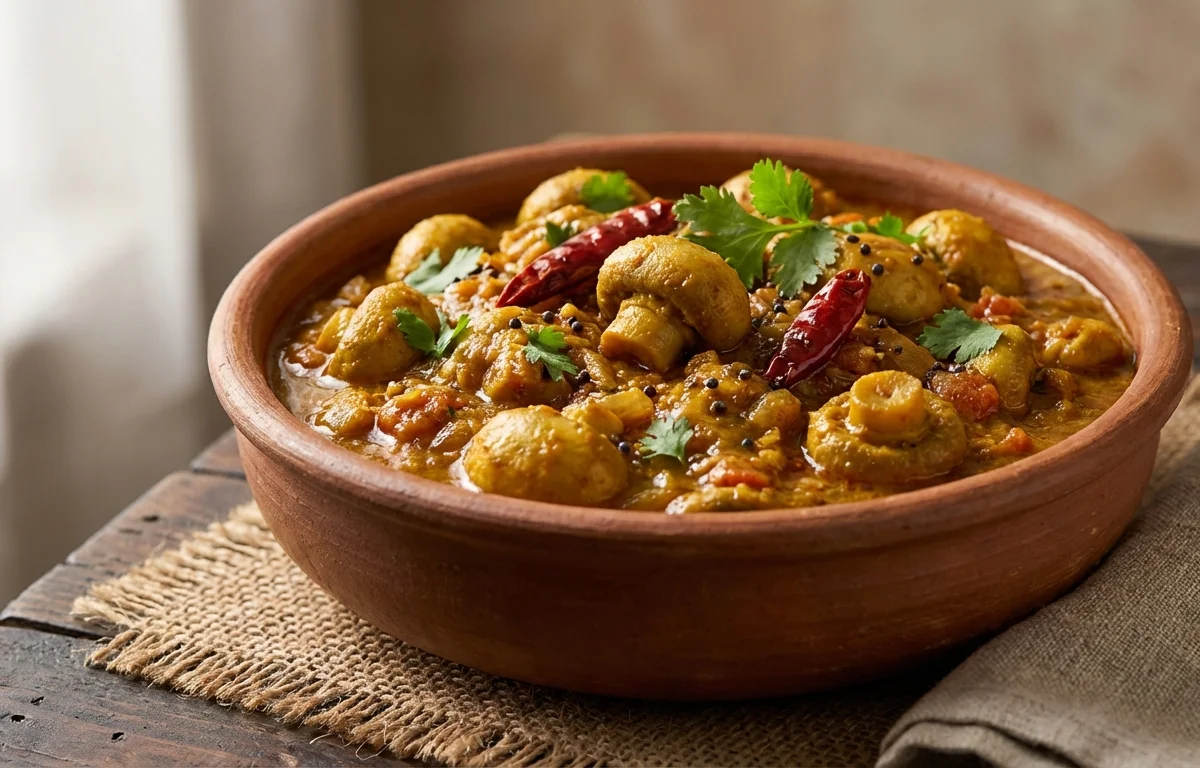
Chhatu Besara
An earthy Odia mushroom curry where tender mushrooms are simmered in a mustard-coconut gravy with gentle spice and a bright finish. It is homely, comforting, and especially good with plain rice.
For 4 servings
- prep · ~10 min
Soak the mustard seeds and prep the vegetables.
1.Soak the mustard seeds in a little water for 10 minutes.2.Clean the mushrooms and halve them if large.3.Peel the potato and cut it into small cubes.4.Keep one green chili for the paste and slit the other.TIPSoaking helps the mustard grind smoother and keeps the paste from tasting too sharp. - mix · ~3 min
Grind the besara paste.
Drain the soaked mustard seeds and grind them with grated coconut, 1 green chili, and a little water to a smooth paste. Keep the paste slightly thick so it holds the gravy well.
- saute · ~7 min
Cook the potato and mushrooms.
1.Heat oil in a pan over medium heat.2.Add cumin seeds and bay leaf and let them sizzle for a few seconds.3.Add the cubed potato and cook for 3 to 4 minutes.4.Add the mushrooms, turmeric powder, red chili powder, and salt, then cook until the mushrooms start releasing water. - simmer · ~12 min
Simmer the curry with the mustard paste.
Add the mustard-coconut paste and stir gently for 1 minute on low heat. Pour in the water, add the slit green chili, and simmer until the potato is tender and the gravy lightly coats the mushrooms.
TIPKeep the heat low after adding the mustard paste so the gravy stays smooth and does not turn bitter. - serve · ~2 min
Serve the Chhatu Besara hot.
Take the pan off the heat and rest the curry for 2 minutes. Serve hot with plain rice.
What to keep in mind.
7 tips from the recipe — small details that make a real difference to the final dish.
- 1Soak the mustard just long enough to soften it; over-soaking can dull its sharp, fresh flavor.
- 2Grind the mustard-coconut paste very smooth, or the gravy can taste gritty and slightly harsh.
- 3Keep the heat low after adding the besara paste so the mustard does not split or turn bitter.
- 4Cook the potatoes for a few minutes before adding mushrooms so both finish at the same time.
- 5Do not overcrowd the pan at the mushroom stage; they should first release water, not steam excessively.
- 6Let the curry rest for 2 minutes before serving so the mustard flavor settles and the gravy thickens slightly.
- 7This tastes even better with steamed rice after 30 minutes of standing, once the mushrooms absorb the gravy.
Adapt it for your goals.
No-potato
Skip the potato for a lighter, faster mushroom besara where the mustard-coconut flavor feels more pronounced.
mixed vegetableMixed-vegetable
Add pumpkin, pointed gourd, or brinjal along with mushrooms for a more traditional home-style besara feel.
spicierSpicier
Use an extra green chili or a little more red chili powder if you want the curry hotter with plain rice.
low oilLow-oil
Reduce the oil slightly and cook covered after adding mushrooms; the released moisture helps the masala coat well.
Why this is on our healthy list.
Vegetable-Rich Comfort Curry
Mushrooms and potato make this a satisfying plant-forward dish that pairs well with simple rice for a balanced meal.
Mustard-Based Flavor Without Heavy Cream
The gravy gets body from mustard and fresh coconut instead of dairy-heavy ingredients, keeping the texture rich but traditional.
Contains Beneficial Spices
Mustard, cumin, turmeric, and chili bring aromatic depth along with the everyday spice benefits of a home-cooked curry.
Frequently asked questions
Usually the mustard was ground too coarsely, overheated, or cooked on high heat after adding the paste. Keep the paste smooth and simmer gently.