Chingudi Besara
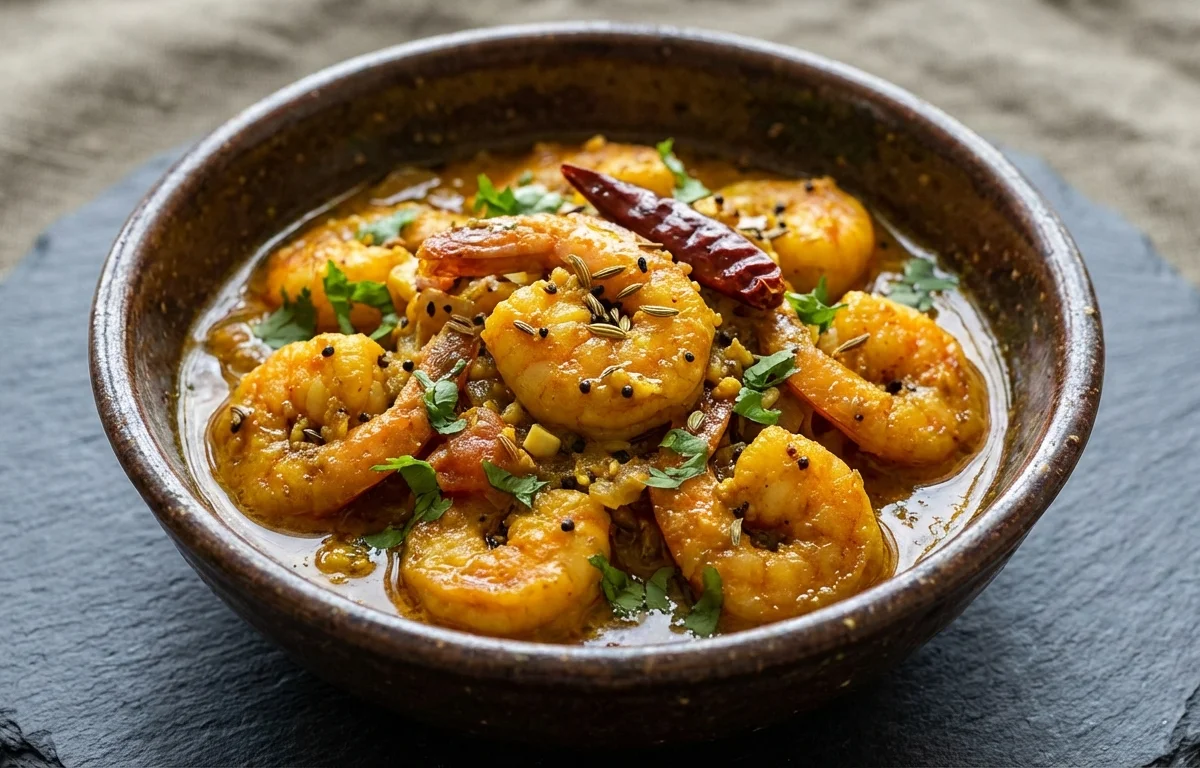
Prawns simmered in a bold, tangy mustard and tomato gravy from Odisha. The pungent mustard paste, balanced with tomatoes and green chilies, creates a sharp, earthy sauce that perfectly coats tender prawns. A quintessential coastal comfort dish best served with steamed rice.
For 4 servings
- prep · ~30 min
Soak and prepare the mustard paste.
1.Soak mustard seeds in 1/4 cup water for 30 minutes.2.Drain and transfer to a grinder. Add garlic cloves and green chilies.3.Grind to a smooth, thick paste. Set aside.TIPSoaking the mustard seeds tames their bitterness and makes the paste creamier. - prep · ~10 min
Marinate the prawns.
1.Pat the cleaned prawns dry with a paper towel.2.Toss prawns with a pinch of turmeric powder and a pinch of salt.3.Set aside for 10 minutes. - fry · ~3 min
Fry the prawns.
1.Heat 2 tablespoons mustard oil in a pan until it reaches its smoking point, then reduce to medium heat.2.Add the marinated prawns and sear for 30 seconds per side until they turn pink and slightly firm.3.Remove the prawns from the pan and set aside.TIPDon't overcook the prawns at this stage; they will finish cooking in the gravy. High heat ensures a slight crispness. - saute · ~10 min
Cook the onion and tomato base.
1.In the same pan, add the chopped onions and sauté until translucent (3-4 minutes).2.Add the chopped tomatoes, red chili powder, and a pinch of salt.3.Cook until the tomatoes are soft and the oil separates from the mixture (5-6 minutes). - simmer · ~11 min
Simmer the mustard curry.
1.Add the ground mustard paste to the pan and stir continuously for 1 minute.2.Pour in 1 cup of water and stir well to combine into a uniform gravy.3.Bring the gravy to a gentle simmer and cook for 8-10 minutes until the raw smell of mustard disappears.TIPNever let the gravy boil vigorously after adding mustard paste — high heat turns it bitter. - simmer · ~3 min
Return prawns to the gravy and finish.
1.Gently slide the seared prawns into the simmering mustard gravy.2.Cook for 2-3 minutes just until the prawns are cooked through and coated in the gravy. - garnish
Drizzle raw mustard oil and serve.
1.Turn off the heat and immediately drizzle 1 tablespoon of raw mustard oil over the curry.2.Garnish with chopped coriander leaves.3.Serve hot with steamed rice.TIPThe raw mustard oil at the end is essential — it adds the signature nostril-tingling pungency classic to Odia mustard curries.
What to keep in mind.
6 tips from the recipe — small details that make a real difference to the final dish.
- 1Always use mustard oil for authentic flavor; its pungency defines this dish.
- 2Do not skip soaking the mustard seeds — it softens their bitterness for a creamier paste.
- 3Sear prawns just until pink; they finish cooking in the gravy to stay tender.
- 4Simmer the mustard gravy gently — boiling makes it bitter and harsh.
- 5The final drizzle of raw mustard oil is non-negotiable for that signature sharp note.
- 6Make the mustard paste fresh; pre-made jarred paste will not yield the same depth.
Adapt it for your goals.
Low-oil
Reduce mustard oil in frying to 1 tbsp and omit the final raw drizzle; the dish will be milder but still flavorful for those watching oil intake.
veganVegan
Replace prawns with firm tofu or mushrooms; the mustard-tomato gravy is already plant-based and pairs beautifully with smoky veggies.
extra spicyExtra-spicy
Add 2 more green chilies to the mustard paste and increase red chili powder to 1/2 tsp for a fiercer heat that Odia spice lovers enjoy.
thick gravyThick-gravy
Reduce water to 3/4 cup and stir in 1 tsp of rice flour slurry; this creates a thicker, clingier sauce perfect for dipping crusty bread.
no onion no garlicNo-onion no-garlic
Skip onion and garlic for a Jain-friendly version; the mustard and tomato base remains boldly flavored, and you can add a pinch of asafoetida for depth.
Why this is on our healthy list.
Lean Protein Source
Prawns provide high-quality, low-fat protein that supports muscle health and satiety.
Rich in Omega-3s
Mustard oil is a source of omega-3 fatty acids, known for supporting heart and brain health.
Digestive Aid
Mustard seeds stimulate digestion and can help reduce bloating when consumed in moderation.
Antioxidant Boost
Tomatoes, coriander, and turmeric deliver antioxidants like lycopene and curcumin that combat oxidative stress.
Frequently asked questions
Yes, black mustard seeds are traditional in Odia cooking and work well; they are slightly more pungent, so soak them a bit longer to prevent bitterness.