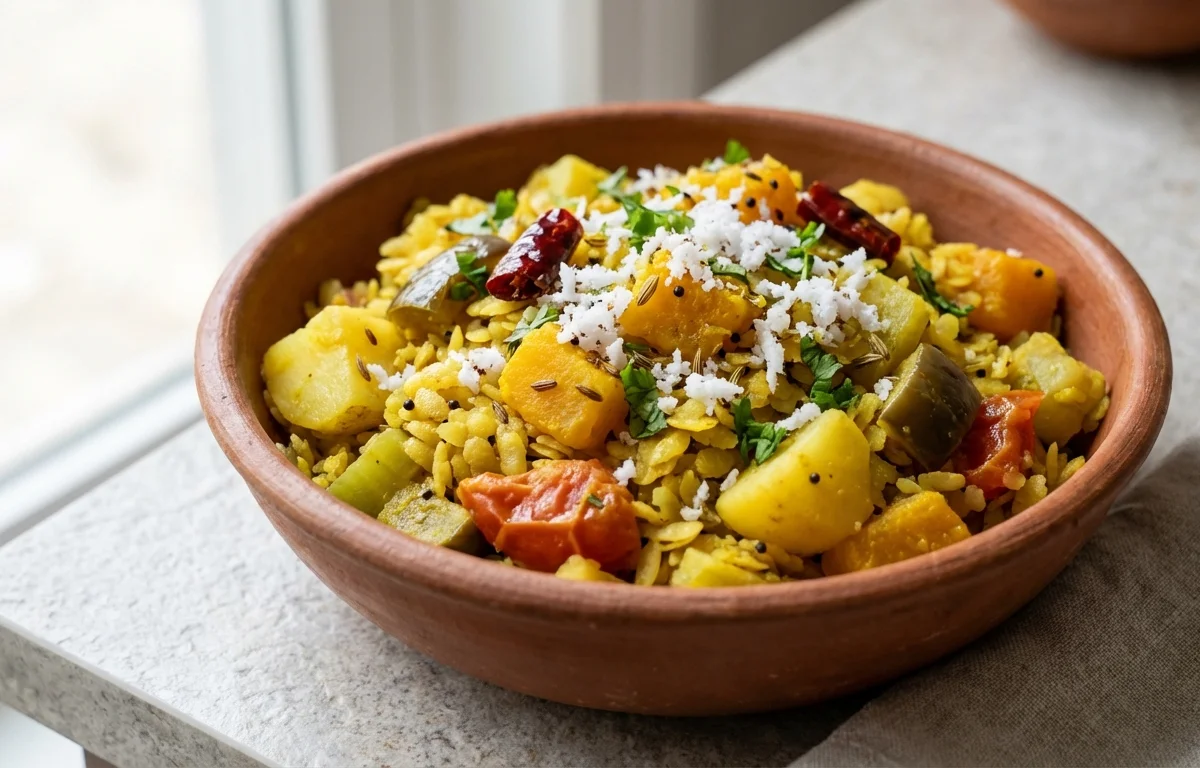
Chuda Santula
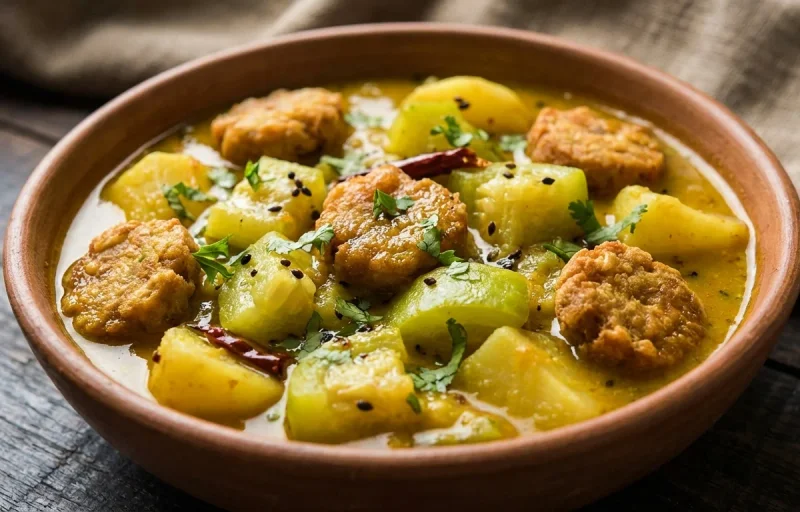
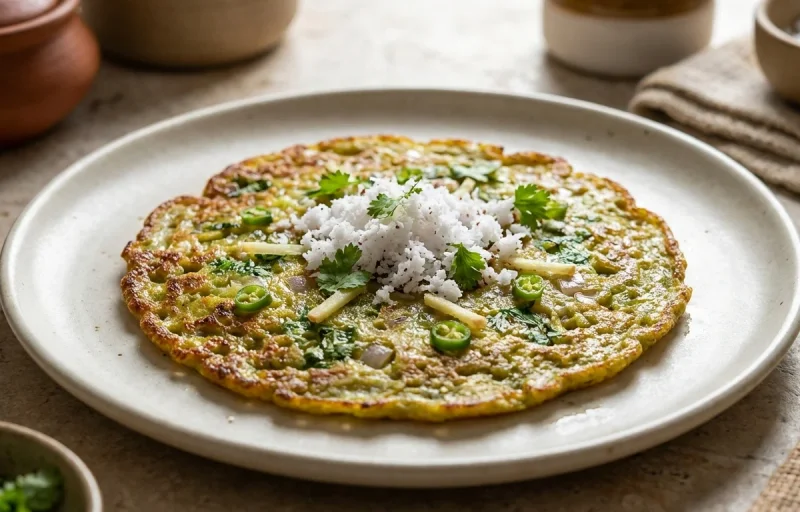
A light, wholesome curry from Odisha made with flattened rice (chuda) and assorted vegetables gently simmered together. This no-onion, no-garlic dish relies on ginger, cumin, and green chilies for its delicate warmth. Quick to put together and easy on the stomach, it's a comforting breakfast or light lunch often served at the Jagannath Temple.
For 4 servings
- prep · ~10 min
Wash and soak the poha.
1.Place poha in a colander and rinse gently under running water for 30 seconds.2.Let it sit in the colander for 10 minutes to soften and drain completely.3.Check by pressing a flake between your fingers — it should mash easily.TIPDo not over-soak or the poha turns mushy. Medium-thick poha holds its texture best. - prep · ~5 min
Prep all vegetables into uniform small cubes.
Peel and cube the potato and pumpkin into small, even pieces. Dice the carrot and chop the green beans. Slit the green chilies and grate the ginger. Uniform size ensures even cooking.
- boil · ~10 min
Boil the vegetables with ginger and spices.
1.Add potato, pumpkin, carrot, beans, green chili, and grated ginger to a kadhai or pan.2.Pour in 1.5 cups water, add turmeric powder and salt.3.Bring to a boil, then reduce heat to medium. Cover and cook until vegetables are tender (8-10 minutes).4.Most of the water should be absorbed, leaving only a little moisture.TIPKeep the vegetables slightly al dente — they continue cooking when you add the poha. - mix · ~3 min
Fold in the softened poha.
Add the drained, softened poha to the cooked vegetables. Gently fold everything together with a light hand, taking care not to mash the poha flakes. Cook on low heat for 2-3 minutes until heated through and well combined. Turn off the heat.
- temper · ~2 min
Make the tadka with ghee and cumin.
1.Heat 2 teaspoons ghee in a small tadka pan over medium heat.2.Add cumin seeds and let them sizzle and turn golden (30 seconds).3.Add broken dried red chili and curry leaves. Fry until fragrant and crisp (20 seconds). - mix · ~1 min
Pour the tadka over the poha mixture.
Immediately pour the sizzling ghee tempering over the poha-vegetable mixture. The crackling sound means you did it right. Gently mix once more to distribute the tempered spices evenly.
- garnish · ~1 min
Garnish with fresh coconut and coriander.
Transfer to a serving bowl. Sprinkle generously with fresh grated coconut and chopped coriander leaves. Serve warm.
- serve
Serve Chuda Santula immediately.
Best eaten warm on its own or with a side of curd. It thickens as it cools, so don't let it sit too long. Squeeze a little lemon juice on top if you like extra tang.
TIPChuda Santula is a temple-style offering; for authenticity, keep it onion-garlic free.
What to keep in mind.
7 tips from the recipe — small details that make a real difference to the final dish.
- 1Use medium-thick poha (flattened rice) for the best texture; thin poha turns mushy.
- 2Rinse the poha gently under running water for only 30 seconds; over-washing makes it fall apart.
- 3Let the drained poha rest 10 minutes until it softens but still holds its shape when pressed.
- 4Cut all vegetables into small, even cubes so they cook at the same rate.
- 5Cook the vegetables until just tender with a little bite; they soften further when mixed with poha.
- 6Pour the sizzling tadka immediately over the poha mixture for maximum aroma and crunch.
- 7Serve Chuda Santula warm; it thickens as it cools, so eat soon after making.
Adapt it for your goals.
Protein boost
Add 1/2 cup roasted peanuts or cubed paneer along with the vegetables for a heartier, protein-rich meal that works well as a lunch bowl.
veganVegan
Replace ghee with coconut oil or any neutral oil for the tadka; the dish remains fully vegan without losing its comforting aroma.
leafy greensLeafy greens
Stir in a handful of chopped spinach or methi (fenugreek) leaves after the vegetables are cooked for extra color and iron.
spicierSpicier
Add 1/4 teaspoon red chili powder or a pinch of garam masala along with turmeric for a bolder, warming heat.
no oilNo-oil
Skip the tadka and instead finish the dish with a squeeze of lemon juice and a pinch of roasted cumin powder for a light, oil-free version.
Why this is on our healthy list.
Light & Easy to Digest
The combination of flattened rice (poha) and gently cooked vegetables makes this dish a low-fiber, easily digestible meal, ideal for breakfast or when your stomach feels sensitive.
Rich in Complex Carbs
Poha provides sustained energy release, while the vegetables (potato, pumpkin, carrot, beans) add dietary fiber and natural vitamins like vitamin A and C.
Low in Fat & No Onion-Garlic
Made with only 2 teaspoons of ghee and no onion or garlic, this dish is naturally low in fat and suitable for satvic (temple-style) diets.
Good Source of Vitamin A
Carrots and pumpkin contribute beta-carotene, which the body converts to vitamin A for healthy vision and immune function.
Contains Ginger & Turmeric
Both ginger and turmeric add anti-inflammatory properties, aiding digestion and providing gentle warmth without overpowering heat.
Frequently asked questions
Use medium-thick poha (flattened rice). Thin poha turns mushy; thick poha takes too long to soften and remains chewy.