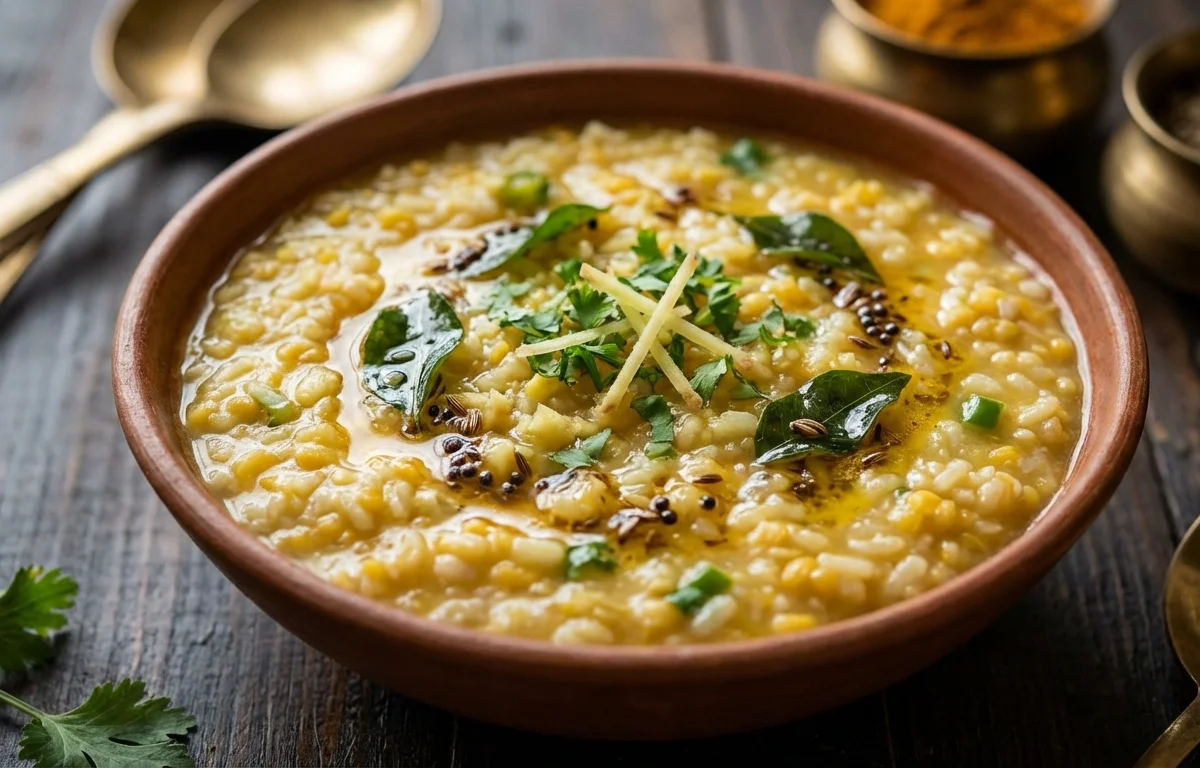
Congee
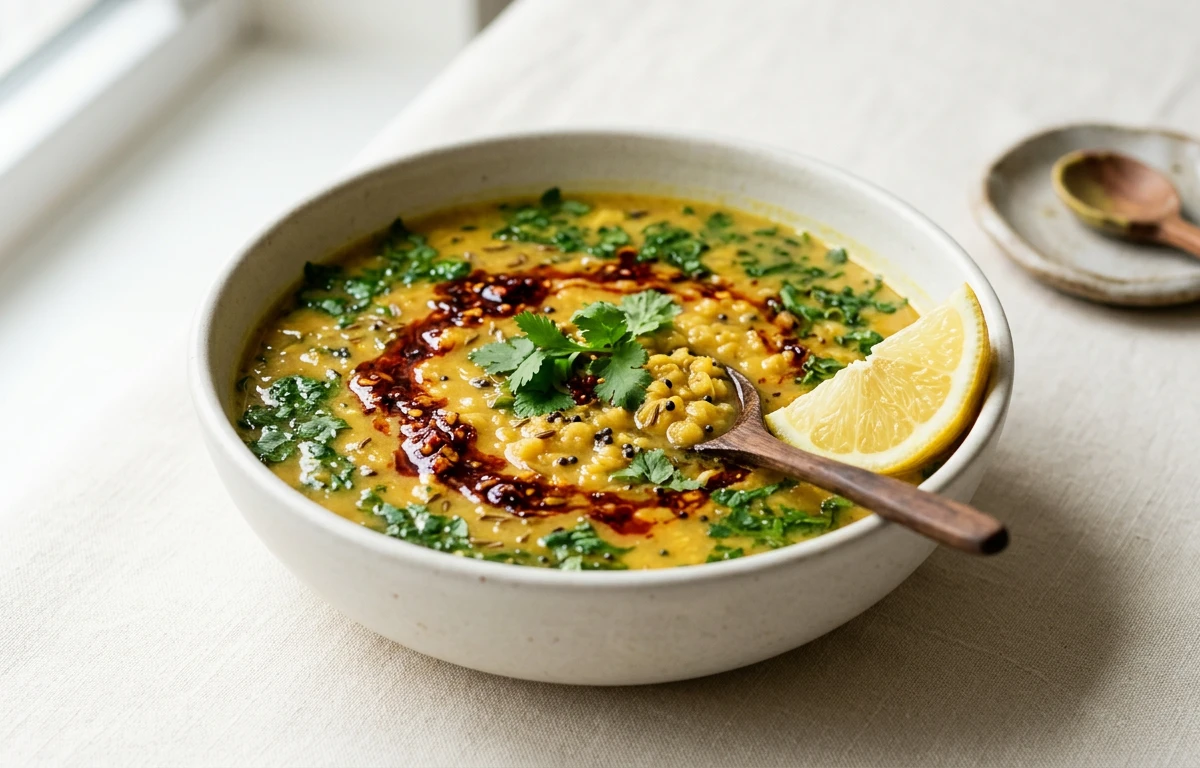
A warm, soothing bowl of broken rice simmered into a creamy, velvety porridge. This comforting one-pot meal is gently spiced with ginger and cumin, making it the ultimate Indian-style comfort food for any time of day.
For 4 servings
- prep · ~2 min
Wash the rice.
Rinse the rice in water 2-3 times until the water runs mostly clear. Drain and set aside.
- boil · ~40 min
Simmer the congee base.
1.In a heavy-bottomed pot, combine washed rice, water, grated ginger, and salt.2.Bring to a rolling boil over high heat.3.Reduce heat to low, partially cover with a lid, and simmer for 35-40 minutes, stirring occasionally to prevent sticking.4.The congee is ready when the rice grains have broken down completely and the mixture is thick and creamy.TIPStir every 5-7 minutes to release starch and achieve a silky texture. Add a splash of boiling water if it gets too thick. - temper · ~2 min
Make the cumin tempering.
1.Heat ghee in a small tadka pan over medium heat.2.Add cumin seeds and let them crackle and turn aromatic, about 30 seconds.3.Immediately pour the hot tempering over the cooked congee. - mix · ~1 min
Finish and season the congee.
Stir the tempering into the congee. Mix in the freshly crushed black pepper. Taste and adjust salt if needed.
- garnish
Garnish with coriander and serve hot.
Ladle the congee into serving bowls, sprinkle with fresh coriander leaves, and serve immediately.
What to keep in mind.
7 tips from the recipe — small details that make a real difference to the final dish.
- 1Use broken rice or sona masoori for the creamiest, most authentic texture.
- 2Stir the congee every few minutes to help release starch and achieve a velvety consistency.
- 3For extra depth, toast cumin seeds in ghee until fragrant before adding to the pot.
- 4If the congee thickens too much while resting, thin it with a splash of hot water just before serving.
- 5Let the congee sit covered for 5 minutes after cooking to allow flavors to meld.
- 6Make ahead: congee keeps well in the fridge for up to 3 days; reheat with a little water.
- 7Crush black pepper fresh just before adding — pre-ground lacks the same punch.
Adapt it for your goals.
High-protein
Stir in 1/2 cup of cooked, shredded chicken or a beaten egg during the last 5 minutes of simmering for a more filling meal.
veganVegan
Replace ghee with coconut oil or a neutral vegetable oil for the tempering to keep the dish fully plant-based.
low oilLow-oil
Skip the tempering step entirely and instead stir in 1/2 teaspoon of cumin powder and a dash of chili flakes directly into the simmering congee.
jainJain
Omit the ginger and use asafoetida (hing) in the tempering instead of cumin seeds to follow Jain dietary restrictions.
Why this is on our healthy list.
Ginger for Digestion
Ginger is known to soothe the stomach and reduce nausea, making this congee a gentle choice for an upset digestive system.
Low in Fat
With only 1 teaspoon of ghee per serving, this congee is a light, low-fat meal that is easy on the stomach.
Hydrating and Easy to Digest
The high water content and long cooking time break down the rice, creating a soft, hydrating porridge ideal for recovery or sensitive digestion.
Source of Energy from Whole Grains
Rice provides easily accessible carbohydrates for quick energy, especially beneficial when broken down into a congee.
Frequently asked questions
Yes, but the congee may take slightly longer to break down and won't be quite as creamy. Short-grain or sushi rice works best as a substitute.