
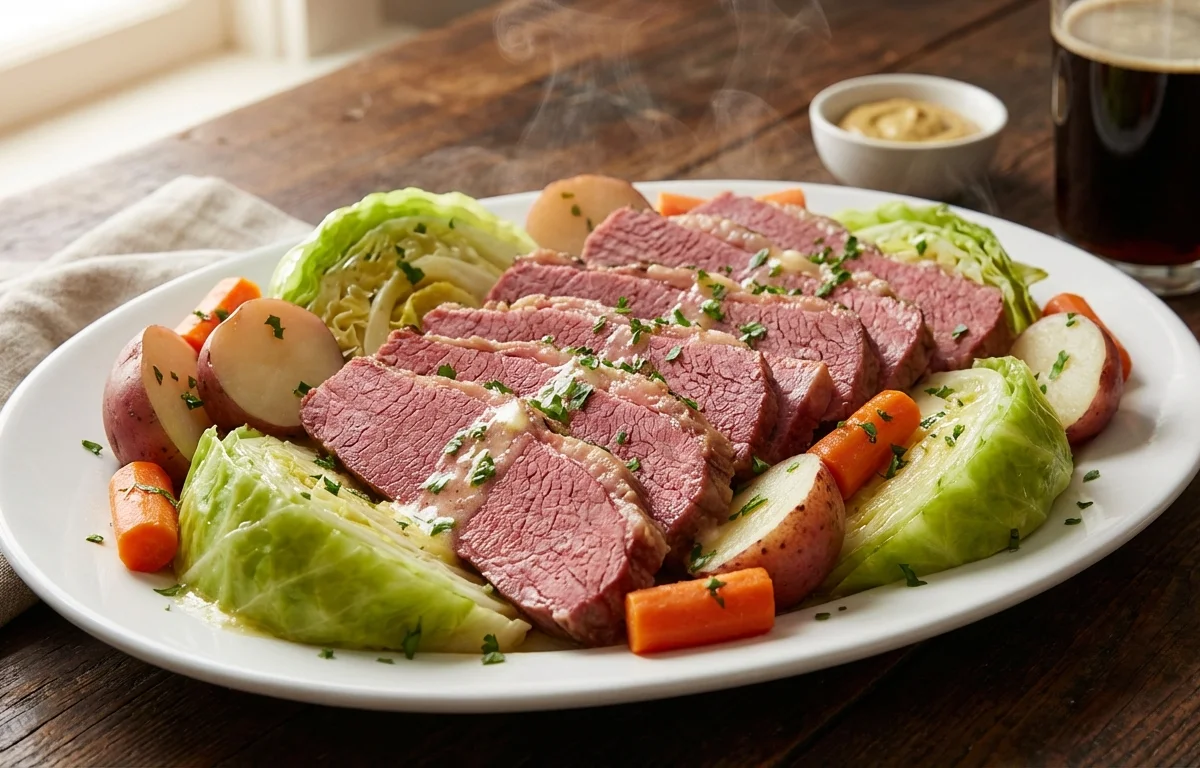
Corned Beef and Cabbage
Tender, salty-savory corned beef brisket simmered low and slow with wedges of cabbage, carrots, and potatoes until everything is melt-in-your-mouth soft. This one-pot Irish-American comfort classic fills the kitchen with an irresistible aroma and lands on the table as a hearty, satisfying dinner.
For 6 servings
- prep
Rinse and prep the corned beef brisket.
Remove brisket from packaging. Rinse under cold water and pat dry with paper towels. Set aside the included spice packet.
- boil · ~120 min
Start simmering the corned beef.
1.Place brisket in a large Dutch oven or stockpot, fat side up.2.Add water until brisket is fully submerged by about 2 inches.3.Add quartered onion, smashed garlic, bay leaves, peppercorns, and the contents of the spice packet.4.Bring to a boil over high heat, then reduce heat to low, cover, and simmer gently for 2 hours.TIPKeep the water at a gentle bubble — a rolling boil will toughen the meat. - simmer · ~20 min
Add the root vegetables.
1.After 2 hours, add carrot chunks and halved potatoes to the pot.2.Check water level; add more hot water if needed to keep vegetables submerged.3.Return to a simmer, cover, and cook for 20 minutes. - simmer · ~20 min
Add the cabbage wedges.
1.Nestle cabbage wedges into the pot, pushing them down to submerge as much as possible.2.Cover and continue simmering until cabbage is tender but still holds its shape, about 15 to 20 minutes.TIPDon't overcook the cabbage — it should be fork-tender, not mushy or falling apart. - prep · ~10 min
Rest the brisket before slicing.
1.Use a slotted spoon to transfer cabbage, carrots, and potatoes to a serving platter.2.Lift brisket to a cutting board and tent loosely with foil for 10 minutes.3.Find and slice against the grain into 1/4-inch thick slices.TIPSlicing against the grain is the single most important step for tender meat — look for the lines in the brisket and cut perpendicular to them. - serve
Plate and serve family-style.
Arrange sliced brisket on a large platter alongside cabbage wedges, carrots, and potatoes. Spoon a little cooking liquid over the meat to keep it moist. Garnish with fresh parsley and serve with whole grain mustard on the side.
What to keep in mind.
7 tips from the recipe — small details that make a real difference to the final dish.
- 1Rinse the corned beef well to remove surface brine for a more balanced saltiness.
- 2Keep the water at a gentle simmer—a rolling boil will toughen the brisket.
- 3Add cabbage wedges only in the last 20 minutes so they stay tender, not mushy.
- 4Always slice the brisket against the grain for the most tender bite.
- 5Let the brisket rest 10 minutes under foil before slicing to reabsorb juices.
- 6Save the leftover cooking liquid as a flavorful base for soups or beans.
- 7For a less salty result, change the water halfway through simmering.
Adapt it for your goals.
Low-oil
Skip the added fat completely—this dish is naturally made by simmering in water and its own rendered juices, making it an excellent low-oil meal.
high proteinHigh-protein
Add extra protein by including a second smaller brisket or a couple of beef short ribs; cook time will need to increase by about 30 minutes.
gluten freeGluten-free
This recipe is naturally gluten-free as long as the corned beef seasoning packet is certified gluten-free—check the label.
spicySpicy
Add 1-2 dried chipotle peppers or a teaspoon of red pepper flakes to the simmering liquid for a smoky, spicy kick.
Why this is on our healthy list.
Rich in Iron
Corned beef is a good source of heme iron, which is easily absorbed and supports healthy blood oxygen transport.
High in Vitamin C
Cabbage, potatoes, and carrots all contribute vitamin C, which aids immune function and collagen production.
Source of Fiber
Cabbage and potatoes provide dietary fiber that supports digestive health and helps maintain steady energy levels.
Potassium from Vegetables
Potatoes and carrots are naturally rich in potassium, an electrolyte that supports heart function and muscle contraction.
Moderate Protein Content
The brisket supplies a moderate amount of high-quality protein, essential for muscle repair and satiety.
Frequently asked questions
Flat-cut brisket is traditional because it's lean and slices neatly, but point-cut brisket works too—it's slightly fattier and more flavorful.


