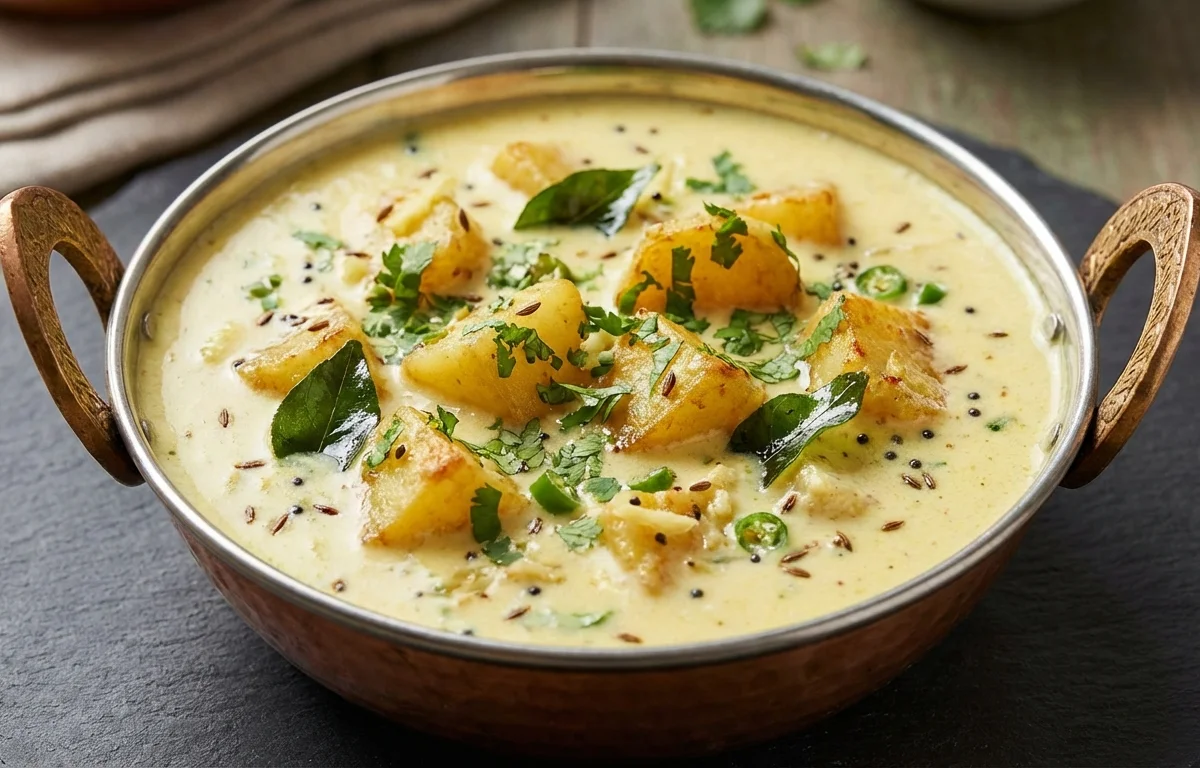
Dahi Aloo
Tender potatoes simmered in a lightly spiced yogurt gravy that turns creamy without feeling heavy. This simple North Indian style dish has gentle tang, warm spices, and pairs beautifully with roti or jeera rice.
For 4 servings
- prep · ~15 min
Boil and prep the potatoes.
1.Boil the potatoes until just tender, then peel and halve them.2.Whisk the yogurt in a bowl until smooth and lump-free.3.Chop the onion, grate the ginger, slit the green chili, and keep everything ready.TIPDo not overboil the potatoes or they may break once they simmer in the yogurt gravy. - saute · ~7 min
Cook the onions and spices.
1.Heat oil in a pan over medium heat.2.Add cumin seeds and let them sizzle for 20 to 30 seconds.3.Add onion and cook until soft and light golden, about 5 minutes.4.Add ginger and green chili, then cook for 1 minute.5.Add turmeric powder, red chili powder, and coriander powder, and stir for a few seconds.TIPKeep the heat medium to low after adding the ground spices so they do not burn. - mix · ~3 min
Add the yogurt carefully.
Lower the heat and add the whisked yogurt slowly, stirring continuously so it stays smooth. Mix until the masala looks creamy and well combined.
TIPStir constantly while adding the yogurt to keep the gravy from splitting. - simmer · ~10 min
Simmer the potatoes in the gravy.
1.Add the boiled potatoes and salt, then mix gently to coat them well.2.Pour in water and bring the curry to a gentle simmer.3.Cook for 8 to 10 minutes until the gravy thickens slightly and the potatoes absorb the flavor.4.Sprinkle in garam masala and stir gently. - garnish
Garnish with coriander leaves.
- serve
Serve hot with roti or rice.
What to keep in mind.
7 tips from the recipe — small details that make a real difference to the final dish.
- 1Use potatoes that are just fork-tender; overboiled pieces will crumble when stirred into the yogurt gravy.
- 2Whisk the yogurt until completely smooth before it goes into the pan to help prevent a grainy texture.
- 3Lower the flame fully before adding yogurt and keep stirring, or the gravy can split from sudden heat.
- 4Let the onion turn light golden, not dark brown, so the gravy stays pale and softly flavored.
- 5Simmer gently after adding water; a hard boil can make the yogurt sauce separate.
- 6If the curry thickens too much as it sits, loosen it with a splash of hot water before serving.
- 7This dish tastes even better after 20 to 30 minutes of resting, when the potatoes soak up the spiced yogurt.
Adapt it for your goals.
No-onion
Skip the onion for a lighter, simpler dahi aloo with a cleaner yogurt-and-spice flavor.
jainJain
Omit onion and ginger, then rely on cumin, green chili, yogurt, and coriander for a Jain-friendly version.
low oilLow-oil
Reduce the oil slightly and cook the onions on lower heat with a splash of water for a lighter everyday curry.
spicierSpicier
Increase green chili and red chili powder for a sharper heat that balances the cooling yogurt gravy.
Why this is on our healthy list.
Comforting Yet Light Gravy
The sauce gets its creaminess from yogurt rather than cream or heavy nut pastes, keeping the dish rich-tasting but not overly heavy.
Good Source of Potassium
Potatoes provide potassium and satisfying carbohydrates, making this curry filling and suitable for a simple meal.
Includes Beneficial Spices
Ginger, cumin, coriander, and turmeric add flavor along with traditional warming ingredients commonly used in home-style Indian cooking.
Frequently asked questions
Whisk it very well, lower the heat before adding it, and stir continuously as it goes into the pan. Avoid boiling the curry aggressively afterward.



.webp)