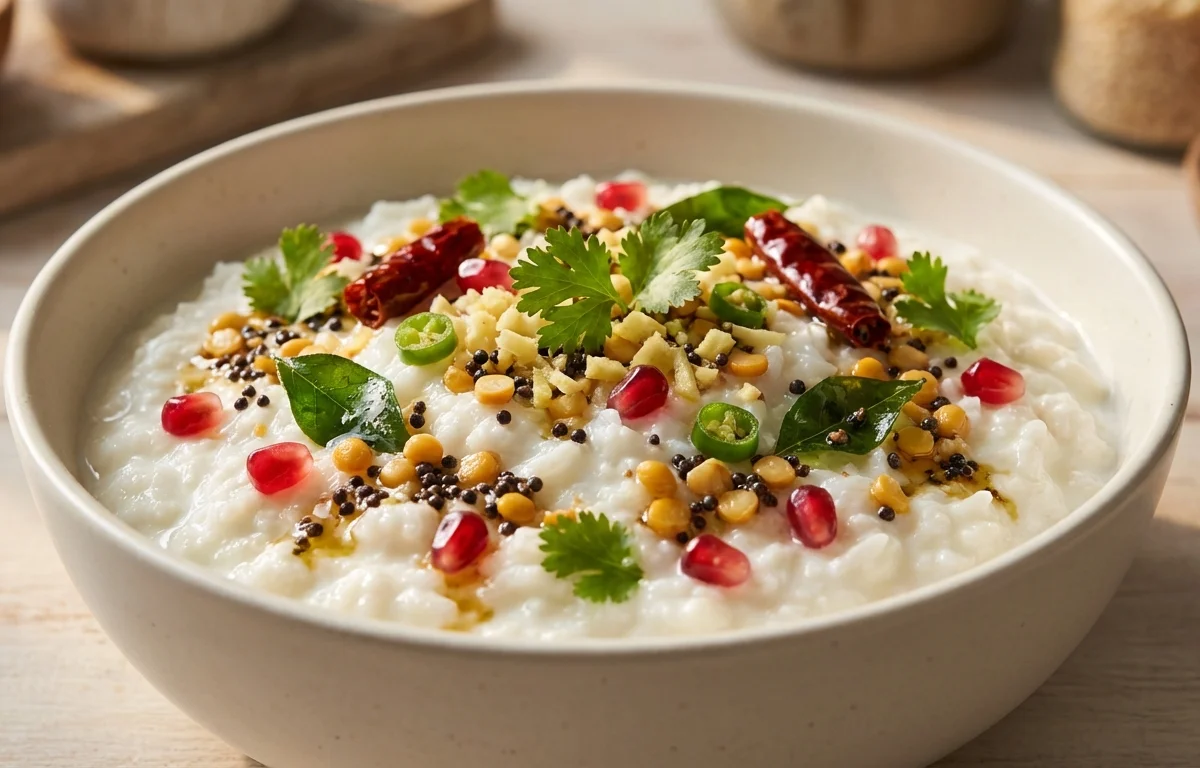
Dahi Chawal
The ultimate comfort food from India — soft, mushy rice folded into cool, creamy yogurt and finished with a fragrant tempering of mustard seeds, curry leaves, and ginger. A gentle, probiotic-rich meal that soothes the stomach and comes together in minutes, a staple across Indian homes.
For 4 servings
- boil · ~20 min
Cook the rice until very soft.
1.Wash 1 cup rice thoroughly and drain.2.Add rice and 3 cups water to a pot. Bring to a boil over medium-high heat.3.Lower heat, cover partially, and simmer until rice is very soft and mushy (18-20 min).4.Turn off heat, mash the rice lightly with the back of a spoon while still warm. - mix · ~5 min
Combine rice and yogurt.
1.Let the mashed rice cool until just warm (not hot).2.Add whisked yogurt, milk, and salt to the rice.3.Mix thoroughly until creamy and combined. Adjust consistency with a splash of milk or water if needed.TIPHot rice will curdle the yogurt — always cool to lukewarm first. - temper · ~3 min
Make the tempering.
1.Heat oil in a small pan over medium heat until shimmering.2.Add mustard seeds and let them pop (30 sec).3.Add cumin seeds, urad dal, and curry leaves. Sauté until dal turns golden (1 min).4.Add asafoetida, grated ginger, and chopped green chili. Stir for 30 seconds and remove from heat.TIPKeep the heat medium — high heat will burn the urad dal and ruin the tempering. - mix · ~1 min
Fold the tempering into the yogurt rice.
Pour the hot tempering over the prepared dahi chawal. Mix gently to incorporate all the flavors evenly.
- garnish
Garnish and serve.
Top with chopped coriander leaves. Serve at room temperature or slightly chilled with pickle and papad on the side.
What to keep in mind.
6 tips from the recipe — small details that make a real difference to the final dish.
- 1Always cool the cooked rice to lukewarm before adding yogurt to prevent curdling.
- 2Use full-fat yogurt for a creamier texture and richer flavor in dahi chawal.
- 3Whisk the yogurt until completely smooth before mixing to avoid lumps in the final dish.
- 4Let the tempered spices cool slightly before folding them in to retain their crackling aroma.
- 5For best flavor, serve dahi chawal at room temperature or slightly chilled, not straight from the fridge.
- 6Adjust consistency with cold milk or water just before serving, as the rice will continue to absorb liquid.
Adapt it for your goals.
Vegan
Replace yogurt with thick coconut milk yogurt or cashew yogurt, and use plant-based milk. The dish remains creamy and tangy, ideal for those avoiding dairy.
High ProteinHigh-Protein
Mix in 1/2 cup of cooked moong dal (yellow lentils) along with the rice. This boosts protein content while keeping the texture soft and comforting.
Spicy South IndianSpicy South Indian
Add a teaspoon of ginger-garlic paste and an extra green chili to the tempering, or stir in a pinch of red chili powder for a fiery kick.
Fruit & NutFruit & Nut
Fold in 2 tablespoons of roasted cashews and pomegranate arils just before serving for a sweet-crunchy contrast against the creamy yogurt.
Why this is on our healthy list.
Probiotic-Rich Gut Support
Full-fat yogurt is naturally packed with live probiotics that aid digestion and promote a healthy gut microbiome, making this dish gentle on the stomach.
Hydrating & Cooling
The combination of rice, yogurt, and milk provides a hydrating, cooling meal, ideal for hot weather or soothing an irritated digestive system.
Anti-Inflammatory Spices
Asafoetida, ginger, and curry leaves contain compounds known for their anti-inflammatory and digestive-stimulating properties, enhancing overall wellness.
Frequently asked questions
Yes, leftover rice works well. Make sure it's at room temperature and not refrigerated cold; reheat gently to lukewarm before mixing with yogurt.