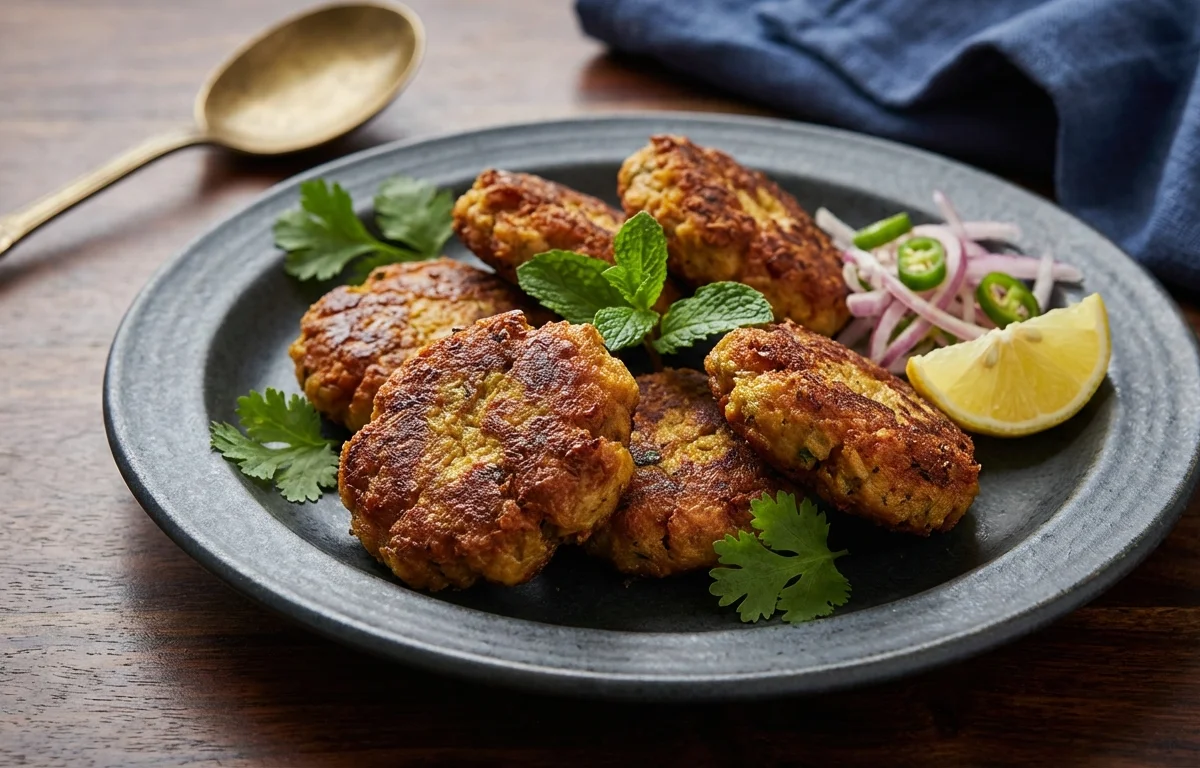
Dalcha Kebab
Melt-in-your-mouth patties made from tender mutton and chana dal, infused with aromatic Hyderabadi spices. These kebabs are shallow-fried to a perfect golden-brown crisp, making them an irresistible appetizer.
For 4 servings
Pressure Cook the Mutton and Dal
1.In a pressure cooker, combine the mutton pieces, soaked and drained chana dal, roughly chopped onion, ginger-garlic paste, and green chilies.2.Add turmeric powder, red chili powder, garam masala, cinnamon stick, cloves, green cardamoms, and salt.3.Pour in 2 cups of water and stir well to combine.4.Secure the lid and pressure cook on medium heat for 6-7 whistles, or until the mutton is extremely tender (approximately 25-30 minutes).5.Allow the pressure to release naturally before opening the cooker.Dry and Grind the Mixture
1.Open the cooker. If there is any excess water, cook the mixture on high heat, stirring continuously, until all the moisture has evaporated. The mixture should be very dry.2.Spread the mixture on a plate and let it cool down completely. This step is crucial for non-sticky kebabs.3.Once cool, remove and discard the whole spices (cinnamon stick, cloves, and cardamoms).4.Transfer the mixture to a grinder or food processor and grind to a smooth, thick paste without adding any water.Shape the Kebabs
1.Transfer the ground paste to a large mixing bowl.2.Add the finely chopped onion, coriander leaves, mint leaves, fresh lemon juice, and the beaten egg.3.Mix everything thoroughly until well combined. The mixture should be firm. If it feels too soft, refrigerate for 30 minutes.4.Grease your palms with a little oil. Divide the mixture into 16 equal portions and shape each into a round, flat patty (about 2-3 inches in diameter).Shallow Fry to Perfection
1.Heat oil in a wide, non-stick skillet or pan over medium heat. The oil should be hot but not smoking.2.Carefully place 4-5 kebab patties in the pan, ensuring they are not overcrowded.3.Fry for 3-4 minutes on each side, until they turn a deep golden brown and develop a crisp exterior.4.Use a slotted spoon to remove the kebabs and place them on a plate lined with paper towels to absorb any excess oil.5.Repeat the process for the remaining kebabs.Serve and Garnish
1.Arrange the hot Dalcha Kebabs on a serving platter.2.Serve immediately with a side of green mint chutney, onion rings, and lemon wedges.
What to keep in mind.
6 tips from the recipe — small details that make a real difference to the final dish.
- 1Ensure the cooked mutton-dal mixture is completely dry before grinding. Any moisture will make the kebabs difficult to shape and fry.
- 2For easier shaping, refrigerate the kebab mixture for 30-60 minutes before forming the patties.
- 3Do not overcrowd the pan while frying; this lowers the oil temperature and can make the kebabs greasy and prone to breaking.
- 4Fry on a steady medium heat to ensure the kebabs cook evenly and develop a crisp exterior without burning.
- 5Test the seasoning by frying a tiny portion of the mixture first. Adjust salt or spices in the remaining mixture if needed.
- 6If the mixture is too loose even after cooling, add a tablespoon of roasted gram flour (besan) or breadcrumbs to help bind it.
Adapt it for your goals.
Vegetarian
Replace mutton with 2 cups of boiled and mashed raw bananas (kachhe kele) or yam (suran). The rest of the process remains the same.
ChickenChicken
Use 500g of chicken mince instead of mutton. Reduce the pressure cooking time to 3-4 whistles as chicken cooks much faster.
HealthierHealthier
For a lower-fat version, shape the patties, lightly brush them with oil, and bake at 200°C (400°F) for 15-20 minutes, flipping halfway through, or cook them in an air fryer.
SpicierSpicier
Add 1/2 teaspoon of black pepper powder and increase the number of green chilies in the mixture for an extra kick.
Why this is on our healthy list.
Rich in Protein
Mutton and chana dal provide high-quality protein, which is essential for muscle repair, building new tissue, and overall body function.
Excellent Source of Iron
Mutton is a great source of heme iron, which is more easily absorbed by the body than non-heme iron from plant sources. Iron is crucial for forming hemoglobin and preventing anemia.
Provides Sustained Energy
The complex carbohydrates and fiber from chana dal are digested slowly, providing a steady release of energy and helping to keep you full for longer.
Rich in B-Vitamins
Mutton is a good source of B-vitamins, particularly B12 and B6, which are vital for the nervous system, energy metabolism, and the formation of red blood cells.
Frequently asked questions
A serving of 4 Dalcha Kebabs contains approximately 625 calories. This is an estimate and can vary based on the type of mutton and the amount of oil absorbed during frying.