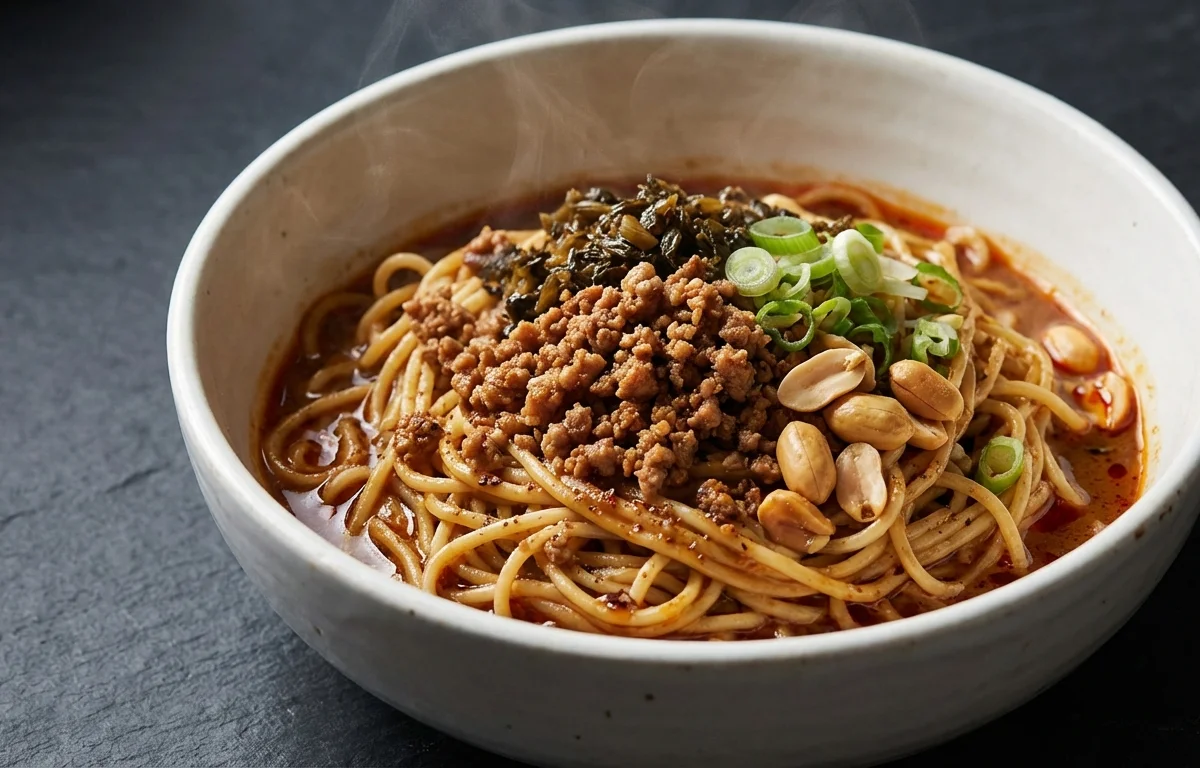
Dan Dan Noodles
A fiery, numbing bowl of ground pork and noodles swimming in a deeply savory sesame-chili sauce. This Sichuan street-food classic comes together fast, layering the intense flavors of preserved mustard greens, chili oil, and Sichuan peppercorns in every slippery bite.
For 4 servings
- mix · ~3 min
Prepare the sauce base.
1.In a small bowl, combine chili oil, tahini, soy sauce, black vinegar, sugar, salt, and ground Sichuan peppercorns.2.Slowly whisk in water until the sauce is smooth and pourable. Set aside. - boil · ~5 min
Boil the noodles.
1.Bring a large pot of water to a rolling boil.2.Cook the fresh noodles according to package directions until just al dente, about 3 minutes.3.Drain well and divide among four serving bowls. - other · ~5 min
Brown the pork.
1.Heat the oil in a wok over high heat until shimmering.2.Add the ground pork and spread it into a thin layer. Let it sear undisturbed until the bottom is deeply browned, about 2 minutes.3.Break the pork into small crumbles and continue cooking until no longer pink, about 2 more minutes.TIPDon't stir too soon — letting the pork sear builds the deep savory crust that defines this dish. - other · ~2 min
Add the aromatics and mustard greens.
1.Add the garlic and ginger to the pork and stir-fry until fragrant, about 30 seconds.2.Toss in the sui mi ya cai and stir-fry for 1 minute to meld the flavors.3.Remove the wok from the heat. - assemble
Assemble the dan dan noodles.
1.Spoon the prepared sauce evenly over the noodles in each bowl.2.Top with the hot pork mixture.3.Scatter scallion greens generously over the top. - serve
Serve immediately.
Bring the bowls to the table and instruct everyone to toss everything together vigorously with chopsticks so the sauce coats every strand. Eat at once while hot.
TIPThe sauce settles fast — a good toss right before eating makes all the difference.
What to keep in mind.
6 tips from the recipe — small details that make a real difference to the final dish.
- 1Sear the pork in a single layer without stirring for 2 minutes to develop a deep, savory crust.
- 2Use fresh thin alkaline noodles for the best chewy texture; dried noodles will not yield the same result.
- 3Rinse the sui mi ya cai briefly to remove excess salt, then pat dry before stir-frying.
- 4Add the water to the sauce just before assembling so the tahini doesn't seize up.
- 5Toss the noodles vigorously with chopsticks right before eating so every strand is coated.
- 6Store leftover sauce and pork separate from noodles to keep the noodles from turning mushy.
Adapt it for your goals.
Vegetarian
Replace the ground pork with 300g of finely chopped mushrooms (shiitake or king oyster) sautéed until browned. Add a splash of soy sauce for umami. This makes the dish lighter and accessible to vegetarians.
less spicyLess-spicy
Reduce the chili oil to 1½ tablespoons and omit the ground Sichuan peppercorns, replacing with a pinch of white pepper. This tones down the heat while keeping the sesame and vinegar flavors forward.
gluten freeGluten-free
Substitute the wheat noodles with 400g of rice noodles or soba noodles (ensure 100% buckwheat). Use tamari instead of soy sauce. This adapts the dish for gluten-sensitive diners.
Why this is on our healthy list.
High in Protein
Ground pork provides a hearty dose of complete protein, essential for muscle repair and satiety.
Rich in Antioxidants
Sichuan peppercorns and chili oil contain capsaicin and hydroxy-alpha-sanshool, compounds linked to anti-inflammatory and antioxidant effects.
Gut-Friendly Ferments
Sui mi ya cai (preserved mustard greens) is a fermented vegetable that introduces beneficial bacteria to support digestion.
Frequently asked questions
Yes, but the texture will be different. Use fresh spaghetti or linguine and cook 1 minute less than al dente for a closer bite.