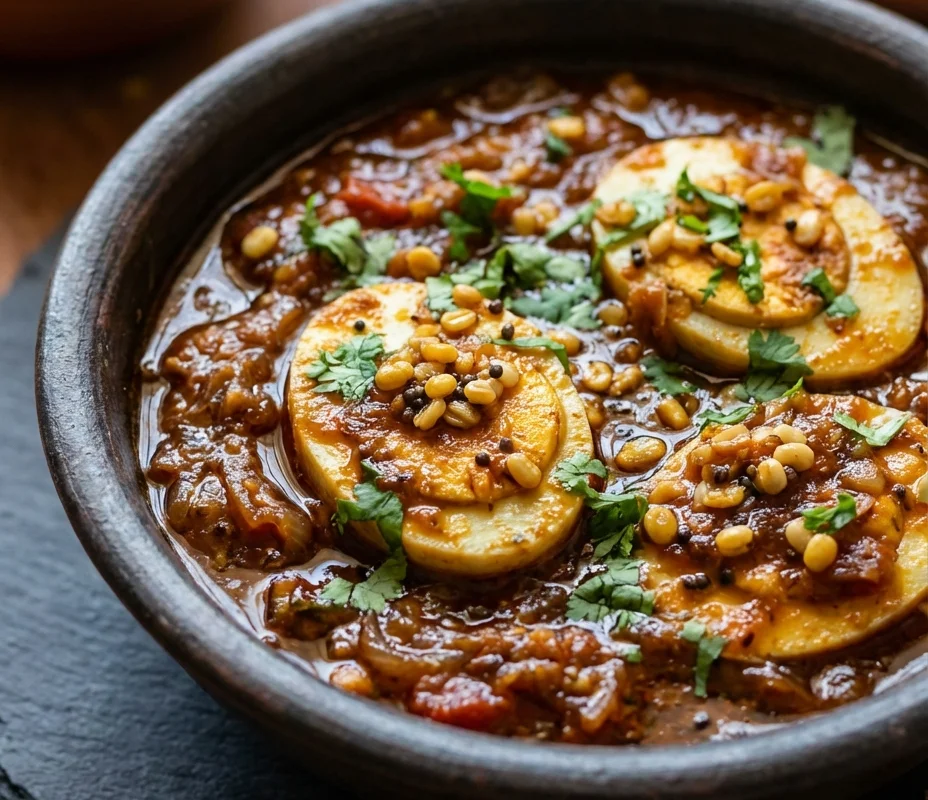
Egg Gothsu
A homestyle Tamil Nadu side dish where boiled eggs simmer in a tangy onion-tomato gravy with gentle spice. It is thinner than a curry, deeply comforting, and especially good with idli, dosa, or pongal.
For 4 servings
- boil · ~12 min
Boil and peel the eggs.
Place the eggs in water, bring to a boil, then cook until hard-boiled. Cool, peel, and make a few light slits on each egg so the gravy can flavor them better.
TIPLight slits help the eggs absorb the tangy gravy without breaking apart. - prep · ~5 min
Prepare the tamarind water and vegetables.
Mix the tamarind paste with a little warm water until smooth. Chop the onion, tomato, ginger, garlic, and coriander leaves, and slit the green chilies.
- temper · ~2 min
Make the tempering.
1.Heat oil in a pan over medium heat.2.Add mustard seeds and let them splutter.3.Add urad dal and cook until lightly golden.4.Add curry leaves and asafoetida for a few seconds.TIPKeep the heat moderate so the urad dal turns golden, not dark brown. - saute · ~7 min
Cook the onion base.
1.Add onion and green chili to the pan.2.Cook until the onion turns soft and lightly golden.3.Add ginger and garlic and sauté until the raw smell fades. - saute · ~6 min
Cook the tomatoes and spices.
1.Add tomato and cook until soft and pulpy.2.Add turmeric powder, red chili powder, coriander powder, and salt.3.Mix well and cook until the masala looks thick and glossy.TIPMash the tomatoes with the spoon as they cook to get the soft gothsu texture. - simmer · ~8 min
Add tamarind water and simmer the gravy.
Pour in the tamarind mixture and the remaining water. Bring it to a gentle simmer and cook until the raw tamarind smell disappears and the gravy turns slightly thick but still pourable.
- simmer · ~4 min
Simmer the eggs in the gothsu.
Add the boiled eggs to the gravy and spoon some of the masala over them. Simmer gently for a few minutes so the eggs warm through and take on the flavors.
- garnish
Finish with coriander leaves.
- serve
Serve hot with idli, dosa, or pongal.
What to keep in mind.
7 tips from the recipe — small details that make a real difference to the final dish.
- 1Make only shallow slits in the boiled eggs so they absorb gravy without splitting apart in the simmer.
- 2Cook the onion until lightly golden, not deeply browned, to keep the gothsu soft and homestyle rather than curry-like.
- 3Mash the tomatoes as they soften so the gravy gets the classic pulpy, slightly loose gothsu texture.
- 4Let the tamarind simmer until its raw smell disappears before adding the eggs, or the gravy will taste sharp and unfinished.
- 5Keep the final gravy pourable; Egg Gothsu should be thinner than an egg curry and easy to spoon over idli or pongal.
- 6Simmer the eggs very gently for just a few minutes, since prolonged boiling can make hard-boiled eggs rubbery.
- 7This tastes even better after a short rest, as the slit eggs absorb the tangy onion-tomato masala.
Adapt it for your goals.
Spicier
Add an extra green chili or a little more red chili powder for a sharper heat that pairs especially well with plain pongal.
shallot basedShallot-based
Use small onions or shallots instead of regular onion for a sweeter, more traditional Tamil-style depth.
low oilLow-oil
Reduce the oil slightly and cook the onion-tomato base a bit longer; good if you want a lighter everyday side dish.
vegetarian without eggVegetarian-without-egg
Replace eggs with boiled baby potatoes or brinjal for a gothsu-style side that still suits idli and dosa.
Why this is on our healthy list.
Protein From Eggs
Boiled eggs add satisfying protein, making this thin gravy more filling than a plain chutney or sambar side.
Tomato and Onion Base
The gravy uses a generous onion-tomato base, which contributes plant compounds and savory depth without needing cream.
Digestive Spice Support
Ginger, garlic, curry leaves, asafoetida, and tamarind bring traditional digestive-friendly flavor to the dish.
Frequently asked questions
Yes. Make the gravy ahead and refrigerate it, then reheat gently and add the boiled eggs shortly before serving so they stay tender.