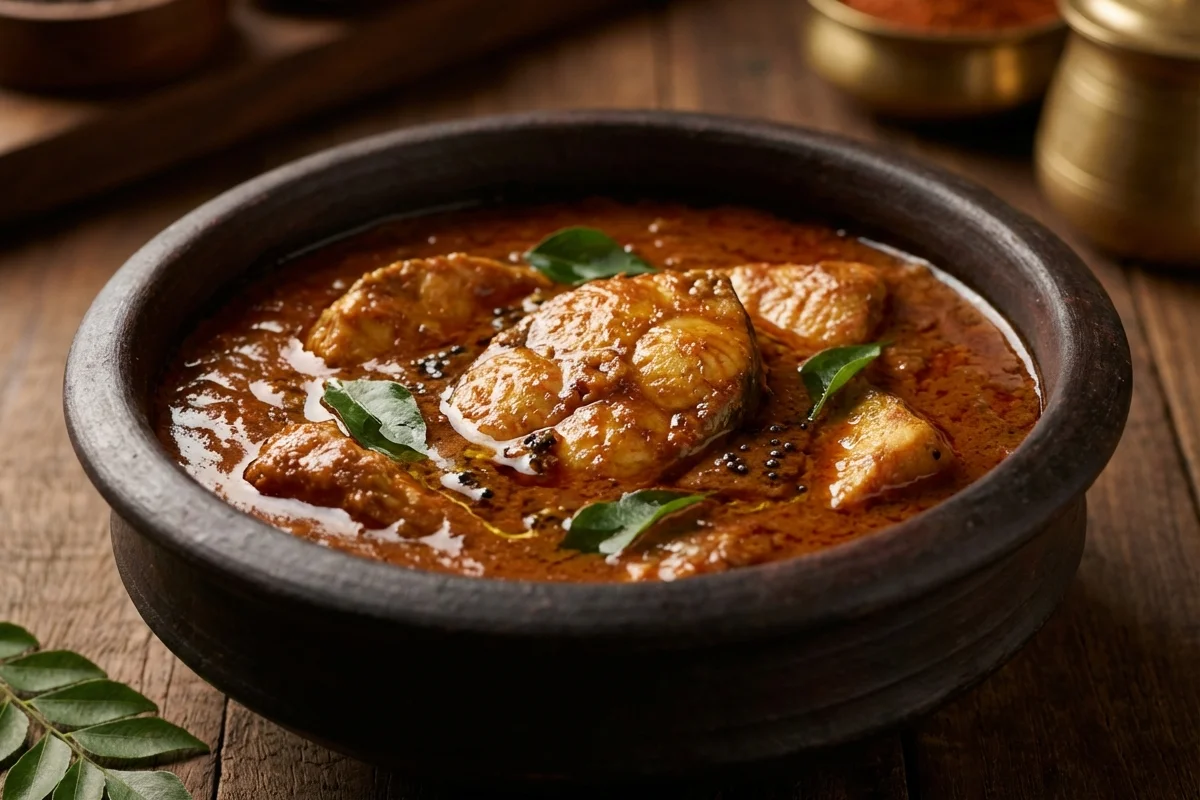
Fish Pulimunchi
A fiery Mangalorean fish dish with a bold red chili and tamarind masala. The gravy is sharp, spicy, and deeply savory, making it especially good with plain rice on the side.
For 4 servings
- prep · ~15 min
Soak the chilies and tamarind.
1.Place the dried red chili in a bowl and cover with warm water.2.Place the tamarind in a second bowl with a little warm water.3.Let both soak for 15 minutes to soften well. - mix · ~4 min
Grind the pulimunchi masala.
1.Drain the soaked chilies and add them to a grinder jar.2.Add tamarind, garlic, cumin seeds, black peppercorns, turmeric powder, salt, and 0.5 cup water.3.Grind to a smooth, thick red paste.TIPKeep the masala thick so the gravy stays bold and does not turn watery. - saute · ~5 min
Cook the onion.
Heat oil in a wide pan over medium heat. Add the sliced onion and cook until soft and lightly golden.
- saute · ~4 min
Cook the masala.
Add the ground masala to the pan and cook for 3 to 4 minutes, stirring often, until the raw smell fades and the oil begins to show at the edges.
TIPUse medium heat here. High heat can scorch the chili paste and make the curry bitter. - simmer · ~5 min
Add water and bring the gravy to a simmer.
Pour in the remaining 1 cup water and mix well. Bring the gravy to a gentle simmer so the flavors come together.
- simmer · ~8 min
Cook the fish in the gravy.
1.Slide the fish pieces gently into the simmering gravy in a single layer.2.Cover and cook on low heat until the fish is just done and tender, 6 to 8 minutes.3.Shake the pan gently once or twice instead of stirring hard.TIPDo not stir with a spoon after adding the fish or the pieces may break. - rest · ~5 min
Rest the curry for 5 minutes.
- serve
Serve hot with plain rice.
What to keep in mind.
7 tips from the recipe — small details that make a real difference to the final dish.
- 1Choose firm fish like king fish, seer fish, pomfret, or snapper so the pieces hold in the sour, spicy gravy.
- 2Grind the soaked chilies and tamarind to a very smooth paste; any coarse bits can make the gravy taste harsh.
- 3Cook the masala until the oil shows at the edges before adding water, or the curry can taste raw and bitter.
- 4Once the fish goes in, keep the gravy at a gentle simmer; a rolling boil can make the fish tough and break it apart.
- 5Resting the curry for 5 minutes after cooking helps the fish absorb the pulimunchi masala and deepens the tamarind-chili flavor.
- 6This curry often tastes even better after a few hours, so you can make the masala base ahead and add the fish just before serving.
- 7Store leftovers chilled for up to a day and reheat very gently, shaking the pan instead of stirring to keep the fish intact.
Adapt it for your goals.
Low-oil
Use 1 tablespoon oil and sauté the onion more slowly; the curry stays bold while feeling a little lighter.
extra spicyExtra-spicy
Add a few hotter dried red chilies along with the Byadagi chilies if you want more heat without losing the classic red color.
bonelessBoneless
Use thick boneless fillets for easier serving; this is especially good if you want a less fiddly rice-side curry.
prawnPrawn
Swap the fish for prawns and shorten the final simmer, for a faster coastal-style pulimunchi with the same tangy masala.
Why this is on our healthy list.
Good Source of Protein
The fish provides satisfying protein, making this curry filling and helpful for a balanced meal with rice.
Rich in Aromatic Spices
Garlic, cumin, black pepper, and red chilies bring strong flavor, so the dish tastes robust without needing many ingredients.
Naturally Dairy-Free
This pulimunchi gets its body from the masala itself rather than cream or coconut milk, keeping the finish clean and sharp.
Frequently asked questions
Use firm fish that can handle simmering in gravy, such as seer fish, king fish, pomfret, snapper, or other sturdy steaks and fillets.