Gefilte Fish
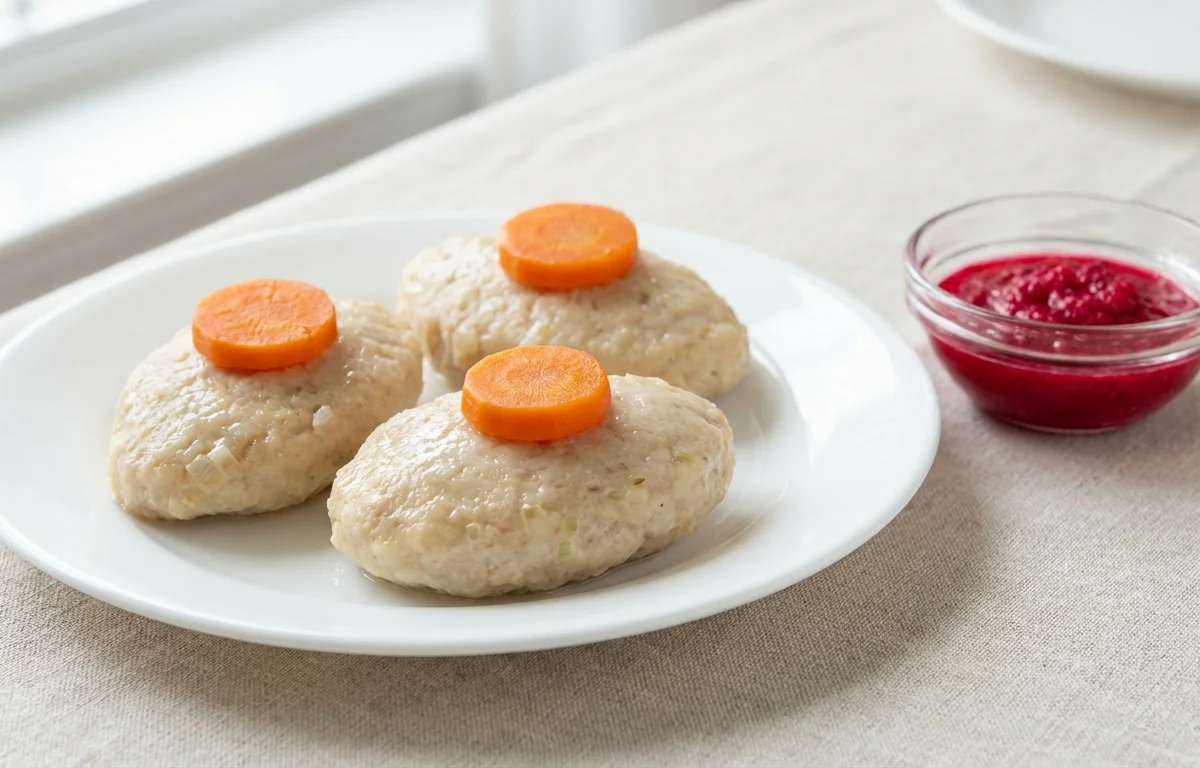
Delicate, poached fish patties made from a finely ground mix of white fish, onion, and carrots, bound with egg and matzo meal. This Ashkenazi Jewish classic is traditionally served chilled with a slice of carrot on top and a tangy horseradish on the side.
For 6 servings
- prep · ~20 min
Prepare the broth.
1.Place 8 cups water in a large pot over high heat.2.Add 1 quartered onion, 3 quartered carrots, 6 peppercorns, 2 bay leaves, and 1 tsp sugar.3.Bring to a rolling boil, then reduce heat to a gentle simmer. Cover and cook for 20 minutes. - prep · ~3 min
Grind the fish and vegetables.
1.Cut fish fillets into 1-inch chunks and place in a food processor.2.Add 2 quartered raw onions and pulse until coarsely ground.3.Scrape down the sides and pulse again until a slightly chunky paste forms.TIPWork in batches if your food processor is small. Don't over-process into a puree; the mixture should have some texture. - mix · ~5 min
Mix the fish paste.
1.Transfer the fish mixture to a large mixing bowl.2.Add 2 eggs, 0.5 cup matzo meal, 0.5 tsp salt, and a pinch of white pepper.3.Stir vigorously with a wooden spoon until the mixture is uniform and slightly sticky.TIPThe mixture should feel light and hold together when shaped. If it feels too wet, add an extra tablespoon of matzo meal. - prep · ~5 min
Shape the gefilte fish patties.
1.With wet hands, scoop about 1/3 cup of the mixture.2.Gently shape into an oval patty about 2.5 inches long.3.Place shaped patties on a plate. Repeat until all mixture is used.TIPKeep a bowl of cold water nearby to wet your hands. This prevents the sticky mixture from clinging. - other · ~45 min
Poach the fish patties gently.
1.Carefully lower each patty into the simmering broth using a slotted spoon.2.Add the reserved carrot coin slices to the broth.3.Cover the pot and simmer gently for 45 minutes. Do not let the broth boil vigorously.TIPA gentle simmer is key — a hard boil will break the delicate patties apart. - prep · ~240 min
Cool and chill the gefilte fish.
1.Remove patties and carrot coins carefully with a slotted spoon and arrange in a serving dish.2.Strain the broth and pour it over the patties until just covered.3.Top each patty with a carrot coin. Let cool to room temperature, then refrigerate for at least 4 hours.TIPThe chilling step is essential. The broth will set into a light jellied stock, and the flavors meld beautifully.
What to keep in mind.
6 tips from the recipe — small details that make a real difference to the final dish.
- 1Wet your hands before shaping each patty to prevent the sticky fish mixture from clinging.
- 2For the best texture, pulse the fish and onion until coarsely ground, not pureed.
- 3Simmer the patties gently; a rolling boil will cause them to break apart.
- 4Chill the cooked gefilte fish in its broth for at least 4 hours to let the jelly set and flavors meld.
- 5Refrigerate leftovers in the strained broth to keep the patties moist and flavorful.
- 6Use a combination of carp, whitefish, and pike for authentic flavor and a tender texture.
Adapt it for your goals.
Leaner option
Use only skinless white fish fillets (like sole or cod) and reduce the matzo meal to 1/4 cup for a lighter, less dense patty.
sweet twistSweet twist
Add 1 grated apple (peeled) and an extra teaspoon of sugar to the fish mixture for a subtly sweet, fruity variation.
gluten freeGluten-free
Substitute matzo meal with an equal amount of gluten-free breadcrumbs or almond flour for those avoiding gluten.
Why this is on our healthy list.
Lean Protein Source
White fish provides high-quality, low-fat protein essential for muscle repair and maintenance.
Rich in B Vitamins
Fish and eggs contribute B12 and niacin, supporting energy metabolism and nervous system health.
Low in Saturated Fat
This dish uses no added oil, making it a heart-friendly choice when prepared as directed.
Natural Gelatin for Joints
The homemade fish broth contains gelatin, which may support joint and bone health.
Frequently asked questions
Yes, but thaw them completely in the refrigerator and pat very dry with paper towels before grinding to avoid excess moisture.