
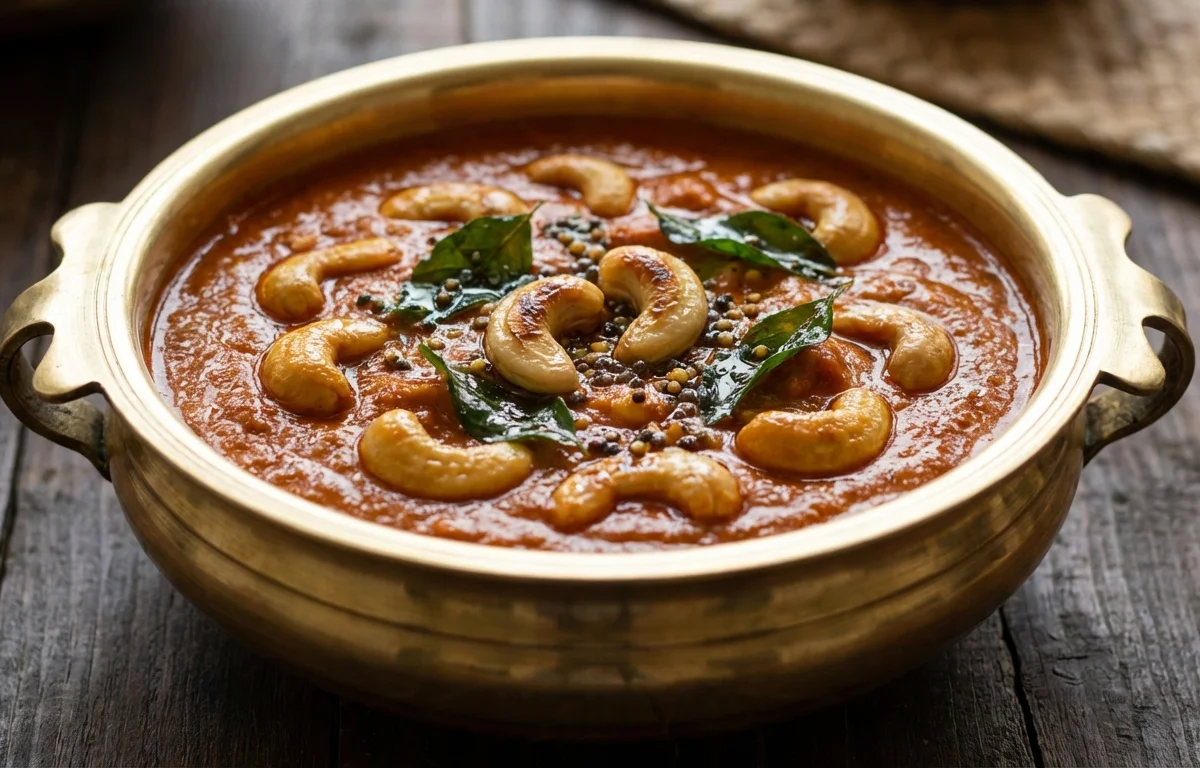
Girengi Gassi
A classic Mangalorean coconut-based curry where tender ridge gourd slices swim in a fragrant, spice-laced gravy. Roasted spices and fresh coconut are ground to a smooth paste, then simmered with ridge gourd until soft. A gentle tempering of mustard seeds and curry leaves finishes this coastal comfort dish — perfect with a bowl of steamed rice.
For 4 servings
- roast · ~4 min
Roast coconut and spices for the masala paste.
1.Heat a small pan over medium heat. Add grated coconut, dried red chilies, coriander seeds, cumin seeds, and fenugreek seeds.2.Dry roast, stirring continuously, until coconut turns golden brown and aromatic (3-4 min).3.Remove from heat and let cool completely.TIPKeep the heat on medium — too high and the coconut burns before the spices release their oils. - mix · ~3 min
Grind the masala to a smooth paste.
1.In a blender jar, add the roasted coconut-spice mixture along with turmeric powder and tamarind.2.Pour in 1 cup water and grind to a very smooth, fine paste. Scrape down sides as needed.3.Set masala paste aside.TIPThe paste should be silky smooth with no coarse coconut bits — this gives the curry its signature texture. - simmer · ~12 min
Cook the ridge gourd in the masala.
1.Transfer the ground masala paste to a heavy-bottomed pot.2.Add the chopped ridge gourd pieces, salt, and 1 cup water. Stir well.3.Bring to a gentle boil over medium-high heat, then lower heat to medium-low.4.Cover partially and simmer until ridge gourd turns tender and translucent (10-12 min), stirring occasionally.TIPDon't overcook — ridge gourd should be soft but still hold its shape. Mushy gourd makes for a sad curry. - temper · ~2 min
Prepare the tempering.
1.In a small tempering pan, heat coconut oil over medium heat until it shimmers.2.Add mustard seeds and let them pop and crackle (30 sec).3.Add crushed garlic and curry leaves. Fry until garlic turns light golden and leaves are crisp (20-30 sec).4.Immediately pour the sizzling tempering over the simmering curry. Stir once and switch off the heat.TIPStand back when adding curry leaves — they sputter! Pour the tempering while it's still sizzling for maximum aroma. - rest · ~5 min
Rest the curry briefly.
Let the Girengi Gassi rest for 5 minutes off the heat. This allows the flavors to settle and the gravy to thicken slightly.
- serve
Serve hot with steamed rice.
Ladle into bowls and serve immediately. Pairs beautifully with plain steamed rice and a drizzle of raw coconut oil on top.
What to keep in mind.
6 tips from the recipe — small details that make a real difference to the final dish.
- 1Use tender ridge gourds with soft seeds — older gourds turn bitter and fibrous in the curry.
- 2Dry-roast the coconut and spices on medium heat until evenly golden for a deep, nutty flavor.
- 3Grind the masala to a silky-smooth paste — any coarse coconut bits will ruin the gravy's texture.
- 4Simmer the ridge gourd just until tender and translucent; overcooking makes it mushy.
- 5Pour the sizzling tempering over the curry immediately for the best aromatic punch.
- 6Let the curry rest for 5 minutes off the heat so the gravy thickens slightly and flavors meld.
Adapt it for your goals.
Vegan
This recipe is already vegan, but for extra richness, add 2 tablespoons of soaked cashew paste along with the ground masala. It makes the curry creamier without any animal products.
low oilLow-oil
Skip the tempering oil and simply stir in raw mustard seeds and curry leaves off the heat. This cuts the oil without losing the aroma, ideal for a lower-fat version.
protein boostProtein boost
Add 1/2 cup of cooked Bengal gram (chana) or pigeon peas (toor dal) while simmering the ridge gourd. This turns the gassi into a more filling, protein-rich meal.
jainJain
Replace garlic with a pinch of asafoetida (hing) in the tempering and use tamarind paste instead of tamarind pieces. This keeps the dish Jain-friendly while maintaining the classic taste.
spicy mangoSpicy mango
Substitute tamarind with a small raw green mango slice (or 1 tsp green mango powder). It adds a tangy, fruity note that pairs beautifully with the coconut — popular in some Mangalorean homes.
Why this is on our healthy list.
Hydrating & Low-Calorie
Ridge gourd is over 90% water and very low in calories, making this curry a light yet satisfying choice for weight management.
Rich in Dietary Fiber
Both ridge gourd and coconut provide dietary fiber, which supports healthy digestion and promotes a feeling of fullness.
Good Source of Iron
Coriander seeds, cumin, and fenugreek seeds are naturally rich in iron, which helps maintain healthy blood oxygen levels.
Antioxidant Spices
Turmeric, curry leaves, and fenugreek seeds contain antioxidant compounds that help fight oxidative stress in the body.
Contains Healthy MCTs
Coconut (in the form of fresh coconut and coconut oil) provides medium-chain triglycerides, which are a quick source of energy for the body.
Frequently asked questions
Yes, but the flavor will be less vibrant. Thaw frozen coconut fully and pat dry before roasting. For dried coconut, use only 3/4 cup and roast it gently as it burns faster.



.webp)


.webp)