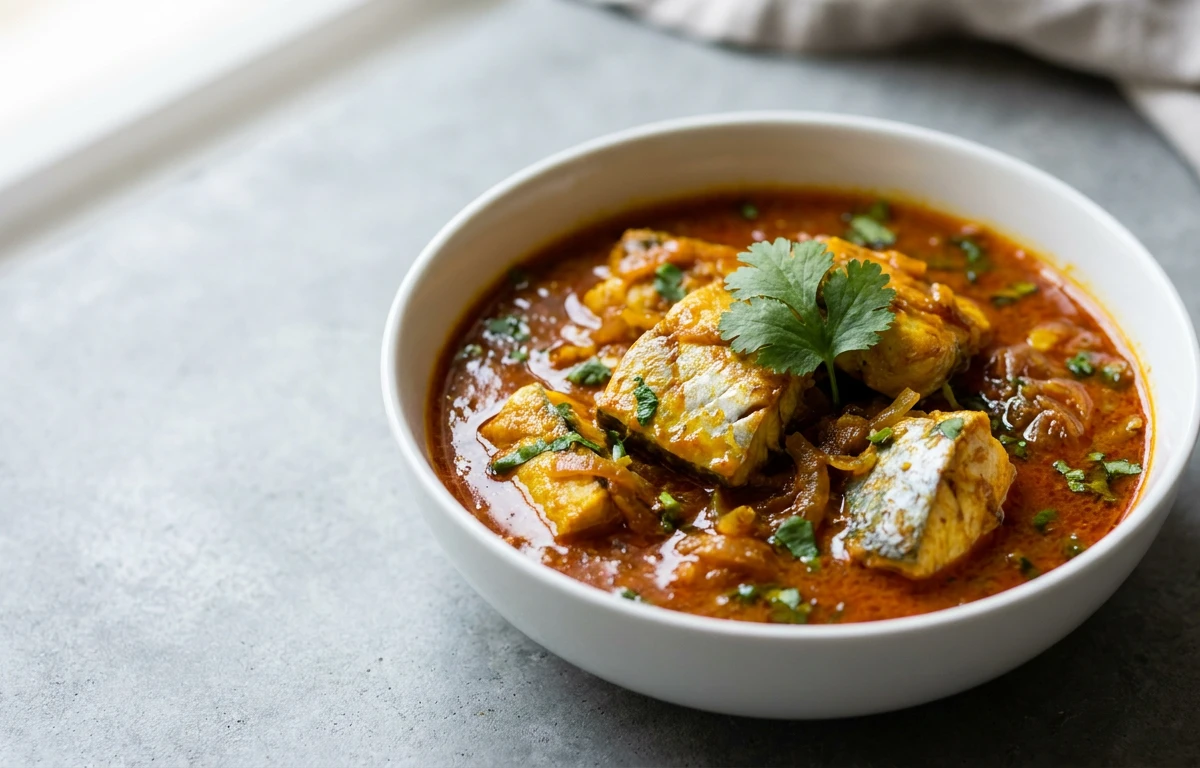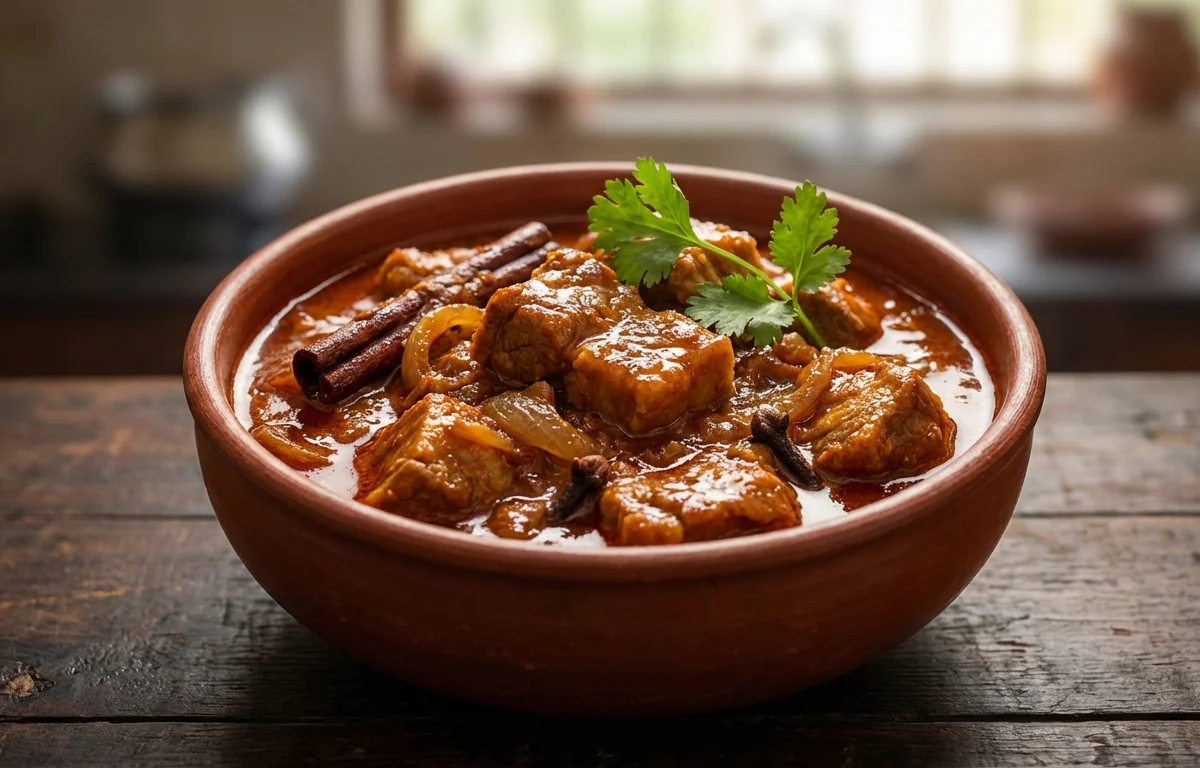
Goan Pork Indad
Tangy, spicy Goan pork cooked with a bold vinegar masala and gentle sweetness from onions. The meat turns tender as it simmers, making a rich, deeply flavored curry that goes especially well with rice or pav.
For 4 servings
- prep · ~5 min
Grind the indad masala.
1.Add garlic, ginger, dried red chili, cumin seeds, black peppercorns, cloves, cinnamon, turmeric powder, red chili powder, vinegar, and 2 tbsp water to a small grinder jar.2.Grind to a smooth, thick paste.3.If needed, add a little more water to help the blades move, but keep the masala concentrated.TIPA smooth paste gives the curry a better texture and coats the pork evenly. - mix · ~15 min
Coat the pork with the masala.
Place the pork in a bowl and rub in the ground masala well. Let it sit for 15 minutes while you slice the onions.
- saute · ~8 min
Cook the onions.
1.Heat oil in a heavy pan over medium heat.2.Add the sliced onions and cook until lightly golden and soft.3.Stir often so the onions color evenly without burning.TIPLightly golden onions add sweetness that balances the sharp vinegar. - saute · ~8 min
Fry the masala with the pork.
Add the marinated pork to the pan and cook over medium heat for 6 to 8 minutes, stirring often, until the masala smells roasted and the meat loses its raw look.
- simmer · ~40 min
Simmer until the pork is tender.
1.Add water, salt, and jaggery to the pan and mix well.2.Bring the curry to a gentle boil, then lower the heat.3.Cover and simmer, stirring now and then, until the pork is tender and the gravy thickens.TIPKeep the heat low so the pork softens gradually and the vinegar flavor mellows. - other · ~2 min
Adjust the final balance.
Taste and check the gravy. If you want a sharper finish, add 1 tsp more vinegar and simmer for 2 minutes. If the curry looks too thick, loosen it with a splash of water.
- serve
Serve the Goan Pork Indad hot.
What to keep in mind.
7 tips from the recipe — small details that make a real difference to the final dish.
- 1Choose pork with a little fat; it stays juicier and gives the gravy a fuller Goan-style richness.
- 2Grind the vinegar masala very smooth so it clings to the pork instead of leaving gritty spice bits in the curry.
- 3Do not deeply brown the onions; light golden onions give sweetness without making the indad taste overly caramelized.
- 4Fry the marinated pork until the masala smells roasted before adding water, or the curry can taste raw and harsh.
- 5Simmer gently, not at a rolling boil, so the pork turns tender without tightening up.
- 6Taste only near the end, then adjust with a little extra vinegar for tang or jaggery to round out sharp edges.
- 7This curry tastes even better after resting a few hours or overnight, as the vinegar and spices settle into the pork.
Adapt it for your goals.
Low-oil
Use 1 tbsp oil and cook the onions a bit slower with a splash of water; good if you want a lighter but still robust curry.
bonier cutBonier-cut
Make it with pork shoulder or rib pieces on the bone for deeper flavor; simmer longer until the meat is fully tender.
extra spicyExtra-spicy
Increase dried red chilies or red chili powder for a fiercer, more traditional heat that stands up well to rice or pav.
less tangyLess-tangy
Reduce the vinegar slightly and lean a touch more on jaggery if you prefer a softer, rounder curry profile.
Why this is on our healthy list.
Protein-Rich Main Dish
Pork makes this curry filling and satisfying, providing substantial protein for a hearty meal.
Spice-Driven Flavor
Garlic, ginger, cumin, pepper, cloves, and cinnamon add strong flavor, letting the dish taste full without needing many extra ingredients.
Moderate Added Sweetness
Only a small amount of jaggery is used, mainly to balance the vinegar and chilies rather than make the curry sweet.
Frequently asked questions
Yes, you can marinate it for a few hours in the fridge for deeper flavor, but because the masala contains vinegar, avoid leaving it too long overnight unless you want a stronger cured note.