Gongura Dal
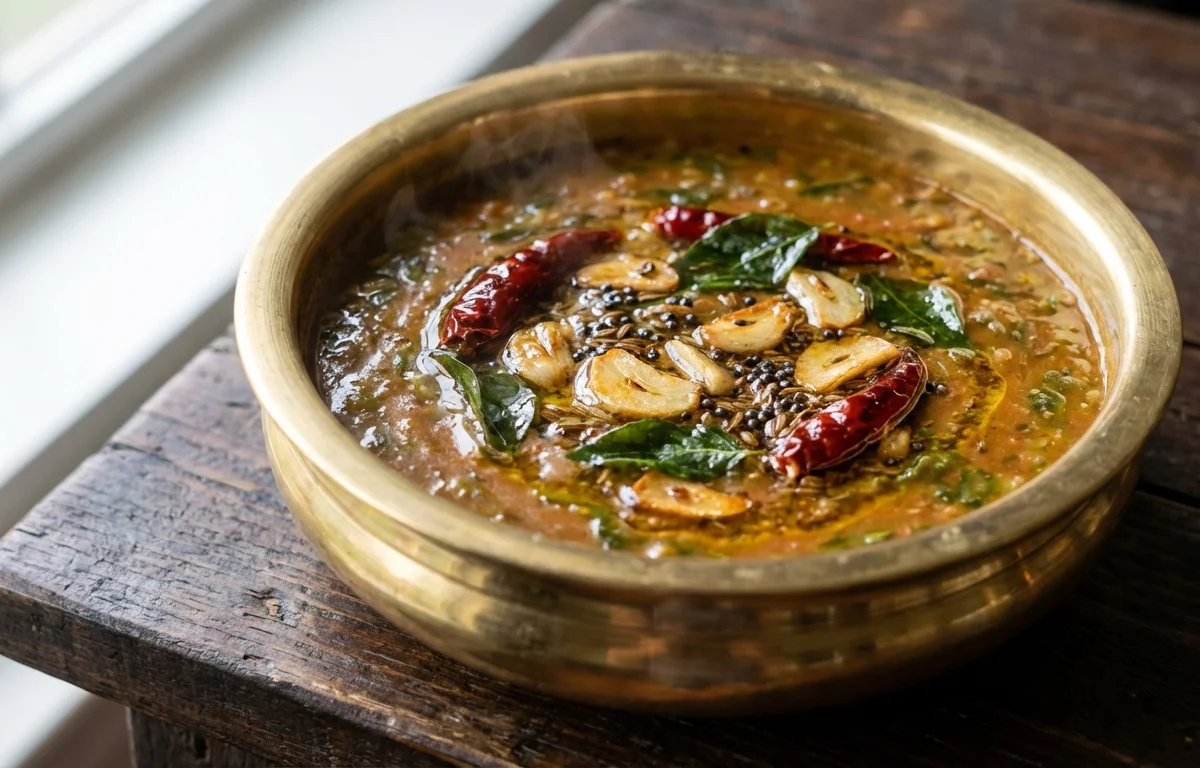
A tangy, earthy lentil dish from Andhra Pradesh where tender toor dal meets the signature sourness of fresh gongura leaves. Finished with a crackling tempering of garlic, dried red chilies, and mustard seeds, this rustic dal pairs perfectly with steamed rice and a dollop of ghee.
For 4 servings
- prep · ~2 min
Wash and prep the dal.
1.Wash 1 cup toor dal in 2-3 changes of water until water runs clear.2.Drain and set aside. - pressure cook · ~15 min
Pressure cook the dal.
1.Add washed dal to the pressure cooker with 3 cups water, 1 pinch turmeric powder, and 2 slit green chilies.2.Close the lid and pressure cook on medium heat for 3-4 whistles or until dal is soft and mushy.3.Let the pressure release naturally, then open the lid and whisk the dal lightly to mash.TIPIf dal is too thick after cooking, add 0.5 cup hot water to loosen it. - simmer · ~7 min
Cook the gongura leaves with the dal.
1.Place the cooker back on low heat and add chopped gongura leaves and 0.25 tsp salt to the mashed dal.2.Simmer gently for 5-7 minutes until the leaves wilt and the dal turns slightly green.3.Stir occasionally to prevent sticking. Turn off the heat once the leaves are soft.TIPAvoid overcooking — gongura leaves turn bitter if boiled too hard. Keep the heat low. - temper · ~3 min
Make the garlic-chili tempering.
1.Heat 2 tsp oil in a small tadka pan over medium heat.2.Add 0.5 tsp mustard seeds and let them splutter (about 30 seconds).3.Add 0.5 tsp cumin seeds, 2 broken dried red chilies, 6 crushed garlic cloves, and 8 curry leaves.4.Sauté until garlic turns light golden and aromatic (about 1 minute).5.Switch off the heat and add 1 pinch asafoetida and 1 pinch red chili powder. Stir quickly.TIPAdd asafoetida and chili powder off the heat to prevent burning — residual oil heat is enough. - mix · ~1 min
Pour the tempering over the dal and mix.
Immediately pour the sizzling tempering over the cooked dal. Stir gently to combine all the flavors.
- simmer · ~2 min
Simmer together for the final minute.
Place the dal back on low heat and let it bubble gently for 1-2 minutes so the tempered flavors meld into the dal.
- serve
Serve hot with steamed rice and a drizzle of ghee.
Transfer to a serving bowl and serve immediately with hot rice, a dollop of ghee, and some sliced raw onion on the side.
What to keep in mind.
7 tips from the recipe — small details that make a real difference to the final dish.
- 1Gongura leaves are highly perishable; store them refrigerated in a damp paper towel and use within 2 days.
- 2For a deeper sourness, add a handful of fresh gongura leaves just before turning off the heat.
- 3Pressure cook the dal until very soft—overcooked is better than undercooked for a creamy texture.
- 4If fresh gongura is unavailable, substitute with frozen sorrel leaves (thaw and drain excess water).
- 5Let the tempering sizzle directly into the dal to infuse the smoky garlic and chili aroma.
- 6Adjust the final consistency by stirring in hot water: Gongura Dal should be slightly thicker than soup.
- 7The dish tastes even better after resting for 10–15 minutes; flavors meld and deepen.
Adapt it for your goals.
Low-oil
Reduce the tempering oil to 1 teaspoon and skip the final simmer step—just pour the tadka over the hot dal. This cuts fat while retaining the essential garlic-chili flavor.
high proteinHigh-protein
Add 1/2 cup of cooked, shredded chicken or paneer cubes in step 3 along with the gongura leaves. This boosts protein content for a more filling meal while keeping the Andhra character.
jainJain
Omit garlic and onion from the tempering; replace with a pinch of asafoetida plus cumin seeds and curry leaves. Use only green chilies and skip the onion entirely. The sour gongura still shines.
veganVegan
The recipe is naturally vegan as written (no dairy). Serve with vegan ghee (coconut oil or nut-based) or simply a squeeze of lemon instead of ghee.
Why this is on our healthy list.
Rich in Plant Protein
Toor dal (pigeon pea lentils) provides a substantial amount of plant-based protein, essential for muscle repair and satiety.
Digestive Support
Gongura leaves contain natural acids and fiber that aid digestion, while asafoetida and cumin in the tempering are traditional digestive aids.
Iron from Greens & Lentils
Both gongura leaves and toor dal contribute dietary iron, which helps maintain healthy blood cell production.
Low in Saturated Fat
This dal uses minimal oil (only 2 tsp in the tempering) and no cream or butter, making it a heart-friendly choice.
Frequently asked questions
Yes, but rehydrate dried leaves in warm water for 10 minutes, drain, and use about half the volume (1 cup dried for 2 cups fresh). The flavor will be less sharp but still good.



.webp)