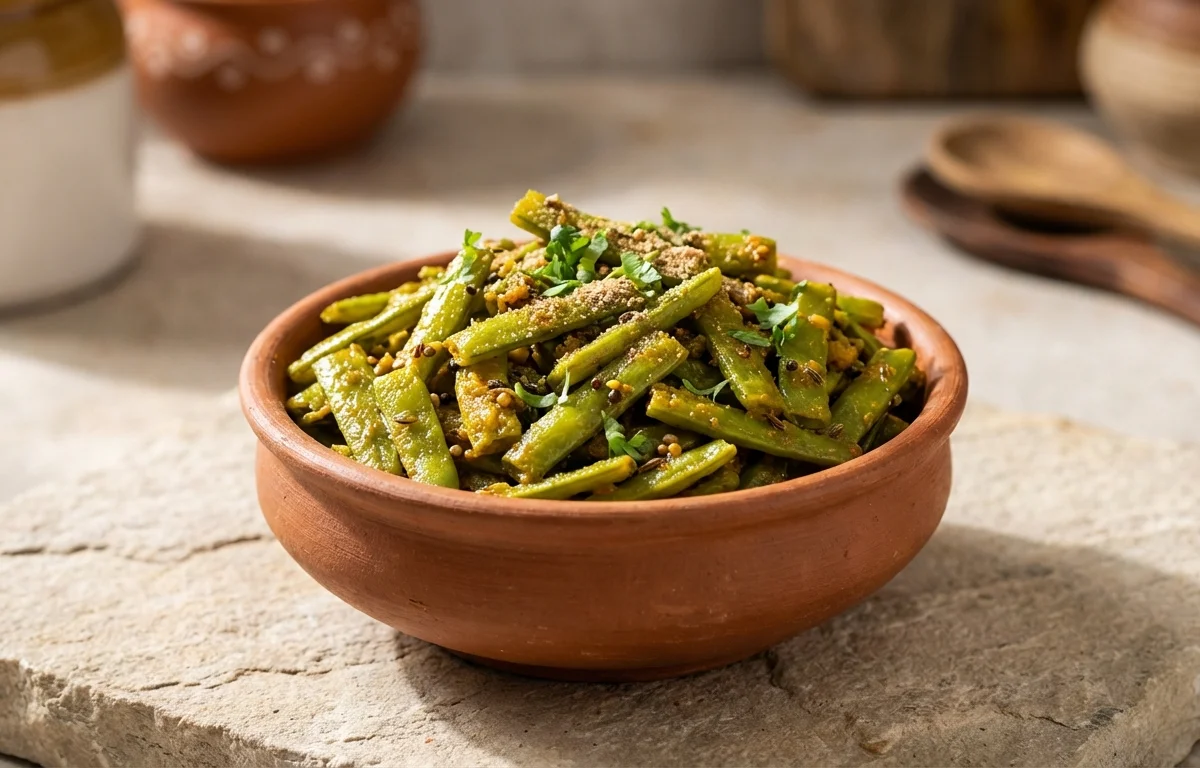
Guvar Fali ki Sabzi
A simple home-style sabzi made with cluster beans, onion, tomato, and everyday spices. It cooks down into a lightly spiced, semi-dry dish that pairs really well with roti or dal-rice.
For 4 servings
- prep · ~10 min
Prepare the guvar fali.
1.Wash the guvar fali well and pat dry.2.Trim both ends and pull away any tough strings.3.Chop the beans into small even pieces so they cook evenly. - saute · ~2 min
Start the tempering base.
1.Heat oil in a kadai over medium heat.2.Add cumin seeds and let them crackle for a few seconds.3.Add asafoetida, green chili, and ginger, then stir for 20 to 30 seconds. - saute · ~7 min
Cook the onion and tomato.
1.Add the onion and cook until soft and light golden, about 4 to 5 minutes.2.Add the tomato and cook until it softens and turns pulpy.3.Stir in turmeric powder, coriander powder, red chili powder, and salt. - simmer · ~15 min
Cook the guvar fali until tender.
Add the chopped guvar fali and mix well so the masala coats the beans. Pour in the water, cover, and cook on low heat until the beans are tender but not mushy, stirring once or twice in between.
TIPIf the beans look dry before they soften, sprinkle in 1 to 2 tbsp more water instead of adding extra oil. - saute · ~3 min
Dry out the sabzi and finish it.
Remove the lid and cook for 2 to 3 minutes to evaporate any extra moisture. Sprinkle in the dry mango powder and mix gently.
- garnish
Garnish with coriander leaves.
- serve
Serve hot with roti or as part of a meal.
What to keep in mind.
7 tips from the recipe — small details that make a real difference to the final dish.
- 1Trim the strings well; any missed fibers stay chewy even after simmering.
- 2Chop the guvar fali small and evenly so the sabzi softens at the same rate.
- 3Cook the onions only to light golden; deeply browned onions can overpower the mild beans.
- 4Keep the pan covered on low heat so the cluster beans steam and soften without needing much extra oil.
- 5Add amchur only after the beans are tender; souring too early can slow softening.
- 6Finish by drying off excess moisture for a proper semi-dry sabzi that sits well with roti.
- 7This sabzi tastes even better after 15 to 20 minutes of rest, when the slight bitterness mellows into the masala.
Adapt it for your goals.
Aloo-guvar
Add small potato cubes with the beans for a heartier sabzi; potatoes balance guvar fali's slight bitterness and make it more filling.
jainJain
Skip onion, ginger, and asafoetida, then use a little extra tomato and coriander powder for a simple Jain-style version.
garlic temperedGarlic-tempered
Add a few sliced garlic cloves with the cumin for a stronger, more rustic flavor that pairs especially well with phulka.
low oilLow-oil
Reduce the oil slightly and rely on covered cooking with small splashes of water; the sabzi still turns soft and flavorful.
Why this is on our healthy list.
Fiber-Rich Vegetable Dish
Cluster beans are naturally rich in fiber, making this sabzi a satisfying way to include more vegetables in a daily meal.
Light Everyday Sabzi
This recipe uses a modest amount of oil and very little water, giving you a flavorful side that is not heavy or greasy.
Phytonutrients From Spices and Tomatoes
Tomato, ginger, turmeric, and coriander powder add plant compounds along with flavor to this simple home-style preparation.
Frequently asked questions
Cluster beans naturally have a slight bitterness. Proper trimming, thorough cooking, onion-tomato masala, and a final pinch of amchur help balance it.



.webp)