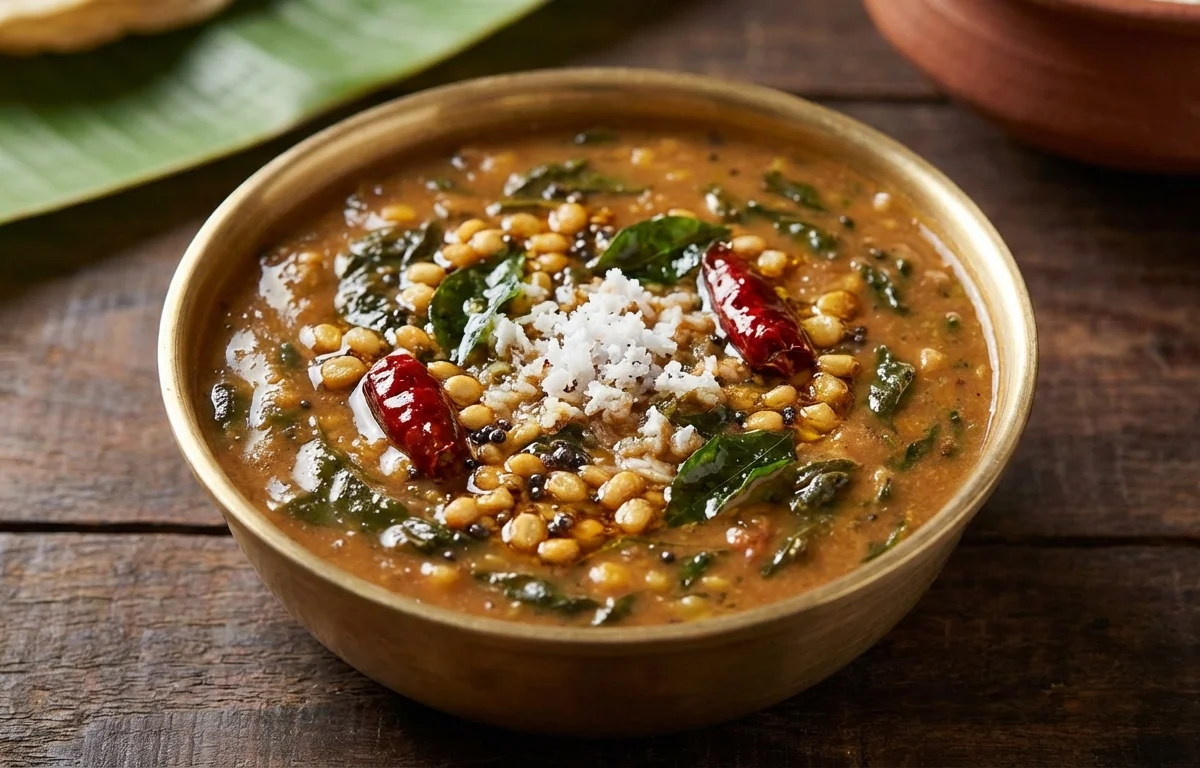
Harive Soppu Koddel
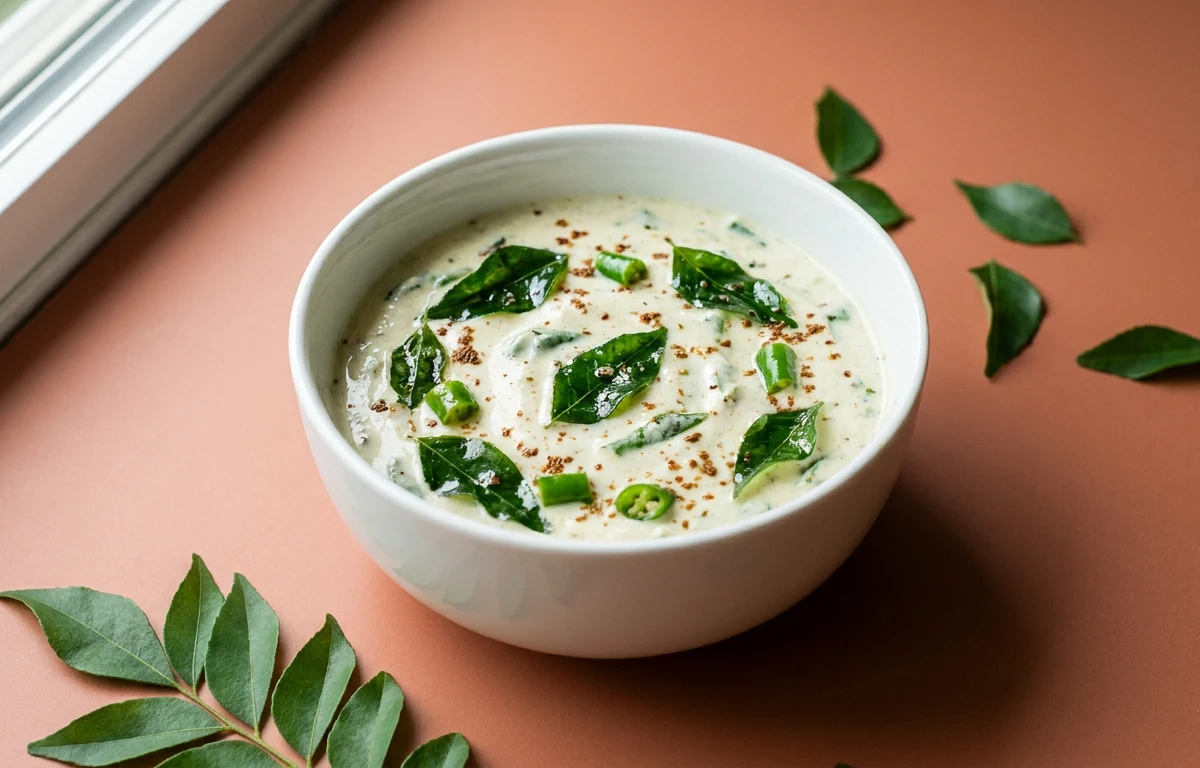
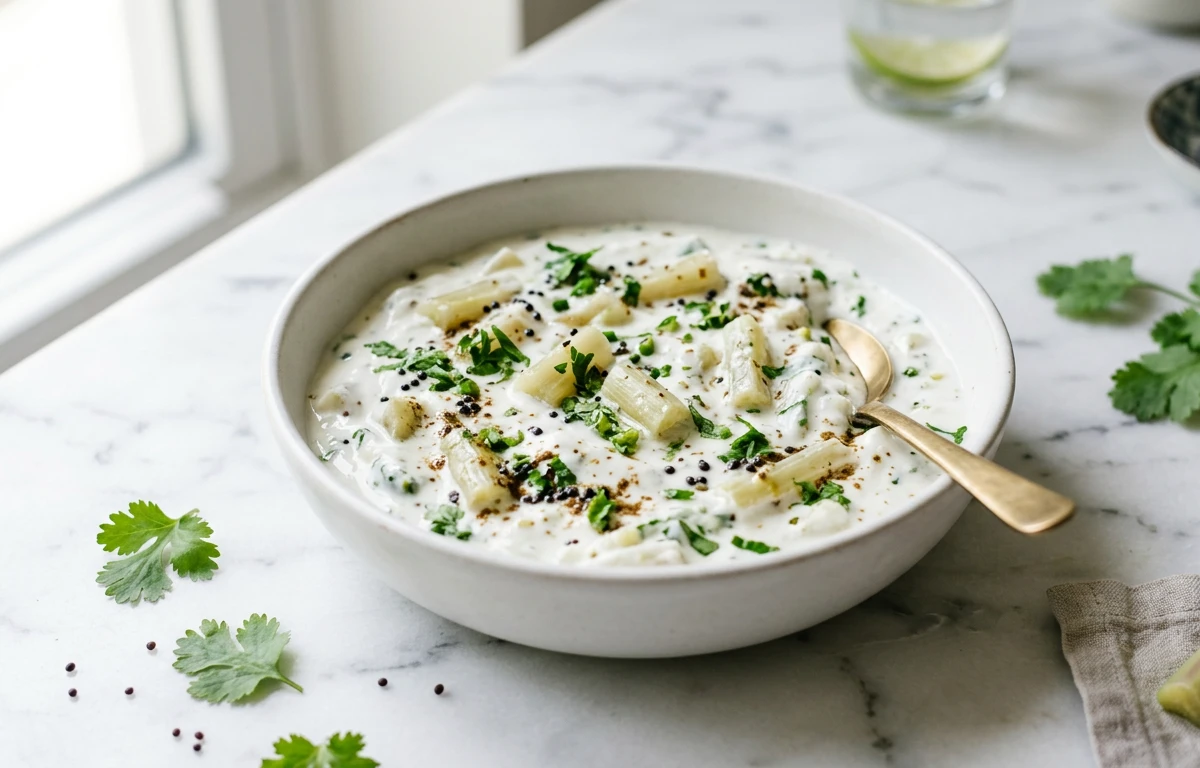
A rustic South Indian dal from Karnataka's Havyaka and Shivalli traditions, where tender dill leaves are simmered in a fragrant coconut- cumin-chili paste and finished with a crackling mustard-red chili tempering. Light, mildly spiced, and deeply aromatic, this curry pairs beautifully with hot steamed rice.
For 4 servings
- prep · ~10 min
Soak the tamarind and prep the greens.
1.Soak tamarind in 2 tbsp warm water for 10 minutes. Squeeze and extract pulp; discard solids.2.Wash dill leaves thoroughly. Discard thick stems. Finely chop tender leaves and thin stems.3.Wash toor dal and soak in water for 15 minutes, then drain. - boil · ~15 min
Cook dal and dill leaves together.
1.Add drained toor dal, chopped dill leaves, turmeric powder, salt, and 1.5 cups water to pressure cooker.2.Close lid and cook over medium heat. After first whistle, reduce to low and cook 10 minutes.3.Turn off heat, let pressure release naturally. Open and mash the dal-dill mixture lightly with a ladle.TIPCooking dill together with dal infuses the curry with deep herbal flavor. Don't overcook — one whistle is enough for soft dill. - mix · ~2 min
Grind the coconut-spice paste.
1.Add grated coconut, cumin seeds, and 3 dried red chilies to mixer grinder jar.2.Add tamarind extract and 0.25 cup water. Grind to a smooth, fine paste.3.Scrape down sides and grind again if needed — paste should be creamy with no coarse bits. - simmer · ~5 min
Combine paste with dal and simmer.
1.Add ground coconut paste to the cooked dal-dill mixture. Stir well.2.Add 0.5 cup water if curry is too thick — consistency should be pourable but not watery.3.Bring to a gentle boil over medium-low heat. Simmer 5 minutes, stirring occasionally.4.Taste and adjust salt. Turn off heat once small bubbles appear on surface.TIPBring just to a boil and turn off immediately — coconut paste shouldn't boil hard or it loses its fresh aroma. - temper · ~2 min
Make the tempering.
1.Heat coconut oil in a small tadka pan over medium heat.2.Add mustard seeds and wait until they pop and crackle (30 seconds).3.Add broken dried red chilies, curry leaves, and asafoetida. Fry 10 seconds until fragrant.4.Pour the sizzling tempering over the curry and mix once.TIPDon't let the red chilies blacken — the moment they darken slightly, pour over the curry immediately. - rest · ~5 min
Rest briefly and serve.
Let the curry rest covered for 5 minutes so the tempering infuses fully. Serve hot with steamed rice and a drizzle of coconut oil on top if desired.
What to keep in mind.
6 tips from the recipe — small details that make a real difference to the final dish.
- 1Use tender dill leaves and thin stems; discard thick, woody stems for a smooth texture.
- 2Grind the coconut-cumin-chili paste to a creamy fine consistency; coarse bits will affect the mouthfeel.
- 3Do not boil the curry vigorously after adding the coconut paste; a gentle simmer preserves its fresh aroma.
- 4Cook the dal-dill mixture at low heat after the first whistle to avoid mushy dal and muted herb flavor.
- 5Let the tempered curry rest covered for 5 minutes before serving; this allows the tadka flavors to meld deeply.
- 6Finish with a drizzle of fresh coconut oil just before serving to amplify the nutty aroma.
Adapt it for your goals.
Dal-free variation
Replace toor dal with 1/2 cup moong dal (split yellow gram) for a lighter, easier-to-digest version that still pairs beautifully with rice.
veganVegan
This recipe is already plant-based; ensure the coconut oil is cold-pressed to maintain the authentic vegan profile.
spicier profileSpicier profile
Use 5 Guntur red chilies in the paste and 3 in the tadka for a fiery punch that complements the mild dill.
low oil optionLow-oil option
Reduce coconut oil in tadka to 1 tsp and skip the finishing drizzle; the curry remains flavorful from the coconut paste.
greens swapGreens swap
Substitute dill leaves with equal quantity of fresh fenugreek leaves (methi) or a mix of spinach and coriander — the cooking method stays the same.
Why this is on our healthy list.
Rich in Plant Protein
Toor dal provides high-quality plant protein and dietary fiber, supporting muscle health and digestion.
Good Source of Iron
Dill leaves and toor dal contribute iron, which helps maintain healthy blood oxygen levels.
Supports Digestion
Cumin seeds, asafoetida, and curry leaves in this dish aid digestion and help reduce bloating.
Antioxidant-Rich Greens
Fresh dill is packed with antioxidants and essential oils that may help reduce oxidative stress.
Healthy Fats from Coconut
Fresh coconut in the paste provides medium-chain triglycerides (MCTs) for sustained energy.
Frequently asked questions
No, fresh dill is essential for this dish — dried dill lacks the tender texture and aromatic oils that define the curry's unique flavor and soft consistency.