Jenji Gassi
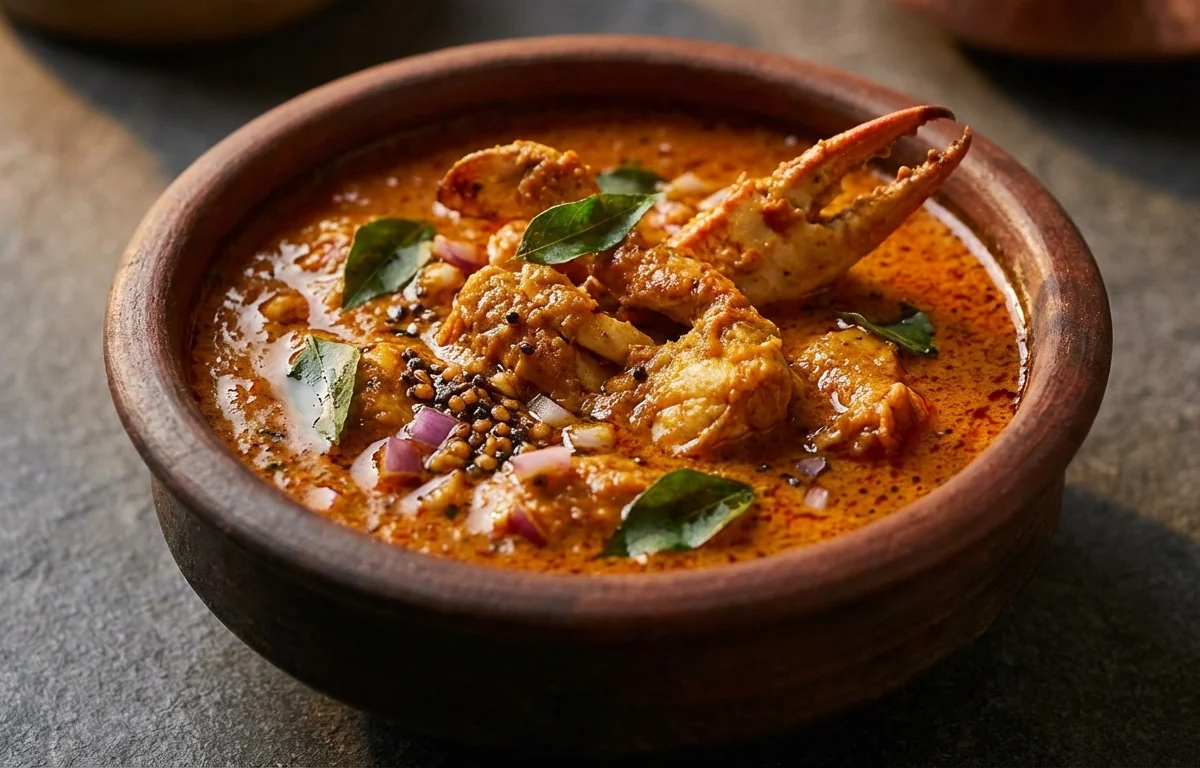
A warm, gently spiced Mangalorean curry where ginger takes center stage. Fresh coconut, tamarind, and roasted spices give it a rich, balanced gravy that tastes especially good with neer dosa, rice, or simple red boiled rice.
For 4 servings
- prep · ~15 min
Prepare the ginger and tamarind.
1.Peel the ginger and cut it into thick matchsticks.2.Soak the tamarind in a little warm water for 15 minutes.3.Squeeze the tamarind well and keep the pulp ready.TIPCut the ginger a little thick so it keeps its bite after simmering. - roast · ~6 min
Roast the coconut and spices.
1.Heat a small pan over medium-low heat.2.Add the dried red chili, coriander seeds, cumin seeds, and fenugreek seeds.3.Roast for 1-2 minutes until fragrant.4.Add the grated coconut and roast until lightly golden, 3-4 minutes.TIPKeep the heat low once the coconut goes in so it toasts evenly and does not taste bitter. - mix · ~3 min
Grind the masala.
Cool the roasted mixture slightly, then grind it with the tamarind pulp and 1 cup water to a smooth paste.
- boil · ~10 min
Boil the ginger.
Add the ginger to a pot with 1 cup water, turmeric powder, and a pinch of the salt. Bring to a boil and cook until the ginger is just tender, 8-10 minutes.
- simmer · ~8 min
Simmer the gassi.
1.Add the ground masala to the pot with the ginger.2.Pour in the remaining 0.5 cup water and mix well.3.Add the remaining salt and jaggery.4.Simmer gently for 6-8 minutes until the curry thickens slightly and the flavors come together.TIPThe gravy should coat the ginger lightly but still pour easily. - temper · ~1 min
Make the tempering.
1.Heat coconut oil in a small pan.2.Add mustard seeds and let them splutter.3.Add curry leaves and fry for a few seconds.4.Pour the tempering over the simmering curry. - serve
Serve the Jenji Gassi warm.
What to keep in mind.
7 tips from the recipe — small details that make a real difference to the final dish.
- 1Keep the ginger matchsticks slightly thick so they stay distinct and pleasantly chewy after simmering.
- 2Roast the coconut only to light golden; deep browning can make the gassi taste bitter and muddy.
- 3Cool the roasted masala briefly before grinding so the coconut releases a smoother, creamier paste.
- 4Boil the ginger just until tender, not soft, since it cooks a little more once the masala is added.
- 5If the curry thickens too much on standing, loosen it with a splash of hot water before serving.
- 6Make it a few hours ahead if possible; the ginger, tamarind, and coconut flavors meld beautifully as it rests.
- 7Add the curry leaf tempering at the end and cover the pot for a minute to trap that fresh coconut-oil aroma.
Adapt it for your goals.
Milder
Use fewer dried red chilies for a gentler curry that lets the ginger remain the main flavor.
thinner gravyThinner-gravy
Add a little extra hot water at the end if serving with red boiled rice, which pairs well with a looser gassi.
no jaggeryNo-jaggery
Skip the jaggery for a sharper, more tangy version if you prefer the tamarind and ginger to dominate.
extra temperingExtra-tempering
Increase curry leaves in the tempering for a more fragrant finish, especially if serving with plain rice.
Why this is on our healthy list.
Ginger-Forward Dish
This curry uses a generous amount of ginger, adding bold flavor along with traditional digestive warmth.
Spice-Rich Ingredients
Coriander, cumin, fenugreek, turmeric, and red chilies bring aromatic compounds that add depth without heavy richness.
Plant-Based Comfort
Fresh coconut provides body and satiety, making the curry satisfying while staying fully plant-based.
Frequently asked questions
Yes, but soak it in a little warm water first and roast gently. Fresh coconut gives a sweeter, creamier, more authentic gravy.