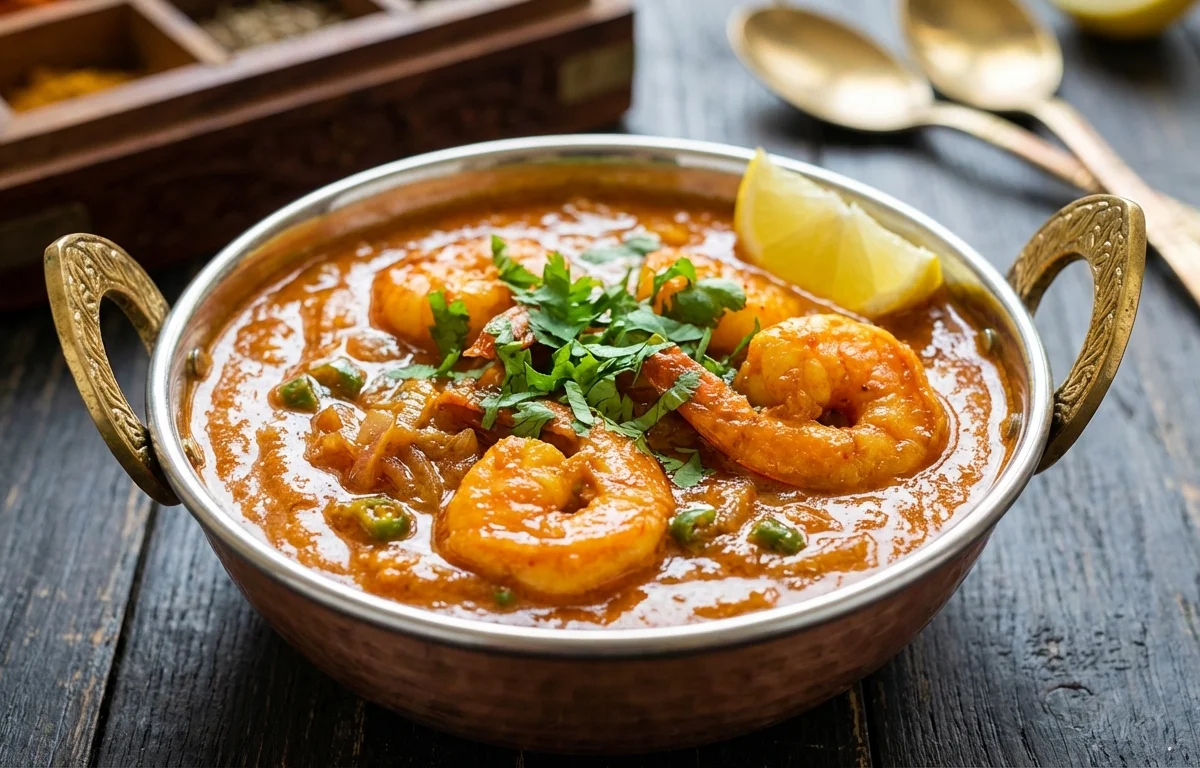
Jhinga Curry
A comforting Indian prawn curry with onions, tomatoes, ginger, garlic, and warm spices simmered into a light, flavorful gravy. It cooks quickly and tastes wonderful with steamed rice or roti as part of a full meal.
For 4 servings
- prep · ~10 min
Clean and season the prawns.
1.Rinse the prawns and pat them dry well.2.Place them in a bowl with turmeric powder, lemon juice, and a small pinch of the salt.3.Mix gently and set aside for 10 minutes.TIPDry prawns sear better and stay juicy instead of turning watery in the pan. - saute · ~7 min
Cook the onion base.
1.Heat oil in a pan over medium heat.2.Add cumin seeds and let them sizzle for 20 to 30 seconds.3.Add onion and cook until light golden, 5 to 6 minutes.4.Add ginger, garlic, and green chili, then cook for 1 minute.TIPKeep the heat medium so the onions brown evenly without burning the garlic. - saute · ~6 min
Build the masala.
1.Add tomato and the remaining salt to the pan.2.Cook until the tomato softens and turns pulpy, 4 to 5 minutes.3.Add red chili powder, coriander powder, and garam masala.4.Mix well and cook for 1 minute until the masala smells fragrant. - saute · ~3 min
Cook the prawns in the masala.
Add the seasoned prawns and stir gently to coat them well in the masala. Cook for 2 to 3 minutes until they just start turning opaque.
TIPDo not overcook the prawns here; they will finish cooking in the gravy. - simmer · ~5 min
Simmer the curry.
Pour in the water and bring the curry to a gentle simmer. Cook uncovered for 4 to 5 minutes until the gravy lightly thickens and the prawns are fully cooked.
- garnish
Finish with coriander leaves.
- serve
Serve the jhinga curry hot.
Let the curry sit for 2 minutes, then serve hot with steamed rice or roti.
What to keep in mind.
7 tips from the recipe — small details that make a real difference to the final dish.
- 1Pat the prawns very dry before marinating so they sear in the masala instead of releasing excess water.
- 2Cook the onions only to light golden; dark browning can make this light curry taste bitter.
- 3Let the tomatoes turn fully pulpy before adding dry spices, or the gravy can taste raw and sharp.
- 4Once the prawns curl into a loose C and turn opaque, stop cooking to keep them tender.
- 5Simmer gently after adding water; a hard boil can toughen the prawns and split the masala.
- 6This curry is best eaten fresh, but you can prep the onion-tomato masala a day ahead and finish with prawns just before serving.
- 7If reheating leftovers, warm on low heat only until hot to avoid rubbery prawns.
Adapt it for your goals.
Coconut
Replace part of the water with thin coconut milk for a softer, coastal-style jhinga curry with a richer body.
spicierSpicier
Add extra green chili or a little more red chili powder if you want a hotter curry that still cooks just as fast.
dry styleDry-style
Use less water and cook the masala down further for a thicker prawn masala that pairs well with roti or paratha.
fishFish
Swap prawns for firm fish pieces and shorten simmering as needed for a similar light curry with a different seafood texture.
Why this is on our healthy list.
Lean Seafood Protein
Prawns provide satisfying protein, making the curry filling without relying on heavy cream or butter.
Tomato-Onion Antioxidants
Tomatoes, onions, ginger, and garlic add protective plant compounds along with depth of flavor.
Light Gravy Style
The curry uses a water-based gravy and a modest amount of oil, so it stays lighter than many richer curries.
Frequently asked questions
They should turn opaque and curl into a loose C shape. If they tighten into a small O, they are likely overcooked.