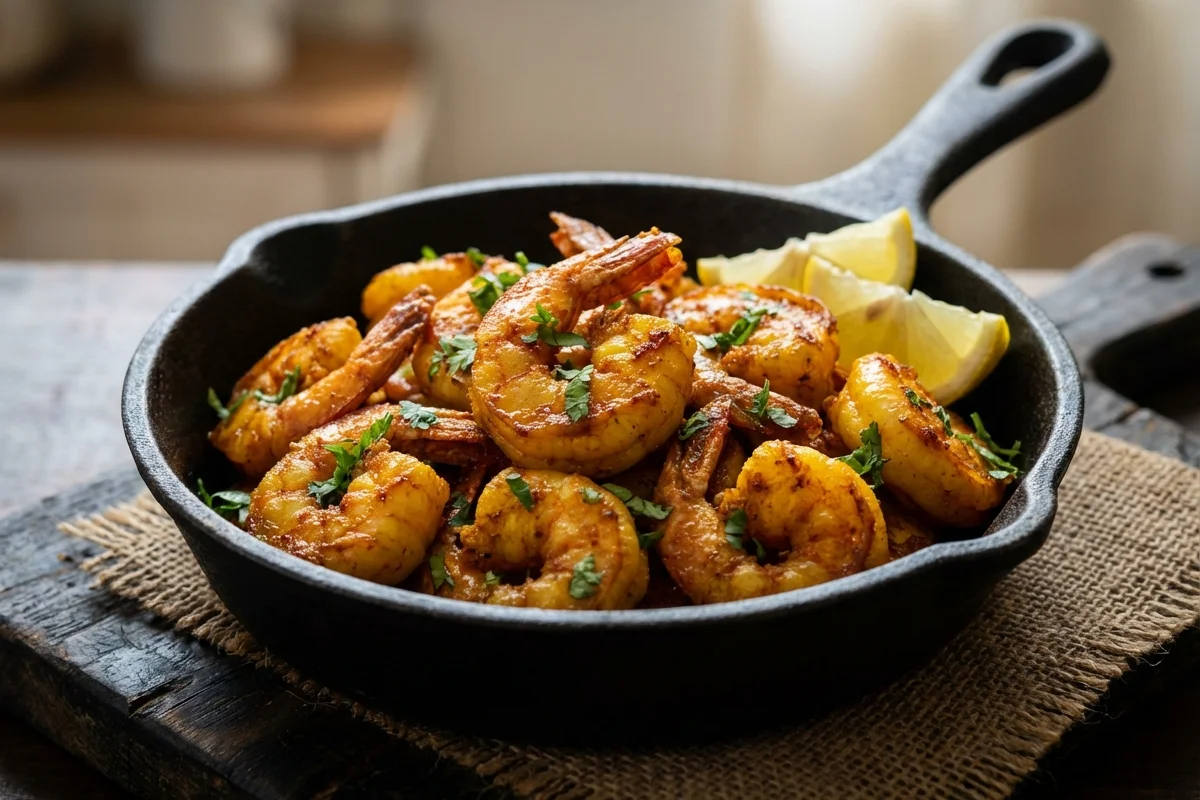
Jhinga Fry
Juicy prawns marinated in a spicy, tangy masala paste and pan-fried to golden perfection. Crisp on the outside with a tender, succulent bite inside, this classic coastal Indian dish comes together in under 30 minutes and pairs beautifully with dal rice or chilled beer.
For 4 servings
- prep · ~10 min
Pat the prawns dry and marinate.
1.Rinse prawns under cold water and pat completely dry with paper towels.2.In a bowl, mix prawns with turmeric powder, red chili powder, lemon juice, and salt.3.Massage gently, cover, and set aside for 10 minutes.TIPDry prawns brown better. Extra moisture steams them instead of frying. - prep · ~3 min
Make the masala paste.
1.In a blender, combine garlic, ginger, roughly chopped onion, and green chili.2.Blend to a smooth paste without adding water. Scrape down sides as needed.3.Transfer paste to a small bowl and stir in coriander powder, cumin powder, and garam masala.TIPA mortar and pestle gives a coarser, more rustic texture that clings to prawns. - mix · ~5 min
Coat prawns with the masala paste.
1.Add the masala paste to the marinated prawns.2.Mix well so every prawn is thickly coated. Let it rest for 5 minutes. - fry · ~7 min
Shallow-fry the prawns until golden.
1.Heat mustard oil in a large heavy-bottomed pan over medium-high heat until it smokes lightly.2.Lower heat to medium and place prawns in a single layer. Do not overcrowd.3.Cook 2–3 minutes per side until the masala crust is deep golden and prawns are just cooked through.4.Remove and drain on paper towels.TIPMustard oil must smoke before cooking to mellow its raw sharpness. The white fumes signal it's ready. - garnish
Garnish and serve immediately.
Transfer prawns to a serving plate, scatter with chopped coriander leaves, and serve with lemon wedges on the side.
TIPSqueeze lemon over hot prawns just before eating — the citrus pops the masala flavours.
What to keep in mind.
6 tips from the recipe — small details that make a real difference to the final dish.
- 1Pat the prawns bone-dry with paper towels before marinating to ensure a crisp sear instead of steaming them.
- 2Let the mustard oil reach its smoking point (white fumes appear) to mellow its pungent edge and develop a nutty aroma.
- 3Do not overcrowd the pan; fry in a single layer so the masala crust turns golden and crunchy, not soggy.
- 4Blend the masala paste without water — a thick paste clings better to the prawns and fries up crisp.
- 5Rest the coated prawns for 5 minutes before frying so the spices adhere firmly; this prevents the paste from falling off in the oil.
- 6Cook the prawns just until opaque and curled — about 2–3 minutes per side — to keep the interior tender and juicy.
Adapt it for your goals.
Low-oil
Skip shallow-frying; spread the coated prawns on a greased baking sheet and broil on high for 3–4 minutes per side. You get a similar char and crunch with significantly less oil.
air fryerAir-fryer
Cook the marinated prawns in an air-fryer at 200°C for 6–8 minutes, shaking halfway. This gives a crispy exterior with minimal oil, ideal for a quick weeknight version.
high proteinHigh-protein
Replace half the onion in the masala with cooked, mashed chickpeas or tofu for extra protein, while keeping the same bold Bengali spicing.
Why this is on our healthy list.
Lean Protein Source
Prawns provide high-quality, low-fat protein that supports muscle repair and keeps you full longer.
Rich in Antioxidants
Turmeric and ginger both contain anti-inflammatory compounds like curcumin and gingerol, which help combat oxidative stress.
Good for Digestion
Cumin and coriander powders aid digestion and reduce bloating, making this a light yet satisfying meal.
Heart-Healthy Fats
Mustard oil contains monounsaturated and polyunsaturated fatty acids that support cardiovascular health when used in moderation.
Frequently asked questions
Yes, but thaw them completely in the refrigerator overnight, then pat very dry before marinating, or they will release water and steam instead of frying.