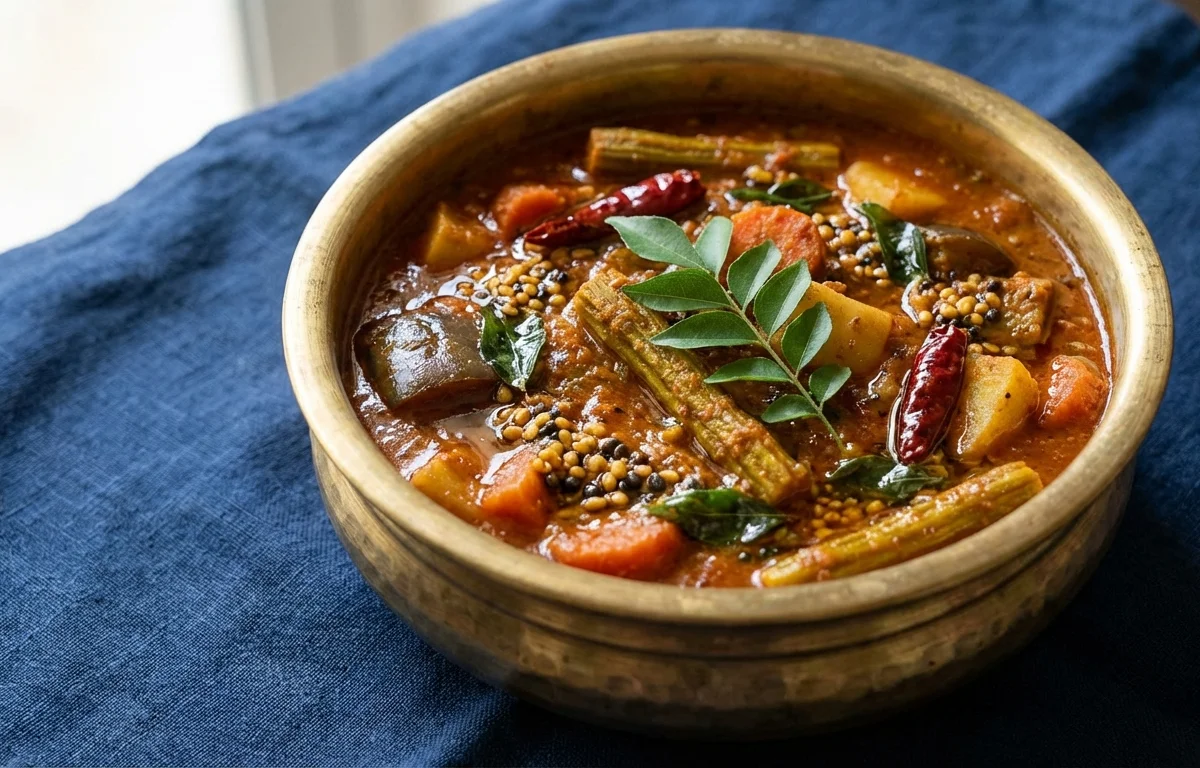
Kaikari Mandi
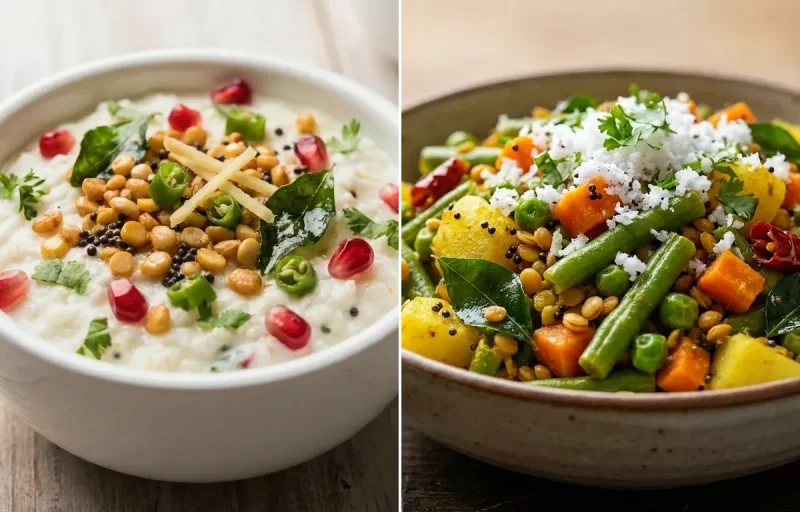
A vibrant Tamil Nadu-style mixed vegetable curry with a gentle warmth from freshly ground spices and creamy coconut. Tender vegetables simmer in a fragrant, mildly spiced gravy that pairs perfectly with steamed rice or soft idlis.
For 4 servings
- prep · ~10 min
Prepare the vegetables.
1.Peel and cube carrot and potatoes into even 1-inch pieces.2.Trim green beans and chop into 1-inch lengths.3.Cut cauliflower into small florets.4.Chop onions and tomatoes finely. Grate ginger and mince garlic. - temper · ~2 min
Make the tempering.
1.Heat oil in a deep pan over medium heat.2.Add mustard seeds and let them splutter (30 sec).3.Add cumin seeds and curry leaves. Sauté until fragrant (20 sec). - saute · ~5 min
Sauté the aromatics.
1.Add chopped onions and cook until translucent (3-4 min).2.Add grated ginger and minced garlic. Sauté until raw smell disappears (1 min).3.Add turmeric powder, red chili powder, and coriander powder. Cook for 30 sec. - saute · ~5 min
Cook the tomatoes.
1.Add chopped tomatoes and slit green chilies to the pan.2.Cook until tomatoes turn soft and mushy (4-5 min).3.Add grated coconut and mix well. - simmer · ~18 min
Simmer the vegetables.
1.Add carrot, potato, beans, cauliflower, and green peas to the pan.2.Pour in water and add salt. Stir everything together.3.Bring to a boil, then lower heat. Cover and simmer until vegetables are tender (15-18 min). - simmer · ~3 min
Finish the gravy.
1.Check that all vegetables are fork-tender.2.Sprinkle garam masala and stir gently.3.Simmer uncovered for 2-3 minutes to thicken the gravy slightly. - garnish
Garnish with fresh coriander leaves and serve hot.
What to keep in mind.
6 tips from the recipe — small details that make a real difference to the final dish.
- 1Cut vegetables into uniform 1-inch cubes for even cooking.
- 2Add the green beans before the potatoes since they take longer to soften.
- 3Use fresh grated coconut for a creamier texture and authentic flavor.
- 4Let the mustard seeds fully splutter before adding cumin for proper tempering.
- 5Simmer the gravy uncovered at the end to reach your preferred consistency.
- 6For a thicker gravy, mash a few cooked potato cubes against the pan wall.
Adapt it for your goals.
Vegan
Replace the ghee (if used) with coconut or vegetable oil; this recipe is already vegan as written since it uses only plant-based ingredients.
low oilLow-oil
Reduce oil to 1 teaspoon and dry-roast the mustard seeds and cumin in a non-stick pan before adding a splash of water to cook the aromatics — ideal for a lighter version.
high proteinHigh-protein
Add 1 cup of cooked chickpeas or paneer cubes along with the vegetables to boost protein content while keeping the dish hearty.
gluten freeGluten-free
This dish is naturally gluten-free; just ensure your garam masala and coriander powder are certified gluten-free if sensitive.
Why this is on our healthy list.
Rich in Dietary Fiber
Mixed vegetables like carrots, beans, and peas provide a good amount of fiber that supports digestive health and keeps you full longer.
High in Vitamin C
Tomatoes, green chilies, and curry leaves contribute vitamin C, which helps boost immunity and iron absorption.
Low in Saturated Fat
Made with minimal oil and no dairy cream, this curry is naturally low in saturated fat, relying on coconut for richness instead.
Antioxidant-Rich Spices
Turmeric and coriander powder contain antioxidants that may help reduce inflammation and support overall wellness.
Frequently asked questions
Yes, frozen peas, beans, and cauliflower work well. Add them directly without thawing, but reduce the simmer time by 3-4 minutes to avoid over-softening.