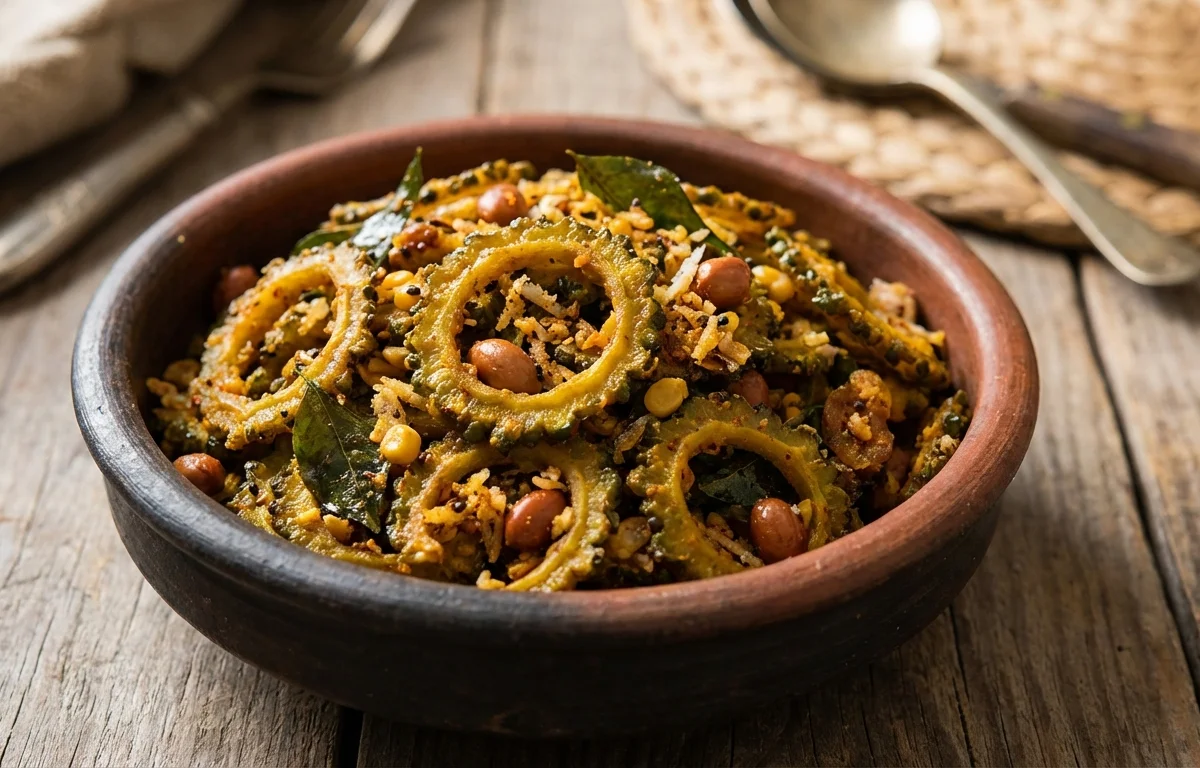
Kakarakaya Vepudu
A classic Andhra-style bitter gourd fry with sliced kakarakaya cooked until tender and lightly crisp. Onion, spices, and a little tamarind balance the bitterness, making it a tasty side for rice and dal.
For 4 servings
- prep · ~15 min
Slice the kakarakaya and onions.
1.Wash the bitter gourd well and trim the ends.2.Halve each one lengthwise and remove only the hard mature seeds if needed.3.Slice the bitter gourd thinly for even cooking.4.Slice the onions and slit the green chilies. - temper · ~2 min
Make the tempering.
1.Heat oil in a wide pan over medium heat.2.Add mustard seeds and let them splutter.3.Add cumin seeds and urad dal.4.Stir in curry leaves and green chilies for a few seconds.TIPUse a wide pan so the bitter gourd fries better instead of steaming. - saute · ~15 min
Cook the onions and bitter gourd.
1.Add the sliced onions and cook until they soften lightly.2.Add the sliced bitter gourd and mix well with the tempering.3.Sprinkle in turmeric powder, red chili powder, coriander powder, and salt.4.Cook on medium heat, stirring every couple of minutes, until the slices turn tender.TIPDo not cover for long, or the bitter gourd will soften too much and lose its fried texture. - saute · ~9 min
Balance the flavors and finish the fry.
Add tamarind paste and jaggery, then mix well. Keep cooking for 8 to 10 minutes, stirring often, until the moisture dries up and the bitter gourd looks lightly crisp at the edges.
- serve
Serve hot with rice.
What to keep in mind.
7 tips from the recipe — small details that make a real difference to the final dish.
- 1Slice the bitter gourd evenly and thin so it turns tender and crisp at the same time.
- 2Remove only hard mature seeds; tender seeds cook well and help the slices hold shape.
- 3Use a wide pan and avoid overcrowding, or the kakarakaya will steam instead of fry.
- 4Stir every couple of minutes rather than constantly, so the edges can catch and crisp.
- 5Add tamarind and jaggery only after the bitter gourd has softened; adding them too early can slow browning.
- 6Cook uncovered for the final few minutes until the pan looks dry and the slices have browned edges.
- 7This fry keeps well for lunch boxes; cool fully before storing so it stays less soggy.
Adapt it for your goals.
Low-oil
Par-cook the sliced bitter gourd briefly, then pan-roast with less oil in a very wide skillet for a lighter everyday version.
spicierSpicier
Add extra green chilies or a little more red chili powder for a sharper Andhra-style heat that stands up well to rice and dal.
no onionNo-onion
Skip the onions for a simpler, more bitter-forward fry that pairs especially well with plain pappu and hot rice.
nuttyNutty
Finish with roasted peanut powder or sesame powder for extra body, nuttiness, and a slightly richer coating on the bitter gourd.
Why this is on our healthy list.
Vegetable-forward side dish
Bitter gourd makes this a produce-rich accompaniment, offering a more wholesome option than heavily battered or deep-fried sides.
Digestive spice support
Cumin, curry leaves, green chili, and coriander add flavor while bringing traditional aromatic ingredients often used in everyday digestive cooking.
Balanced with modest sweetening
A small amount of jaggery and tamarind helps round out bitterness without turning the dish heavily sweet.
Frequently asked questions
Slice it thin, use onions generously, and finish with the tamarind-jaggery mix as written. You can also salt the slices briefly and squeeze them lightly before cooking if you prefer a milder taste.




.webp)