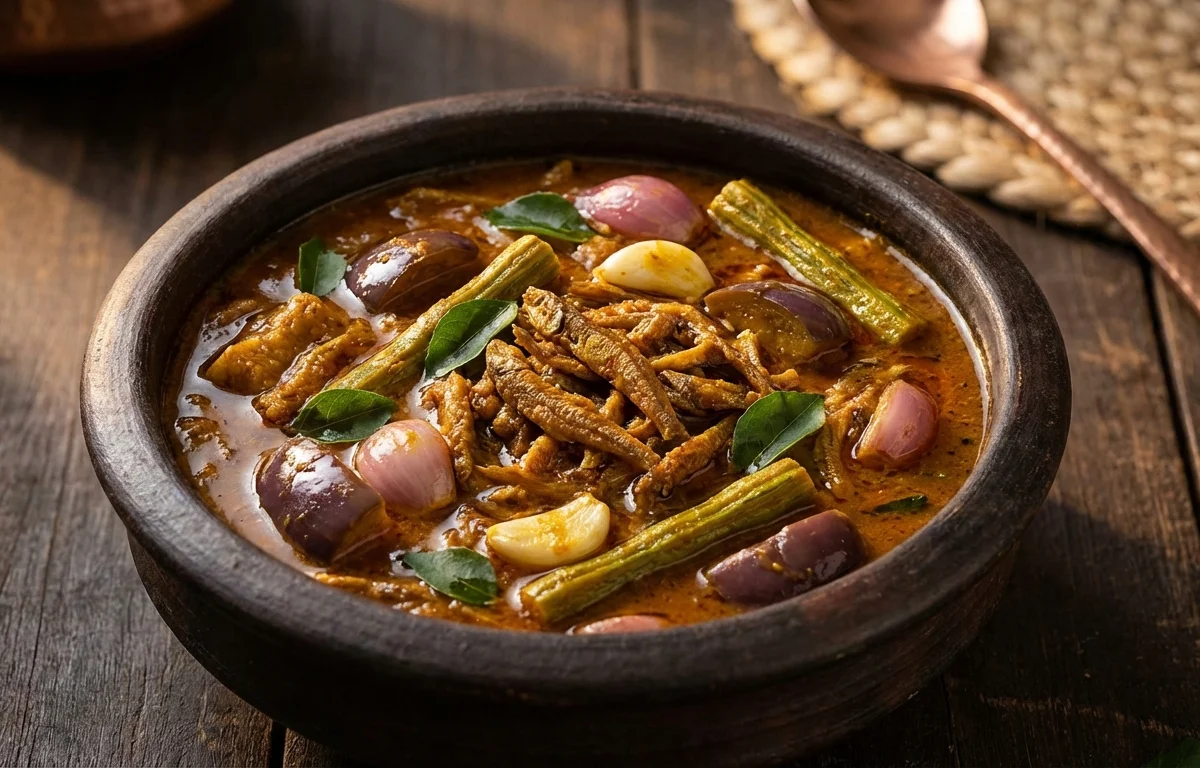
Karuvadu Kuzhambu
A bold Tamil-style dried fish curry with a deep tamarind base, gentle heat, and rich shallot flavor. The karuvadu softens as it simmers, giving the kuzhambu its signature savory depth that pairs beautifully with plain rice.
For 4 servings
- prep · ~15 min
Clean the dried fish and make the tamarind water.
1.Rinse the dried fish well in water 2 to 3 times.2.Soak it in warm water for 15 minutes to soften and remove excess salt.3.Drain the fish and keep it aside.4.Soak tamarind in a little warm water, squeeze well, and strain to make 2 cups tamarind water.TIPTaste a tiny piece of the soaked fish before adding salt later. - temper · ~2 min
Make the tempering.
1.Heat sesame oil in a kadai over medium heat.2.Add mustard seeds and let them splutter.3.Add fenugreek seeds and curry leaves.4.Cook for a few seconds until fragrant. - saute · ~8 min
Cook the shallots, garlic, and tomatoes.
1.Add shallots, garlic, and green chili to the pan.2.Cook until the shallots soften and turn lightly golden, about 4 to 5 minutes.3.Add chopped tomato and cook until soft and pulpy.TIPKeep the heat medium so the fenugreek does not turn bitter. - simmer · ~5 min
Add the spice powders and tamarind base.
Add red chili powder, coriander powder, turmeric powder, black pepper powder, and salt. Stir briefly, then pour in the tamarind water and the remaining water. Mix well and bring the curry to a steady simmer.
- simmer · ~15 min
Simmer the kuzhambu with the dried fish.
Add the soaked dried fish and simmer uncovered for 12 to 15 minutes, until the gravy thickens slightly and the fish turns tender. Gently swirl the pan once or twice instead of stirring too much.
TIPToo much stirring can break the fish and make the gravy cloudy. - rest · ~10 min
Let the curry rest for 10 minutes.
- serve
Serve hot with plain rice.
What to keep in mind.
7 tips from the recipe — small details that make a real difference to the final dish.
- 1Rinse and soak the dried fish exactly as directed to remove grit and excess salt without washing away all its flavor.
- 2Taste the soaked fish before adding any salt; many varieties of karuvadu can season the whole kuzhambu on their own.
- 3Keep the heat moderate when adding fenugreek seeds, because even a few extra seconds can make the gravy bitter.
- 4Cook the shallots until lightly golden, not just soft, for the sweet depth this kuzhambu needs under the tamarind.
- 5After adding the dried fish, gently swirl the kadai instead of stirring so the pieces stay intact and the gravy stays clear.
- 6Let the kuzhambu rest at least 10 minutes before serving; the dried fish and tamarind taste noticeably better after settling.
- 7This curry often tastes even better the next day; reheat gently on low heat so the fish does not toughen or break.
Adapt it for your goals.
Extra-spicy
Add a little more red chili powder and one extra slit green chili for a hotter, more assertive kuzhambu that stands up well to plain rice.
shallot richShallot-rich
Increase the shallots for a sweeter, fuller gravy that balances the dried fish's saltiness and the tamarind's sharpness.
thin gravyThin-gravy
Add a little more water and simmer slightly less if you want a looser kuzhambu to mix thoroughly into hot rice.
pepper forwardPepper-forward
Boost the black pepper slightly for a warmer, earthier finish that complements the garlic and tamarind.
Why this is on our healthy list.
Protein-Rich Main Dish
Dried fish provides concentrated protein, making this curry a satisfying option when served with plain rice.
Aromatics With Added Value
Garlic, shallots, curry leaves, and spices contribute flavor along with beneficial plant compounds found in traditional South Indian cooking.
Moderate Oil, Big Flavor
A small amount of sesame oil carries the spices well, helping the dish taste rich without needing a heavy masala base.
Frequently asked questions
Dried fish salt levels vary a lot. Rinse and soak it well, then always taste the fish before adding any extra salt to the gravy.