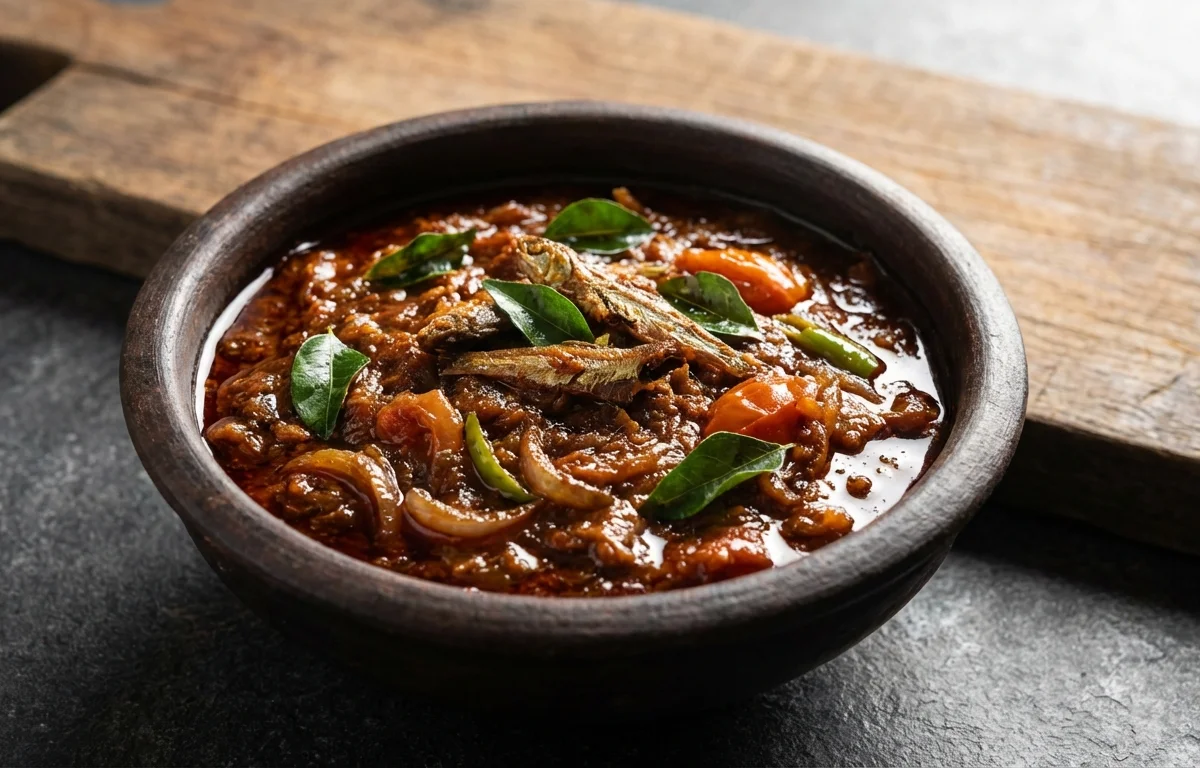
Karuvadu Thokku
A bold Tamil-style dried fish thokku with onions, tomatoes, garlic, and warming spices cooked down into a thick, fiery masala. It is intensely savory, a little tangy, and made to be eaten in small portions with hot rice.
For 4 servings
- prep · ~15 min
Clean and soak the dried fish.
1.Rinse the dried fish well in water 2 to 3 times.2.Soak it in warm water for 15 minutes to soften and remove excess salt.3.Drain, rinse once more, and cut into bite-size pieces if large.TIPTaste a tiny piece after soaking before adding salt later, since dried fish can vary a lot in saltiness. - boil · ~5 min
Boil the dried fish briefly.
Place the soaked dried fish in a small pan with a little fresh water and boil for 5 minutes. Drain well and keep aside.
- temper · ~1 min
Make the tempering.
1.Heat gingelly oil in a kadai over medium heat.2.Add mustard seeds and let them splutter.3.Add fenugreek seeds and curry leaves and cook for a few seconds.TIPDo not let the fenugreek seeds darken too much or the thokku can turn bitter. - saute · ~7 min
Cook the onion, garlic, and chili.
1.Add onion and cook until soft and lightly golden.2.Add garlic and green chili.3.Sauté until the raw smell fades and the garlic turns aromatic. - saute · ~8 min
Cook the tomato and spices.
1.Add tomato and cook until it turns soft and pulpy.2.Add turmeric powder, red chili powder, coriander powder, and black pepper.3.Mix well and cook until the masala thickens and oil starts to show at the edges. - simmer · ~10 min
Simmer the dried fish in the masala.
1.Add the boiled dried fish and mix well to coat it with the masala.2.Stir in tamarind paste and water.3.Cook on low heat until the mixture turns thick and the fish absorbs the flavors.TIPKeep the heat low and stir often near the end so the masala reduces slowly without catching at the bottom. - other · ~3 min
Adjust the salt and finish the thokku.
Taste and add the pinch of salt only if needed. Cook for 2 to 3 minutes more until the thokku is thick, glossy, and semi-dry.
- serve
Serve hot with rice.
What to keep in mind.
7 tips from the recipe — small details that make a real difference to the final dish.
- 1Taste the soaked dried fish before seasoning; many varieties stay quite salty even after rinsing.
- 2Boil the soaked fish briefly and drain well so the thokku tastes cleaner and less aggressively salty.
- 3Let the onions turn lightly golden before adding tomatoes for a deeper, sweeter masala base.
- 4Cook the tomatoes down until jammy and the oil peeks out at the edges; that is key for a proper thokku texture.
- 5Keep fenugreek to a pinch only, because too much or over-browning will make the masala bitter.
- 6Reduce on low heat and stir often at the end so the thick masala does not catch on the kadai.
- 7This tastes even better after resting for a few hours, once the dried fish absorbs the tamarind and spices.
Adapt it for your goals.
Extra-spicy
Add more red chili powder or a couple of extra slit green chilies for a fierier thokku that stands up especially well to hot rice.
shallot basedShallot-based
Use small shallots instead of regular onions for a sweeter, more traditional Tamil coastal flavour and a richer masala.
less oilyLess-oily
Use slightly less gingelly oil and cook the masala longer on low heat; good if you want a lighter but still robust thokku.
more tangyMore-tangy
Increase the tamarind slightly if your dried fish is very salty and strong, as extra sourness helps balance the intensity.
Why this is on our healthy list.
Protein-Rich Main
Dried fish provides concentrated protein, making this a small-portion dish that is still satisfying alongside plain rice.
Contains Protective Spices
Garlic, turmeric, black pepper, curry leaves, and fenugreek add more than flavour and bring traditional spice-based nourishment to the dish.
Tomato and Tamarind Base
Tomatoes and tamarind add acidity and plant compounds that brighten the rich, salty fish and balance the overall dish.
Frequently asked questions
Those two steps soften the fish, wash away grit, and reduce excess salt so the final thokku tastes balanced instead of harshly salty.