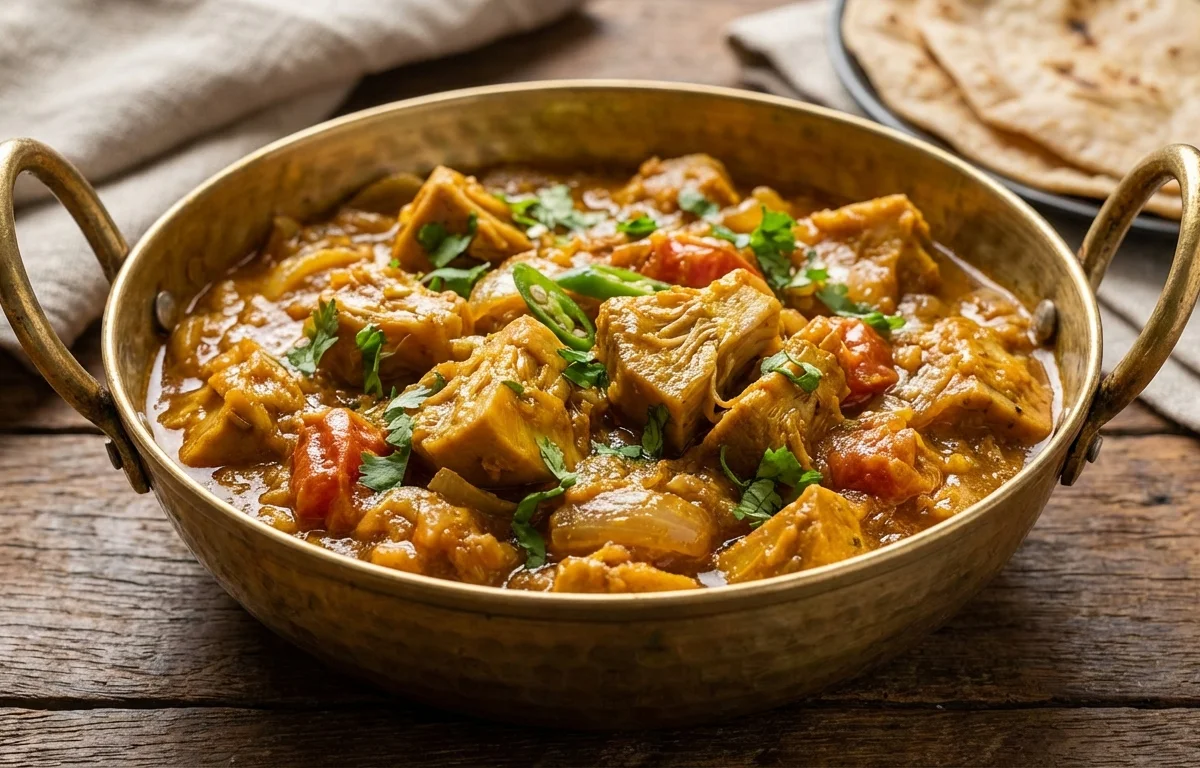
Kathal Sabzi
Tender young jackfruit cooked with onions, tomatoes, and everyday Indian spices until it turns rich, hearty, and full of flavor. This homestyle sabzi has a meaty bite and pairs especially well with roti or paratha.
For 4 servings
- prep · ~20 min
Prep the kathal and aromatics.
1.Peel and cut the young kathal into medium pieces if not already prepared.2.Finely chop the onion and tomato.3.Grate the ginger, crush the garlic, slit the green chili, and chop the coriander leaves.TIPRub a little oil on your knife and hands before cutting kathal to prevent sticking. - pressure cook · ~15 min
Pressure cook the kathal.
Add the kathal, water, and 0.25 tsp salt to a pressure cooker. Cook for 2 whistles, then let the pressure release naturally. Drain if there is excess water and keep the kathal aside.
- saute · ~9 min
Make the masala base.
1.Heat mustard oil in a pan until lightly smoking, then lower the heat.2.Add cumin seeds, bay leaf, and asafoetida and cook for 20-30 seconds.3.Add onion and cook until light golden, 5-7 minutes.4.Add ginger, garlic, and green chili and sauté for 1 minute.TIPLet the mustard oil heat properly first so its raw sharpness mellows. - saute · ~6 min
Cook the tomatoes and spices.
Add tomato, turmeric powder, red chili powder, coriander powder, and the remaining salt. Cook over medium heat until the tomatoes soften and the masala looks thick and glossy, about 5-6 minutes.
- simmer · ~10 min
Cook the kathal with the masala.
Add the cooked kathal and mix well so every piece is coated in the masala. Cover and cook on low heat for 8-10 minutes, stirring once or twice, until the sabzi is semi-dry and flavorful.
TIPStir gently so the kathal keeps its shape and does not turn mushy. - garnish · ~1 min
Finish with garam masala and coriander leaves.
- serve
Serve the kathal sabzi hot.
Serve hot with roti, paratha, or plain rice as part of a full meal.
What to keep in mind.
7 tips from the recipe — small details that make a real difference to the final dish.
- 1Oil your knife and hands while handling raw kathal; its sticky sap can make prep messy.
- 2Do not over-pressure-cook the jackfruit; 2 whistles are enough to keep a meaty bite.
- 3Drain excess cooking water before adding kathal to the masala so the sabzi stays semi-dry.
- 4Let the mustard oil lightly smoke first, then reduce heat, to remove its raw pungency.
- 5Cook the onion-tomato masala until glossy and starting to leave the pan for deeper flavor.
- 6Stir gently after adding the cooked kathal so the pieces stay intact instead of shredding.
- 7This sabzi often tastes even better after resting 15-20 minutes, once the spices settle into the kathal.
Adapt it for your goals.
No-onion-no-garlic
Skip onion and garlic, increase ginger and hing slightly, and cook the tomatoes down well for a sattvic-style version.
gravy styleGravy-style
Add a little more water after the masala cooks and simmer briefly for a softer, saucier kathal sabzi to serve with rice.
spicierSpicier
Use extra green chili and a bit more red chili powder if you want a sharper, dhaba-style heat.
potato addedPotato-added
Add cubed potatoes with the kathal for a homestyle variation that stretches the dish and soaks up the masala beautifully.
Why this is on our healthy list.
Fiber-Rich Main Dish
Young jackfruit, onions, and tomatoes add fiber, making this sabzi hearty and satisfying alongside roti or rice.
Plant-Based and Filling
Kathal gives a substantial, meaty texture without meat, making the dish a satisfying vegetarian option.
Packed with Aromatic Spices
Ginger, garlic, cumin, coriander, turmeric, and hing bring flavor complexity while keeping the dish rooted in everyday Indian pantry ingredients.
Frequently asked questions
Yes, but drain and rinse it well first. It may cook faster than fresh kathal, so reduce the pressure-cooking time or skip it if already tender.



.webp)