
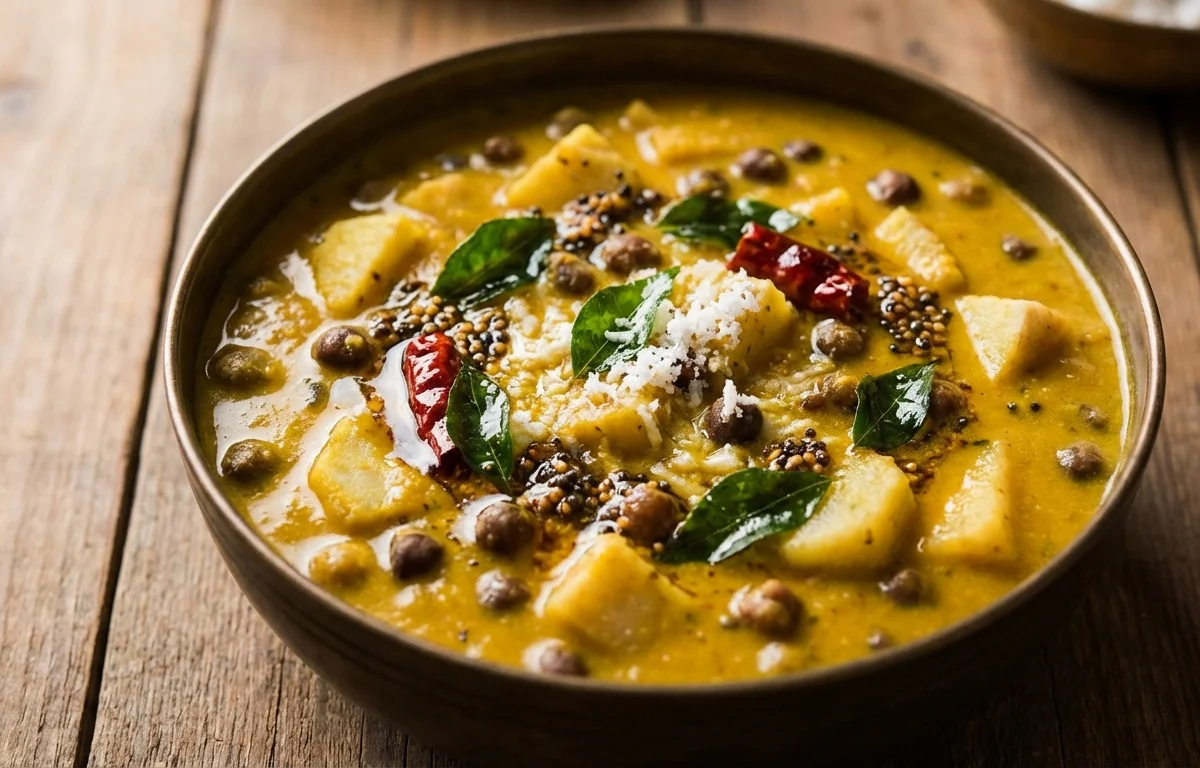
Kootu Curry
A Kerala-style temple favorite made with black chickpeas and yam, gently spiced and finished with roasted coconut. It has a lovely mix of soft bites, nutty sweetness, and a fragrant tempering that makes it feel special.
For 4 servings
- prep · ~10 min
Soak the chickpeas and prepare the yam.
1.Wash the black chickpeas well and soak them in plenty of water overnight.2.Drain the soaked chickpeas before cooking.3.Peel the yam and cut it into small even cubes. - pressure cook · ~25 min
Pressure cook the chickpeas and yam.
1.Add black chickpeas, yam, turmeric powder, salt, and water to a pressure cooker.2.Cook on medium heat until the chickpeas are tender and the yam is soft.3.Let the pressure drop naturally before opening the cooker.TIPCook just until the yam turns soft but still holds shape, so the curry stays textured. - roast · ~6 min
Roast the coconut mixture.
1.Heat a small pan over low to medium heat.2.Add grated coconut and roast, stirring often, until lightly golden and fragrant.3.Add cumin seeds, red chili powder, and black pepper, and roast briefly for 20 to 30 seconds.TIPKeep the heat moderate while roasting the coconut so it browns evenly without turning bitter. - mix · ~2 min
Crush the roasted coconut.
Cool the roasted coconut mixture slightly, then crush it coarsely. It should stay textured, not turn into a smooth paste.
- simmer · ~5 min
Combine and cook the curry.
Add the crushed coconut mixture to the cooked chickpeas and yam. Mix gently and simmer for 4 to 5 minutes until the flavors come together and the curry turns semi-dry.
- temper · ~2 min
Make the tempering.
1.Heat coconut oil in a small pan.2.Add mustard seeds and let them splutter.3.Add dried red chili and curry leaves and fry for a few seconds until aromatic. - garnish
Pour the tempering over the curry.
- serve
Serve warm.
What to keep in mind.
7 tips from the recipe — small details that make a real difference to the final dish.
- 1Soak the black chickpeas a full night; under-soaked chickpeas stay firm even after pressure cooking.
- 2Cut the yam into even small cubes so it softens at the same rate as the chickpeas.
- 3Roast the coconut only to light golden; deep brown coconut can make this kootu curry taste bitter.
- 4Crush the roasted coconut coarsely, not smooth, so the final curry keeps its signature crumbly texture.
- 5After adding the coconut mixture, simmer uncovered until semi-dry; this dish should not be loose or soupy.
- 6Add the tempering at the very end and cover for a minute to trap the aroma of curry leaves and coconut oil.
- 7This tastes even better after a short rest, once the roasted coconut and spices settle into the chickpeas and yam.
Adapt it for your goals.
Jaggery-touch
Add a very small pinch of jaggery while simmering for a gentle sweet note that balances the pepper, chili, and earthy chickpeas.
no yamNo-yam
Replace yam with raw banana for a firmer, less earthy version that still suits the roasted coconut base.
spicierSpicier
Increase black pepper slightly or add one extra dried red chili in the tempering for a warmer, more robust finish.
festival styleFestival-style
Keep it simple and traditional with no onion or garlic, making it especially suitable for Kerala sadya-style meals.
Why this is on our healthy list.
Fiber-Rich Legume Base
Black chickpeas bring plant-based protein and fiber, which helps make this curry hearty and satisfying.
Vegetable-Based Hearty Dish
Yam adds bulk, texture, and useful plant nutrients, turning the curry into a filling side with real substance.
Spice-Forward Flavoring
Turmeric, cumin, black pepper, and curry leaves add aroma and depth without needing heavy sauces or rich dairy.
Naturally Dairy-Free
The dish gets richness from coconut and coconut oil, making it suitable for those avoiding dairy ingredients.
Frequently asked questions
Yes, but the flavor and texture will change. Black chickpeas are earthier and firmer, which is more typical for this Kerala-style kootu curry.



.webp)
.webp)